
StretchDollar
Founded Year
2023Stage
Seed VC - II | AliveTotal Raised
$9.6MLast Raised
$2M | 1 yr agoMosaic Score The Mosaic Score is an algorithm that measures the overall financial health and market potential of private companies.
-43 points in the past 30 days
About StretchDollar
StretchDollar focuses on providing health benefits solutions for small businesses within the insurance industry. The company offers a platform where small businesses can set a budget and match their employees with personalized health plans, simplifying the process of obtaining small business health insurance. StretchDollar primarily serves the small business sector with its health benefits services. It was founded in 2023 and is based in San Francisco, California.
Loading...
StretchDollar's Product Videos
_thumbnaila297.png?w=3840)
ESPs containing StretchDollar
The ESP matrix leverages data and analyst insight to identify and rank leading companies in a given technology landscape.
The ICHRA platforms market consists of companies that offer software to provide individual coverage health reimbursement arrangement (ICHRA) plans. Most ICHRA platforms facilitate payments between employees (sponsored by their employers) and health insurers. ICHRA platforms typically offer employers online portals to administer ICHRA plans, with many companies also offering complimentary portals f…
StretchDollar named as Challenger among 12 other companies, including Gravie, Thatch, and Take Command Health.
StretchDollar's Products & Differentiators
Small Business ICHRA
A free to use platform for small businesses to offer their employees tax free funding to cover the cost of health insurance plans they select and own themselves.
Loading...
Research containing StretchDollar
Get data-driven expert analysis from the CB Insights Intelligence Unit.
CB Insights Intelligence Analysts have mentioned StretchDollar in 2 CB Insights research briefs, most recently on Oct 16, 2025.
Oct 16, 2025 report
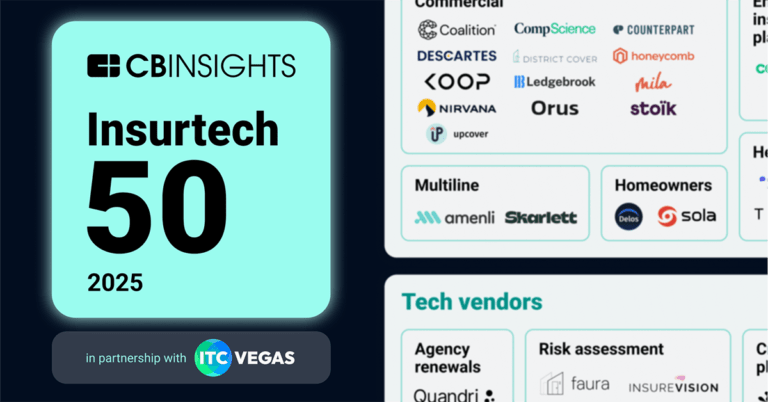
Insurtech 50: The most promising insurtech startups of 2025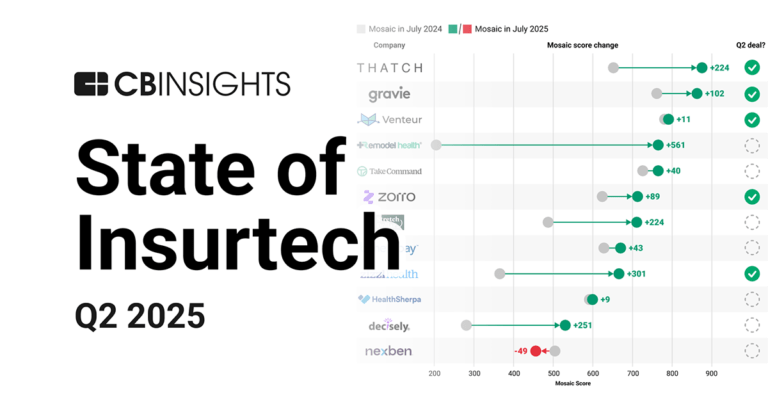
Aug 7, 2025 report
State of Insurtech Q2’25 ReportExpert Collections containing StretchDollar
Expert Collections are analyst-curated lists that highlight the companies you need to know in the most important technology spaces.
StretchDollar is included in 5 Expert Collections, including Insurtech.
Insurtech
3,403 items
Companies and startups that use technology to improve core and ancillary insurance operations. Companies in this collection are creating new product architectures, improving underwriting models, accelerating claims and creating a better customer experience
Fintech
9,809 items
Companies and startups in this collection provide technology to streamline, improve, and transform financial services, products, and operations for individuals and businesses.
Digital Health
12,122 items
The digital health collection includes vendors developing software, platforms, sensor & robotic hardware, health data infrastructure, and tech-enabled services in healthcare. The list excludes pureplay pharma/biopharma, sequencing instruments, gene editing, and assistive tech.
Insurtech 50 2025
50 items
Do not share
Insurtech 50
50 items
Latest StretchDollar News
Jan 26, 2025
ICHRAs are gaining a lot of interest in healthcare. Some say they are beneficial because they give employees more choice in their health insurance, while others are more skeptical. By Marissa Plescia on January 26, 2025 Share Copy LinkCopy Link ICHRA — Individual Coverage Health Reimbursement Arrangement — seems to be the new buzzword of 2025. ICHRAs allow employers to provide their employees pre-tax dollars to cover the cost of individual health insurance premiums and qualified medical expenses. They were created under the first Trump administration in 2019 and became available in 2020. According to the HRA Council — an advocacy organization for Health Reimbursement Arrangement administrators and more — ICHRA adoption rose 29% between 2023 and 2024 among the organization’s members (though it’s difficult to say for sure how many employers are offering them). Multiple startups that help employers administer ICHRAs have also recently gained funding, including StretchDollar and Remodel Health . The interest in ICHRA stems from dissatisfaction with traditional group health insurance. The general consensus among those interviewed for this article appears to be that these plans present employees with more choice, but at least one employer advocate views them as merely a temporary fix to a broken healthcare system. “They are a Band-Aid that addresses a symptom that will have no positive systemic benefit, in my view,” said Elizabeth Mitchell, president and CEO of Purchaser Business Group on Health. “For reasonably healthy people with low healthcare costs, I can see why it would be attractive, and maybe for some populations, it does make sense. But we still have to solve quality and affordability for the system at large.” How do ICHRAs work? The creation of ICHRAs came after the launch of another insurance option for employers with an even longer acronym: Qualified Small Employer Health Reimbursement Arrangements (QSEHRA). QSEHRA was created in 2016 by the Obama administration and allowed small businesses with fewer than 50 full-time employees to offer pre-tax funds to their employees to purchase health insurance plans. However, there were limits, including how much they can offer and it only applied to small businesses. So the Trump administration created ICHRAs in 2019, permitting employers of any size to provide a pre-tax fixed benefit of no limit to their employees. And there are several reasons why ICHRAs have become attractive to employers, particularly small employers, according to Robin Paoli, executive director of the HRA Council. For small employers, it mostly has to do with rising healthcare costs, which have made it increasingly difficult for them to offer health insurance. But for larger employers, ICHRAs give them more flexibility and allow their employees to choose the plan that best suits their needs, such as a plan offered by their preferred carrier, one that covers their preferred hospital or a plan that’s tailored to a specific condition. With group insurance, employees at a 4,500-person company, for example, may only have a handful of plans to choose from. presented by When employers offer an ICHRA, they are able to separate their employees into different classes, such as full-time employees, part-time employees or by different geographic areas, for instance. Then they decide what amount each employee class will receive. Reimbursements can be increased for older employees and those with more dependents. Employees can then purchase individual health insurance through a provider, through the ACA exchange or even Medicare, if eligible. They can use the funds for qualified medical expenses, like to diagnose, treat and prevent a disease. It’s important to note, however, that while employers can offer one class of employees an ICHRA plan and another class a group health insurance plan, they cannot offer both to one class at the same time. For example, a business can give full-time employees group health insurance and part-time employees an ICHRA, but full-time employees can’t be offered both group health insurance and an ICHRA. While small employers have been the biggest adopters of ICHRA, large employers are the fastest-growing cohort, HRA Council’s data shows. An executive at a tech-enabled insurance company that has been a major advocate of ICHRA agreed that there is increased interest among large employers. Louis DeStefano, senior vice president of growth at Oscar Health, anticipates seeing large employers test out ICHRA plans with certain subsets of their population first, such as those in geographic regions with good ACA plans. “I don’t think you’re going to see a 100,000-life employer move their entire population tomorrow to ICHRA, but I think they are asking the questions and trying to understand what pieces of their population this could serve the best,” he said. However, administering ICHRA plans may be confusing to employers, and choosing a plan on the ACA exchanges could be burdensome to employees. That’s where startups like Thatch , StretchDollar and Take Command are coming into play. These companies help educate brokers and employers on ICHRA, as well as assist them in setting up ICHRA plans for their employees. They also help employees shop for the right health plans for them. “On the educational front there is still much work to be done,” said Kyle Estep, senior vice president of strategy at Take Command. “Job one has been to educate insurance agents and large brokerage/consulting firms in the employee benefits space. These folks drive the market. In addition, we are still in the early days of building traction with HR & finance professionals that sit at the decision-making table.” Are ICHRAs beneficial to employers and employees? The main benefit of ICHRAs for employees is that it provides them with choice. For example, someone who has diabetes can choose a plan that fits that need, or a Spanish-speaking individual can select a plan that caters to that language. DeStefano equated it to the transition from pensions to 401Ks. “You’re putting the power back into the employees,” he said. “And I think what’s so telling about ICHRA is that three plans for a large employer doesn’t really fit the needs of all their families. … Everything we buy in this country, we have tons of choices. We just came out of the holidays and there was an unlimited amount of choices for what we would purchase, but I can’t do that with my healthcare plan. I think that’s really the shift, and I think that’s why in the long term, it’ll be successful.” Another benefit is that people can potentially keep their plan even if they leave their employer, versus traditional insurance in which employees lose their coverage after leaving their job, according to Christina Farr, managing director at consulting firm Manatt Health. Still, employees need to be sophisticated to shop for their needs and in that sense ICHRAs place a heavy burden, argued Mitchell of PBGH. “Choosing a health plan or choosing a health system is Byzantine and incredibly challenging to compare and to understand,” she said. “The entire problem with U.S. healthcare is it is an absolutely dysfunctional non-market, where there’s no information, there’s no way to compare quality or cost, there is almost no way to even get an appointment half the time, and that’s when you are part of a larger group. …It is not a fair thing to ask a consumer to navigate an unnavigable system.” In a recent LinkedIn post , another healthcare expert questioned whether ICHRAs actually give employees access to quality healthcare. “I really wonder if any of these ICHRA evangelists have ever bought an individual health plan?” said Ari Gottlieb, principal of consulting group A2 Strategy Corp. “What they would find, generally, are plans that have Medicaid-based, limited provider networks, with most lacking out-of-state coverage and excluding leading health systems.” Paoli of HRA Council did note that while she believes ICHRAs work for a variety of consumers, she can see why someone with complex conditions may prefer receiving coverage through traditional group insurance. That said, she thinks ICHRA works for the majority of people because it’s ACA-compliant insurance. The benefits to employers are much clearer. To them — especially smaller businesses — ICHRAs offer the potential to lower healthcare costs, believes Molly Chidester, deputy director of health care innovation at Morgan Health, a business unit of JPMorgan Chase focused on employer-sponsored insurance. “Rising health care costs are especially burdensome for small and mid-size businesses and ICHRAs could potentially help alleviate that impact – particularly in states where the individual market is competitively priced relative to group plans,” Chidester said. “ICHRAs make health care costs more predictable and have helped some small businesses offer health benefits for the first time.” However, Mitchell doesn’t entirely agree that ICHRAs will have a meaningful impact on healthcare costs for employers. “My question about ICHRAs is, what do people think will hold costs down with an ICHRA?” she argued. “If jumbo companies spending literally billions of dollars a year are challenged to negotiate lower costs, how would an individual with a defined amount of cash do that? So it might be a nice short-term off ramp, but there is no mechanism that would actually drive affordability or have any downward pressure on costs.” In other words, by putting the responsibility on the employee to pick health plans, it’s giving up the bargaining power that employers have with health systems and insurers. That said, this argument mainly applies to large self-funded employers, as small employers don’t have a lot of negotiating power. While it’s difficult to say just how many employers are turning to ICHRAs as there is no reporting requirement, Paoli anticipates adoption to continue to increase. The evidence is clear from market trends. “Investors are very interested in companies that are administrating and implementing and enrolling ICHRAs, and more and more insurance companies are hiring and training staff in the rules and regulations around ICHRA and QSERHA and HRAs generally,” she said. “With the insurance companies doing that and with investors being interested, you know that a bunch of employers are making this move.” Photo: sdecoret, Getty Images
StretchDollar Frequently Asked Questions (FAQ)
When was StretchDollar founded?
StretchDollar was founded in 2023.
Where is StretchDollar's headquarters?
StretchDollar's headquarters is located at 500 Innes Avenue, San Francisco.
What is StretchDollar's latest funding round?
StretchDollar's latest funding round is Seed VC - II.
How much did StretchDollar raise?
StretchDollar raised a total of $9.6M.
Who are the investors of StretchDollar?
Investors of StretchDollar include Expansion VC, Precursor Ventures, Fika Ventures, Oscar, Springbank and 6 more.
Who are StretchDollar's competitors?
Competitors of StretchDollar include Thatch and 3 more.
What products does StretchDollar offer?
StretchDollar's products include Small Business ICHRA.
Loading...
Compare StretchDollar to Competitors

zizzl health specializes in providing Individual Coverage Health Reimbursement Arrangement (ICHRA) solutions within the health insurance sector. The company offers a platform that assists employers in managing health benefits, enabling them to provide customizable health insurance options to their employees without the administrative burden typically associated with traditional plans. zizzl health was formerly known as zizzl. It was founded in 2016 and is based in Milwaukee, Wisconsin.

Zorro is a company that provides solutions within the health benefits industry. The company offers a platform that allows employers to set individual benefits budgets for employees, who can then choose their health benefit bundles. Zorro primarily serves the employer and employee sectors, focusing on a health benefits system. It was founded in 2022 and is based in Beachwood, Ohio.

Take Command Health specializes in health reimbursement arrangements (HRAs) within the financial technology sector. The company provides HRA administration software that enables businesses of various sizes to reimburse employees for health insurance tax-free. Take Command Health's main offerings include QSEHRA administration for small businesses and ICHRA administration for companies of any size, aiming to offer flexible and affordable health benefits. It was founded in 2014 and is based in Richardson, Texas.

Venteur specializes in health insurance solutions with a focus on Individual Coverage Health Reimbursement Arrangements (ICHRA) within the healthcare industry. The company offers platforms that allow employers to provide health benefits to their employees and assist employees in creating health portfolios. Venteur's services integrate with payroll systems, providing options for businesses. Venteur was formerly known as BeneSwyft. It was founded in 2020 and is based in San Francisco, California.

BenefitBay provides a range of ICHRA administration platforms within the health benefits sector. Its offerings include a platform that allows employers to reimburse employees for individual health plans while maintaining tax advantages and tools to support simplified benefits deployment and compliance. Its services are primarily utilized by brokers and their clients in the health benefits industry. It was founded in 2021 and is based in Omaha, Nebraska.

Vitable Health provides primary care and mental health services within the healthcare sector. The company offers a membership model that includes virtual and in-home primary care visits, mental health support, access to prescriptions, and solutions for employers. Vitable Health serves employers, brokers, consultants, third-party administrators, and individuals seeking healthcare. It was founded in 2019 and is based in Woodlyn, Pennsylvania.
Loading...