

Take Command Health
Founded Year
2014Stage
Series B | AliveTotal Raised
$44.75MLast Raised
$25M | 2 yrs agoRevenue
$0000Mosaic Score The Mosaic Score is an algorithm that measures the overall financial health and market potential of private companies.
-81 points in the past 30 days
About Take Command Health
Take Command Health specializes in health reimbursement arrangements (HRAs) within the financial technology sector. The company provides HRA administration software that enables businesses of various sizes to reimburse employees for health insurance tax-free. Take Command Health's main offerings include QSEHRA administration for small businesses and ICHRA administration for companies of any size, aiming to offer flexible and affordable health benefits. It was founded in 2014 and is based in Richardson, Texas.
Loading...
ESPs containing Take Command Health
The ESP matrix leverages data and analyst insight to identify and rank leading companies in a given technology landscape.
The ICHRA platforms market consists of companies that offer software to provide individual coverage health reimbursement arrangement (ICHRA) plans. Most ICHRA platforms facilitate payments between employees (sponsored by their employers) and health insurers. ICHRA platforms typically offer employers online portals to administer ICHRA plans, with many companies also offering complimentary portals f…
Take Command Health named as Outperformer among 12 other companies, including Gravie, Thatch, and Venteur.
Take Command Health's Products & Differentiators
HRA Hub
HRA Hub is Take Command’s purpose-built HRA administration platform designed to give employers flexibility and employees more choice. It gives employers a central dashboard to design, manage, and monitor their HRA, while giving employees the ability to shop for health plans or upload proof of existing coverage.
Loading...
Research containing Take Command Health
Get data-driven expert analysis from the CB Insights Intelligence Unit.
CB Insights Intelligence Analysts have mentioned Take Command Health in 1 CB Insights research brief, most recently on Aug 7, 2025.
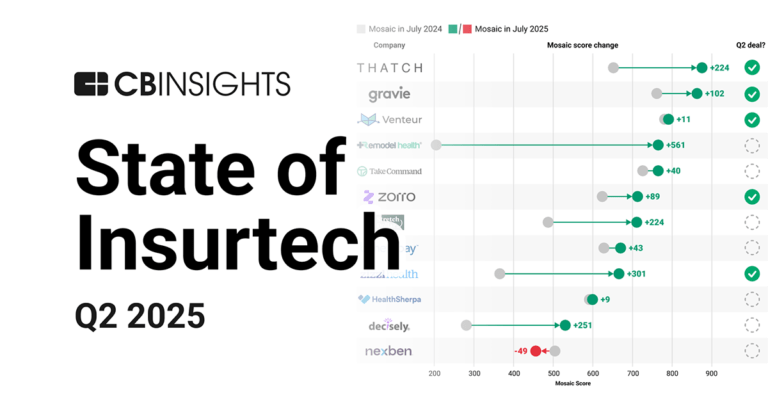
Aug 7, 2025 report
State of Insurtech Q2’25 ReportExpert Collections containing Take Command Health
Expert Collections are analyst-curated lists that highlight the companies you need to know in the most important technology spaces.
Take Command Health is included in 6 Expert Collections, including HR Tech.
HR Tech
6,137 items
The HR tech collection includes software vendors that enable companies to develop, hire, manage, and pay their workforces. Focus areas include benefits, compensation, engagement, EORs & PEOs, HRIS & HRMS, learning & development, payroll, talent acquisition, and talent management.
SMB Fintech
1,231 items
Insurtech
3,403 items
Companies and startups that use technology to improve core and ancillary insurance operations. Companies in this collection are creating new product architectures, improving underwriting models, accelerating claims and creating a better customer experience
Fintech
9,809 items
Companies and startups in this collection provide technology to streamline, improve, and transform financial services, products, and operations for individuals and businesses.
Digital Health
12,122 items
The digital health collection includes vendors developing software, platforms, sensor & robotic hardware, health data infrastructure, and tech-enabled services in healthcare. The list excludes pureplay pharma/biopharma, sequencing instruments, gene editing, and assistive tech.
Telehealth
3,123 items
Companies developing, offering, or using electronic and telecommunication technologies to facilitate the delivery of health & wellness services from a distance. *Columns updated as regularly as possible; priority given to companies with the most and/or most recent funding.
Latest Take Command Health News
Sep 11, 2025
By Jack Hooper September 11, 2025, 11:13 a.m. EDT 4 Min Read As has been contained a big disappointment for those who buy their insurance on the individual market: The legislation fails to extend the enhanced premium tax credits established by the American Rescue Plan Act (ARPA) in 2021 and extended through the Inflation Reduction Act of 2022. Without further action, the tax credits will expire at the end of 2025. If those tax credits are allowed to expire, the may choose to drop their coverage. This will cause the market to contract, shrinking the risk pool and increasing the likelihood that those with health coverage will have high usage; those who need to use their insurance will keep it regardless of the price increase.As a result, the cost of insurance will increase across the board. Companies who provide coverage through an HRA (QSEHRA for qualified small employers; ICHRA for everyone else) will have to choose whether to increase the allowance they provide their employees or pass on the increased expenses. And the problem doesn't just extend to the individual market. Some industry observers expect group health insurance rates to increase as much as individual rates, if not more. According to a , more than half of large employers (those with 500 or more employees) "say they are likely or very likely to make plan design changes in 2026 that would shift more cost to employees, such as raising deductibles or out-of-pocket maximums." A recent survey conducted by the projected that health care costs in 2026 will increase by a median of 9%; Companies that come to our platform at Take Command are facing substantially higher renewals. As we approach open enrollment, most employers are bracing for impact. However, there may be an alternative. Off-exchange plans — a less common way to purchase coverage directly from an insurance company or licensed broker — currently look like they'll see significantly smaller increases than group coverage and plans on the individual exchange. Read more: What are off-exchange plans? Of the millions of Americans who purchase health insurance on the individual market, most do so through a government-run exchange like or a similar state-specific platform. These are "on-exchange" plans, and they're eligible for government subsidies like premium tax credits and cost-sharing reductions. "Off-exchange" plans are exactly what they sound like — they're purchased directly from a broker or an insurance company, bypassing the exchange altogether. Off-exchange plans aren't eligible for government subsidies; however, individual buyers can often find off-exchange plans for the same price as a nearly identical plan on the exchange. Typically, the differences between on-exchange and off-exchange plans would be minimal. Some employers default to on-exchange plans due to convenience: Several ICHRA administrators only allow employees to purchase plans on the exchange. But with premium tax credits set to expire, the differences between on-exchange and off-exchange plans become much more relevant. Recent industry analysis suggests that off-exchange plans will see much smaller increases in terms of premiums. Read more: Finding stability off exchange At Take Command, we recently analyzed the proposed rate increases in the ten largest U.S. states. The differences between on-exchange and off-exchange are striking. Off-exchange plans won't be impacted by the expiration of premium tax cuts, so it makes sense that they'll see less volatile increases when compared with on-exchange plans. While preliminary rates are subject to change, in every state except Florida, the smallest rate increases are observed in the off-exchange plans. In every state except Georgia, off-exchange plans can be seen to increase less than the expected national average. These are evolving, incomplete data sets, but based on what we see today, the off-exchange view is encouraging. What does this difference mean in practice for American insurance buyers? For individuals, it will be worth taking the extra steps to compare plans on- and off-exchange. The result could be significant cost savings — or better coverage for the same price. For companies that provide coverage through ICHRA, it will be worth finding an ICHRA administrator that allows employees to purchase off-exchange plans. Platforms that only include plans on the ACA marketplace will prevent buyers from seeing the entire slate of options and could end up costing them money or coverage. Read more: In the next couple of months, expiring tax credits and rate increases are going to put companies in an extremely difficult position. Employers want to do right by their employees and provide them with competitive benefits, but no company can afford to take on a plan that will break their balance sheet. This is a moment for companies and their HR leaders to focus on optionality: Taking steps to ensure that employees have the maximum amount of choices and avoiding group plans and HRA administrators that will lock them into higher costs. By focusing on plan variety — including the wide range of plans available off-exchange — companies can help their employees find affordable health insurance with below average increases in a rapidly changing and potentially shrinking individual market.
Take Command Health Frequently Asked Questions (FAQ)
When was Take Command Health founded?
Take Command Health was founded in 2014.
Where is Take Command Health's headquarters?
Take Command Health's headquarters is located at 1410 Renner Rd., Richardson.
What is Take Command Health's latest funding round?
Take Command Health's latest funding round is Series B.
How much did Take Command Health raise?
Take Command Health raised a total of $44.75M.
Who are the investors of Take Command Health?
Investors of Take Command Health include LiveOak Venture Partners, SJF Ventures, Edison Partners, Paycheck Protection Program, Green Park & Golf Ventures and 5 more.
Who are Take Command Health's competitors?
Competitors of Take Command Health include Sureco, BenefitBay, Zorro, zizzl health, Venteur and 7 more.
What products does Take Command Health offer?
Take Command Health's products include HRA Hub and 1 more.
Loading...
Compare Take Command Health to Competitors

Venteur specializes in health insurance solutions with a focus on Individual Coverage Health Reimbursement Arrangements (ICHRA) within the healthcare industry. The company offers platforms that allow employers to provide health benefits to their employees and assist employees in creating health portfolios. Venteur's services integrate with payroll systems, providing options for businesses. Venteur was formerly known as BeneSwyft. It was founded in 2020 and is based in San Francisco, California.

zizzl health specializes in providing Individual Coverage Health Reimbursement Arrangement (ICHRA) solutions within the health insurance sector. The company offers a platform that assists employers in managing health benefits, enabling them to provide customizable health insurance options to their employees without the administrative burden typically associated with traditional plans. zizzl health was formerly known as zizzl. It was founded in 2016 and is based in Milwaukee, Wisconsin.

Zorro is a company that provides solutions within the health benefits industry. The company offers a platform that allows employers to set individual benefits budgets for employees, who can then choose their health benefit bundles. Zorro primarily serves the employer and employee sectors, focusing on a health benefits system. It was founded in 2022 and is based in Beachwood, Ohio.
Enrichly is a software-as-a-service (SaaS) insurance technology company focused on health insurance and employee benefits in the insurance and human resources(HR) sectors. The company offers an operating system for administration and benefits for general agencies, insurance brokerages, and HR/Payroll industries. Enrichly provides various employee benefits aimed at addressing health and wellness needs. It was founded in 2023 and is based in New York, New York.

BenefitBay provides a range of ICHRA administration platforms within the health benefits sector. Its offerings include a platform that allows employers to reimburse employees for individual health plans while maintaining tax advantages and tools to support simplified benefits deployment and compliance. Its services are primarily utilized by brokers and their clients in the health benefits industry. It was founded in 2021 and is based in Omaha, Nebraska.

StretchDollar focuses on providing health benefits solutions for small businesses within the insurance industry. The company offers a platform where small businesses can set a budget and match their employees with personalized health plans, simplifying the process of obtaining small business health insurance. StretchDollar primarily serves the small business sector with its health benefits services. It was founded in 2023 and is based in San Francisco, California.
Loading...