

World Labs
Founded Year
2024Stage
Series A - II | AliveTotal Raised
$230MValuation
$0000Last Raised
$130M | 1 yr agoMosaic Score The Mosaic Score is an algorithm that measures the overall financial health and market potential of private companies.
+58 points in the past 30 days
About World Labs
World Labs operates as a spatial intelligence company specializing in artificial intelligence and machine learning. The company focuses on developing large world models (LWMs) that enable artificial intelligence (AI) to perceive, generate, and interact with the three-dimensional (3D) world, both virtual and real, by endowing them with spatial intelligence. World Labs primarily serves sectors that require advanced AI capabilities for understanding and reasoning about 3D environments from various data inputs. It was founded in 2024 and is based in Stanford, California.
Loading...
ESPs containing World Labs
The ESP matrix leverages data and analyst insight to identify and rank leading companies in a given technology landscape.
The multimodal AI developers market provides foundation models and APIs that process and generate content across multiple modalities including text, images, audio, and video. These companies develop transformer-based architectures and vision-language models that enable simultaneous understanding and generation across different data types. Solutions include text-to-image generation, image-to-video …
World Labs named as Challenger among 15 other companies, including OpenAI, Microsoft, and Amazon.
Loading...
Research containing World Labs
Get data-driven expert analysis from the CB Insights Intelligence Unit.
CB Insights Intelligence Analysts have mentioned World Labs in 8 CB Insights research briefs, most recently on Oct 20, 2025.

Oct 20, 2025 report
Book of Scouting Reports: 2025’s Digital Health 50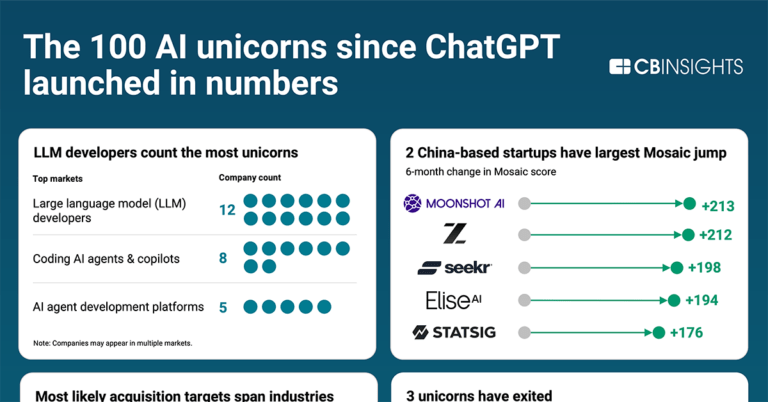
Aug 26, 2025 report
All 100 AI unicorns since ChatGPT launched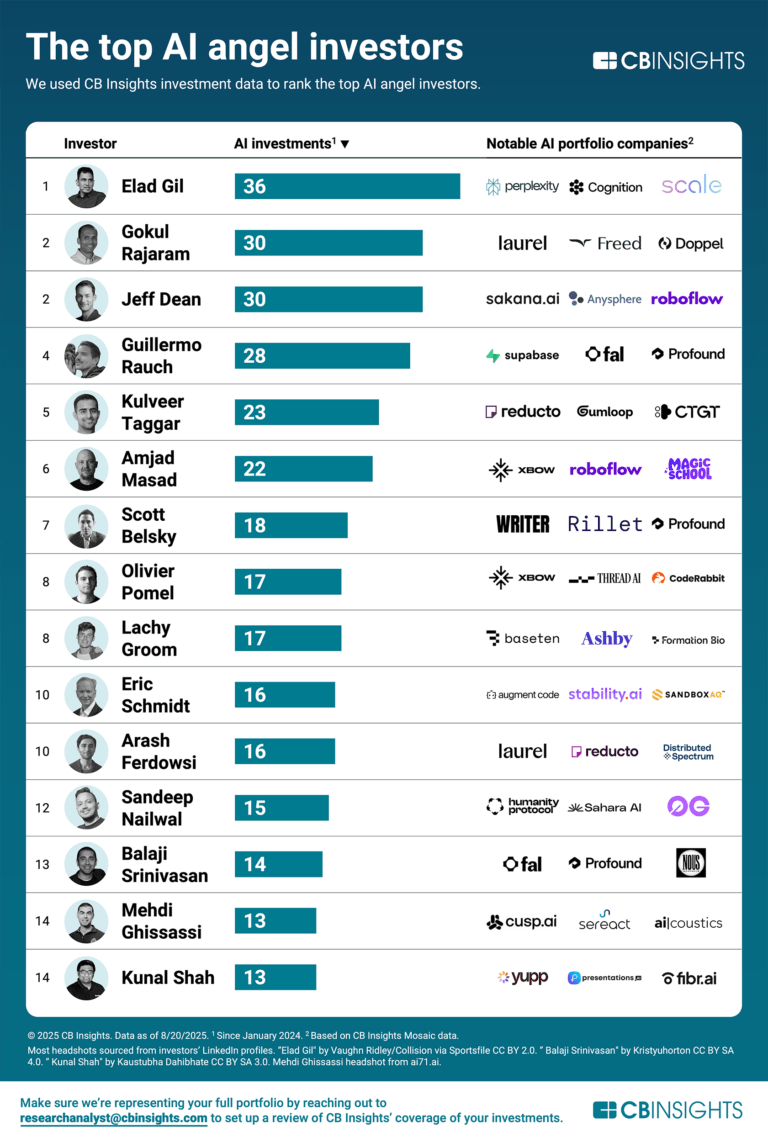
Aug 22, 2025
The top angel investors in AI
May 16, 2025 report
Book of Scouting Reports: 2025’s AI 100
Apr 24, 2025 report
AI 100: The most promising artificial intelligence startups of 2025
Oct 29, 2024 report
State of AI Q3’24 Report
Oct 3, 2024 report
State of Venture Q3’24 ReportExpert Collections containing World Labs
Expert Collections are analyst-curated lists that highlight the companies you need to know in the most important technology spaces.
World Labs is included in 5 Expert Collections, including Unicorns- Billion Dollar Startups.
Unicorns- Billion Dollar Startups
1,297 items
Artificial Intelligence (AI)
37,207 items
Companies developing artificial intelligence solutions, including cross-industry applications, industry-specific products, and AI infrastructure solutions.
Generative AI
2,951 items
Companies working on generative AI applications and infrastructure.
AI 100 (2025)
100 items
AI 100 (All Winners 2018-2025)
100 items
World Labs Patents
World Labs has filed 1 patent.
The 3 most popular patent topics include:
- lanthanides
- monoclinic minerals
- polarization (waves)

Application Date | Grant Date | Title | Related Topics | Status |
|---|---|---|---|---|
10/19/2021 | Monoclinic minerals, Polarization (waves), Lanthanides, Reducing agents, Spectroscopy | Application |
Application Date | 10/19/2021 |
|---|---|
Grant Date | |
Title | |
Related Topics | Monoclinic minerals, Polarization (waves), Lanthanides, Reducing agents, Spectroscopy |
Status | Application |
Latest World Labs News
Oct 31, 2025
October 31, 2025, 2:47 pm IST The year 2025 has already proven to be a pivotal period for artificial intelligence, marked by significant leaps and profound discussions on its implications. In the “No Priors” episode titled “The Best of 2025 (So Far),” hosts Sarah Guo and Elad Gil curate a series of illuminating excerpts from their conversations with leading founders and scientific minds, painting a comprehensive picture of AI’s current trajectory and future challenges. These dialogues, featuring visionaries from Harvey, OpenAI, World Labs, Mercor, the Center for AI Safety, Flagship Pioneering, Gleen, and Abridge, collectively highlight AI’s burgeoning capabilities, its societal disruption, and its potential to redefine human endeavor. One of the most compelling narratives emerging from these discussions is AI’s capacity to unlock immense value in unexpected domains. Winston Weinberg, CEO of Harvey, recounts his “aha moment” with GPT-3. He was “incredibly surprised that no one was talking about GPT-3 and no one was using it in any way, shape or form,” despite its public availability. By applying the model to landlord-tenant legal questions, Weinberg discovered that it produced answers deemed acceptable by attorneys 86% of the time without edits, a finding that quickly captured the attention of OpenAI’s General Counsel. This demonstrates how identifying novel applications for powerful AI models can yield extraordinary value in domains previously thought impenetrable. The conversation extends to the very nature of intelligence itself. Dr. Fei-Fei Li, a luminary in AI, emphasizes spatial intelligence as a profoundly complex problem that evolution has grappled with for eons. Animals, including humans, must process light, reconstruct a 3D world in their minds, and navigate it effectively. She illustrates the difficulty by asking one to close their eyes and build a 3D model of their surroundings, highlighting that even for humans, this is not a fully solved problem. AI’s advancement in this area promises a new dimension of capability, allowing for more fluid interactivity and editability in digital and physical spaces, fundamentally altering how we perceive and manipulate our environment. However, the rapid ascent of AI also brings forth significant societal challenges. Brendan Foody, CEO of Mercor, offers a stark prediction regarding the workforce. He believes that “displacement in a lot of roles is going to happen very quickly, and it’s going to be very painful, and a large political problem.” The economic and social ramifications of such displacement are undeniable, leading to questions about wealth redistribution and the nature of future work. Dan Hendrycks, Director of the Center for AI Safety, draws a parallel to nuclear strategy, where mutual vulnerability deterred aggression. He cautions that as AI becomes more salient and pivotal to national futures, states might attempt to leverage it as a “super weapon,” leading to a destabilizing arms race. This geopolitical tightrope demands careful navigation and international frameworks to prevent catastrophic outcomes. Beyond the challenges, AI is poised to transform the very process of innovation. Noubar Afeyan, founder and CEO of Flagship Pioneering (and co-founder of Moderna), argues for making entrepreneurship a scientific discipline rather than a random, improvisational pursuit. He questions, “Why isn’t entrepreneurship a profession? And if it was going to be a profession, how could it be a profession?” Afeyan believes AI can provide the systematic rigor needed to tackle “damn near impossible” problems in critical areas like healthcare and climate, turning them into valuable, practical solutions. This shift towards scientific entrepreneurship promises to de-risk venture creation and accelerate progress on grand challenges. The architectural underpinnings of this transformation are also evolving rapidly. Brandon McKinzie and Eric Mitchell from OpenAI discuss reasoning models as the biggest paradigm shift in AI since the transformer. They highlight models’ ability to estimate their own uncertainty, indicating when they “can’t really see the thing you’re talking about very well.” Crucially, when these models are given access to tools, their productivity skyrockets. This allows for a more efficient allocation of computational resources, deferring tasks where the model lacks a comparative advantage to specialized tools, thereby optimizing performance and resource use. The journey of AI development is often marked by moments of profound realization, even when success is anticipated. Isa Fulford from OpenAI describes the “visceral experience” of seeing a model trained on browsing tasks actually work, despite prior conviction. These moments, rooted in taste, data generation, and diligent effort, underscore that breakthroughs aren’t always grand theoretical leaps but often the tangible manifestation of persistent work. Yet, the models still surprise with unexpected mistakes, revealing the continuous need for refinement and deeper understanding. AI is also disrupting seemingly stagnant markets, turning “graveyards” into fertile ground for innovation. Arvind Jain, founder of Gleen, recounts building an enterprise search solution in a market notorious for failures. He explains that the fundamental problem in the pre-SaaS era was the inability to access and connect disparate data within an enterprise. SaaS solved this by centralizing data and providing open APIs, which was “a big unlock.” This allowed Gleen to build a turnkey product for the first time, addressing the explosion of content within businesses and providing scalable search capabilities that were impossible in the pre-cloud era. Related Reading Ultimately, the most resonant aspect of AI’s current revolution is its human impact. Dr. Shiv Rao, CEO and founder of Abridge, shares a poignant anecdote about a doctor using Abridge who, thanks to the technology, could leave work early to have dinner with her family. Her son, witnessing this change, remarked, “Mommy’s going to be able to eat dinner with us every night now.” Rao emphasizes that while the “dopamine hits” of hypergrowth are motivating, it’s the “oxytocin hits” of purpose and fulfillment derived from such profound human impact that truly drive the mission. This immediate understanding of AI’s benefit provides a powerful reminder of why innovation matters. These diverse conversations collectively portray AI not merely as a technological advancement but as a fundamental force reshaping our world. From revolutionizing industries and challenging geopolitical norms to redefining work and enhancing human lives, AI stands at a critical juncture. It is a hinge moment in history, compelling us to embrace its capabilities while thoughtfully navigating its complexities, always anchoring its development in meaningful purpose. Don't miss a beat
World Labs Frequently Asked Questions (FAQ)
When was World Labs founded?
World Labs was founded in 2024.
Where is World Labs's headquarters?
World Labs's headquarters is located at Stanford.
What is World Labs's latest funding round?
World Labs's latest funding round is Series A - II.
How much did World Labs raise?
World Labs raised a total of $230M.
Who are the investors of World Labs?
Investors of World Labs include Andreessen Horowitz, Radical Ventures, NEA, Adobe Ventures, Anne Wojciciki and 25 more.
Who are World Labs's competitors?
Competitors of World Labs include Bifrost, Physna, Utopai Studios, Vizzio, Blackshark.ai and 7 more.
Loading...
Compare World Labs to Competitors

RNetLabs focuses on the application of diffusion models in interactive environments within the technology sector. It works on creating environments that enable interaction with digital content. Its services are aimed at sectors that utilize digital experiences. It is based in Delaware City, Delaware.

Blackshark.ai specializes in artificial intelligence AI-based object detection and the creation of a three-dimensional (3D) digital twin of the entire planet within the geospatial technology sector. The company's main offerings include extracting insights from satellite and aerial imagery to produce photorealistic, semantic 3D models and geospatial analytics that serve various enterprise solutions. Blackshark.ai primarily caters to industries requiring high-fidelity simulation environments, such as aviation training, urban planning, and mixed-reality applications. It was founded in 2020 and is based in Graz, Austria.
Traverse3D specializes in integrating AI with 3D technologies within the geospatial sector. The company offers platforms that enable automated analysis and interpretation of the physical world for enterprises, utilizing advanced mapping, drone navigation, target recognition, and digital twin technologies. These solutions cater to the needs of defense and enterprise sectors seeking to leverage digitized worlds for improved decision-making and operational efficiency. It is based in Palo Alto, California.

ZestyAI provides AI-powered risk assessment solutions for the property and casualty insurance industry. The company offers peril-specific risk models for natural disasters and environmental hazards, along with property insights to assist in underwriting and pricing decisions. ZestyAI's services are used by the insurance sector for risk management and decision-making. ZestyAI was formerly known as PowerScout. It was founded in 2015 and is based in San Francisco, California.

Physna specializes in the analysis and codification of three dimensional models for various industries, utilizing advanced geometric deep learning technology. The company offers software solutions that transform physical objects into digital code, for manufacturing, and supporting innovations in three dimensional printing, augmented reality, and virtual reality. It was founded in 2015 and is based in Columbus, Ohio.

Vizzio specializes in the fields of 3D modeling and artificial intelligence. The company's main service involves creating 3D models of cities around the world using deep learning and satellite imagery. Its models, also known as digital twins, are dimensionally accurate and photorealistic, providing a comprehensive visual representation of urban environments. It serves urban planning, smart city development, security and defense, and the gaming industry. The company was founded in 2019 and is based in Singapore.
Loading...