

Wells Fargo
Founded Year
1852Stage
IPO | IPODate of IPO
6/1/1972Market Cap
273.99BStock Price
87.01Revenue
$0000About Wells Fargo
Wells Fargo operates in the banking and investment sectors. The company offers financial products and services, including personal and business banking, mortgage and auto loans, and credit cards, as well as investment and wealth management services. Wells Fargo serves individual consumers, small businesses, and corporate clients. Wells Fargo was formerly known as Wachovia. It was founded in 1852 and is based in San Francisco, California.
Loading...
Loading...
Research containing Wells Fargo
Get data-driven expert analysis from the CB Insights Intelligence Unit.
CB Insights Intelligence Analysts have mentioned Wells Fargo in 4 CB Insights research briefs, most recently on Jul 31, 2025.
Jul 31, 2025 report
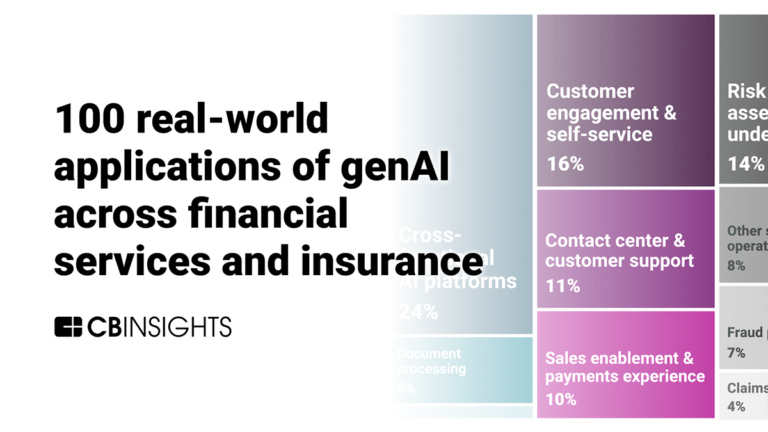
100 real-world applications of genAI across financial services and insurance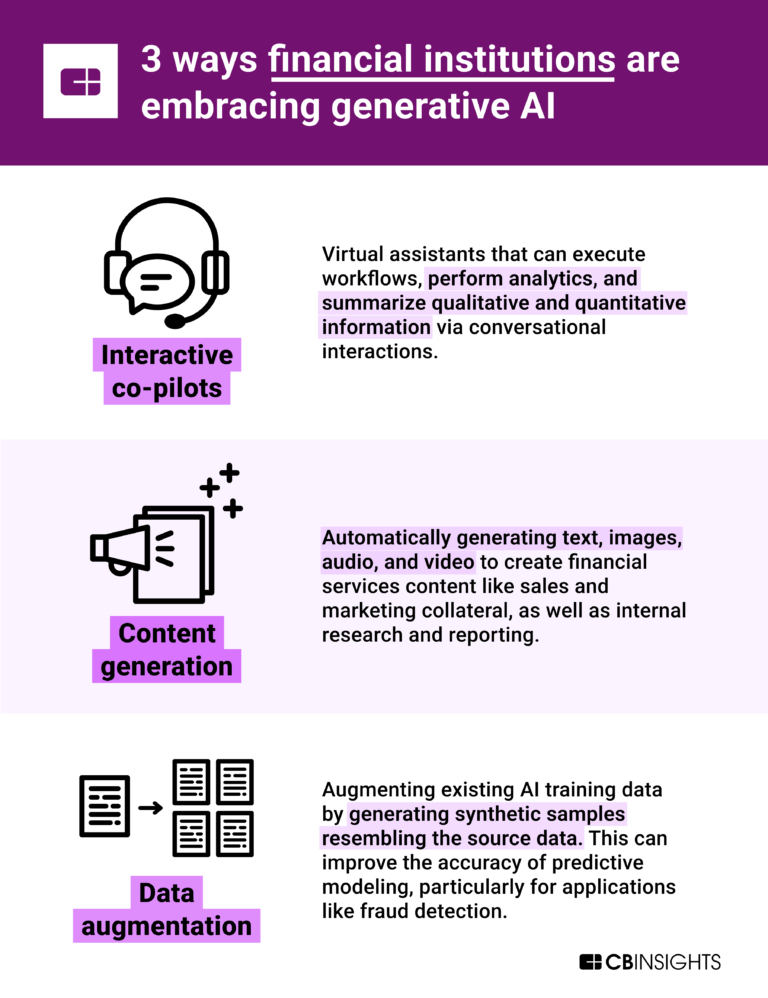


Expert Collections containing Wells Fargo
Expert Collections are analyst-curated lists that highlight the companies you need to know in the most important technology spaces.
Wells Fargo is included in 1 Expert Collection, including Fortune 500 Investor list.
Fortune 500 Investor list
590 items
This is a collection of investors named in the 2019 Fortune 500 list of companies. All CB Insights profiles for active investment arms of a Fortune 500 company are included.
Wells Fargo Patents
Wells Fargo has filed 3534 patents.
The 3 most popular patent topics include:
- payment systems
- banking technology
- data management
Application Date | Grant Date | Title | Related Topics | Status |
|---|---|---|---|---|
8/28/2020 | 4/8/2025 | Grant |
Application Date | 8/28/2020 |
|---|---|
Grant Date | 4/8/2025 |
Title | |
Related Topics | |
Status | Grant |
Latest Wells Fargo News
Oct 28, 2025
Nano, micro GCCs grow at 20% as MNCs focus on R&D By Synopsis Global giants are now setting up nano and micro Global Capability Centres (GCCs) in India, sparked by a surge in innovation and R&D efforts. These nimble, focused units, often backed by private equity, are witnessing an impressive growth rate of 15-20% each year. They represent a smart entry strategy, allowing companies to invest minimally upfront while enjoying maximum adaptability. Nano centres account for 25% of mid-mkt GCCs with teams of less than 50: ANSR data Nano or micro global capability centres (GCCs) are growing at 15-20% annually as innovation and research and development (R&D) take centre stage for several multinationals setting up offshore centres in India. Such smaller GCCs now account for about a fourth of the mid-market GCCs, including private equity (PE)-backed centres with teams of fewer than 50 employees, according to data shared by ANSR, an Accenture-backed GCC enabler and consultancy firm. As of June, the share of nano GCCs stood at about 200 out of 800 GCCs of mid-sized companies. The mid-market segment, which comprises companies with annual revenue of $100 million to $5 billion, has emerged as a sweet spot over the past year, indicating the necessity and flexibility to deliver higher outcomes at similar costs. The overall count of GCCs in India is about 1,800, employing around 1.6 million people. As of March-end 2024, these GCCs generated about $64.6 billion in revenue, which is estimated to touch $100 billion by 2030, according to industry body Nasscom. Nano GCCs are growing faster than the overall GCC segment. Many centres start with 20-50 people and scale up rapidly to 100-plus employees within 12-24 months once value is proven, said Vikram Ahuja, co-founder of ANSR. “There is today the opportunity to create a GCC in less than ten days. And that speed, clarity and simplicity of the model hasn’t existed before. I think that simplicity today is helping companies of all sizes,” Ahuja told ET recently. These are primarily product engineering, artificial intelligence (AI)/machine learning (ML), data analytics and specialised R&D centres with a strategic model that is favoured by mid-market and PE-backed firms to enter India with low upfront investment and high agility, he added. GCCs are in-house back-office and technology centres of multinational companies which traditionally insource the technology services related to IT, human resources and administration work, which most firms outsourced to Indian IT service providers. Starting off as a cost advantage, India has become the GCC capital, housing 17% of global GCCs, and has picked up in scale with value-added services offered over the past couple of years with an added advantage of the technology talent availability at scale. Nano GCCs are compact, specialised centres employing 25–250 people—designed for speed, agility and niche focus—unlike traditional GCCs, which have more than 250 employees that handle diverse, large-scale functions. Nasscom and Zinnov liken nano GCCs to speedboats that adapt quickly, while traditional ones are cruise ships built for scale and endurance. These small offshore units enable firms to access specialised talent, cut costs and boost operational efficiency in targeted domains. Often serving as pilot hubs for future expansion, nano GCCs exemplify a shift toward lean, domain-specific global capability models that prioritise agility over size. Typical GCC set-up timelines have halved. making it easier to establish a 50-member centre in months. Recently, ET reported that one in three mid-market GCCs set up in India in the past three years were built by a PE-backed firm. Nano GCC set-ups reduce capital requirements by 60-70% and deployment timelines to three-six months, enabling mid-sized firms to access specialised expertise in AI, quantum computing and emerging technologies, said Monica Pirgal, CEO of Bhartiya Converge, a smaller GCC enabler. Such centres, however, face 15-25% staff turnover and critical transformation challenges when scaling beyond 300-500 employees, she added. This also reflects in the retrenchment of the workforce by larger traditional GCCs, with the likes of JPMorgan Chase, Wells Fargo and Walmart laying off employees in India to cut costs with the onset of AI-led efficiencies. “The rise of nano GCCs is more than just a trend—it’s a strategic shift. According to industry estimates, demand for nano GCCs is projected to grow by 15-20% by 2025 and further by 25-30% in subsequent years. We’re seeing a strong rise in nano GCCs across India, especially in specialised domains like clinical data management, pharmacovigilance, omnichannel operations,” said Mohit Sood, regional managing principal at consulting firm ZS. Sood said that organisations are realising that they don’t always need to build large, monolithic centres and that focused skill clusters or functional hubs can deliver higher impact and agility. This model allows companies to tap into niche talent pools, often in tier-2 cities, and scale up capabilities faster, he added. Add
Wells Fargo Frequently Asked Questions (FAQ)
When was Wells Fargo founded?
Wells Fargo was founded in 1852.
Where is Wells Fargo's headquarters?
Wells Fargo's headquarters is located at 420 Montgomery Street, San Francisco.
What is Wells Fargo's latest funding round?
Wells Fargo's latest funding round is IPO.
Who are Wells Fargo's competitors?
Competitors of Wells Fargo include Cadence Bank, Fidelity Investments, Credit Suisse, First United Bank, Brown Brothers Harriman and 7 more.
Loading...
Compare Wells Fargo to Competitors
Barclays is a financial services company that provides banking and financial solutions. Its offerings include digital banking services, personal banking, corporate banking, wealth management, and international banking. Barclays provides insurance products, investment services, mortgages, loans, savings accounts, and credit cards. It is based in London, England.
BNP Paribas is a European bank that provides various financial services. The company offers services including loans, financing, savings, investment, protection, and financial market activities. BNP Paribas serves private individuals, businesses, and institutional clients. It is based in Rome, Italy.
TD Bank offers banking services within the retail banking sector. The company provides personal and commercial banking services, including checking and savings accounts, credit cards, loans, and home lending. TD Bank also provides investment and wealth management services to its customers. It was founded in 1852 and is based in Cherry Hill, New Jersey.

Societe Generale is a financial institution that provides banking services. It offers various financial products for individuals, professionals, and businesses, including personal, professional, and corporate banking solutions. It serves different customer segments with specific services for each group. It was founded in 2000 and is based in Algiers, Algeria. It is a subsidiary of Societe Generale Group.

Citibank operates as a financial services company in the banking sector. The company offers a variety of services such as banking, credit cards, mortgage solutions, and personal loans. Citibank serves both individual consumers and businesses with financial products. Citibank was formerly known as City Bank of New York. It was founded in 1812 and is based in New York, New York.

Sumitomo Mitsui Banking provides banking services. The company offers financial products, including corporate banking and personal banking. It was founded in 2001 and is based in Tokyo, Japan.
Loading...