

The Browser Company
Founded Year
2019Stage
Acquired | AcquiredTotal Raised
$103MValuation
$0000About The Browser Company
The Browser Company operates a specialized web browser for internet users. It develops web browsers, specifically Dia and Arc, aimed at improving navigation and interaction with the internet. It was founded in 2019 and is based in New York, New York. In September 2025, The Browser Company was acquired by Atlassian.
Loading...
Loading...
Research containing The Browser Company
Get data-driven expert analysis from the CB Insights Intelligence Unit.
CB Insights Intelligence Analysts have mentioned The Browser Company in 2 CB Insights research briefs, most recently on Oct 30, 2025.
Oct 30, 2025 report
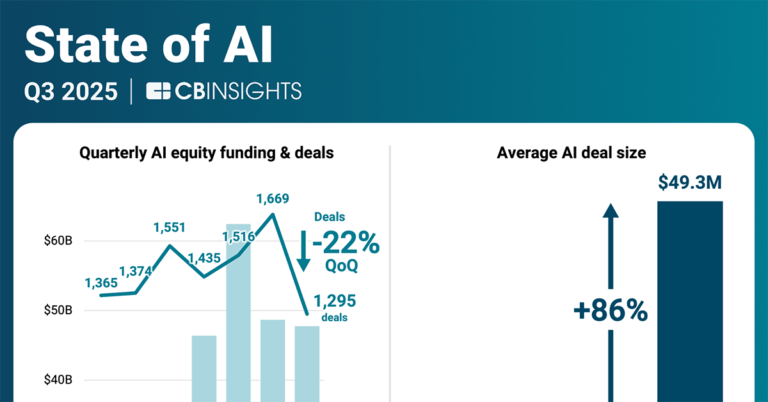
State of AI Q3’25 Report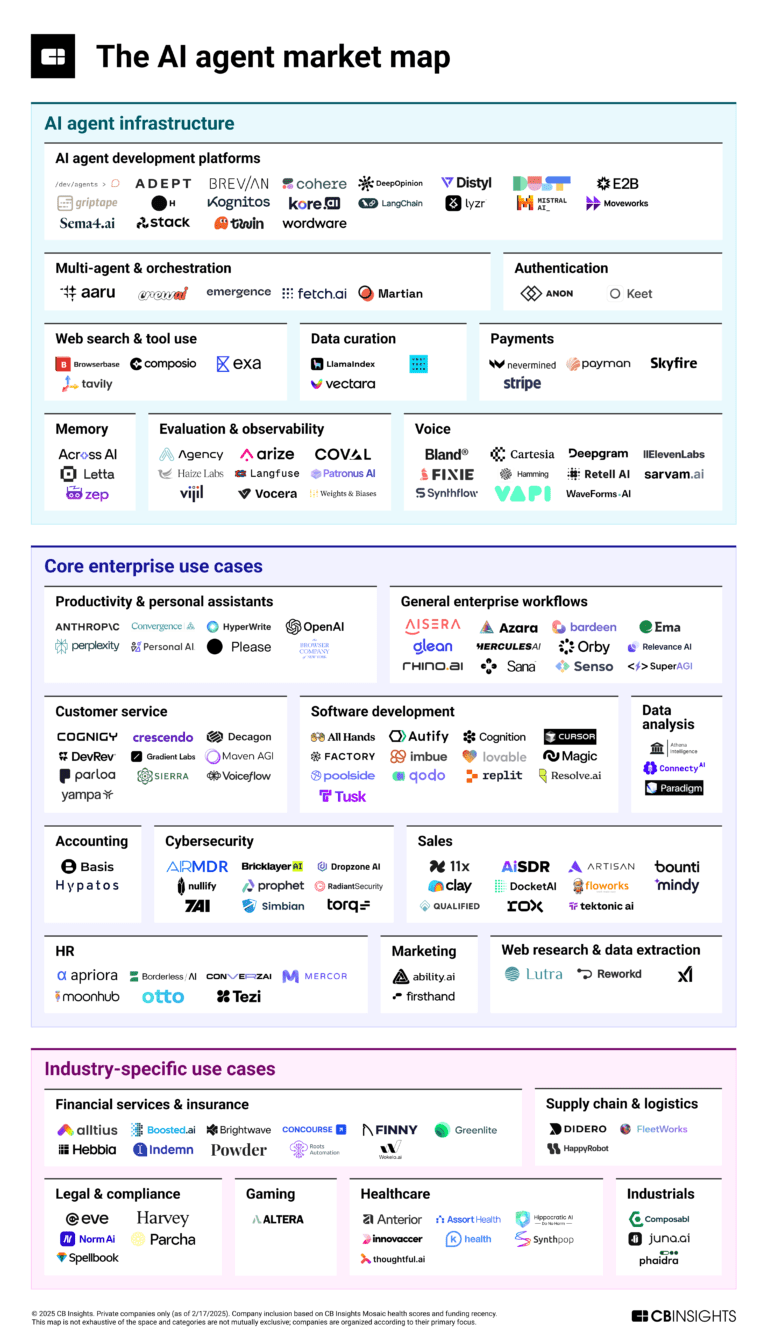
Mar 6, 2025
The AI agent market mapExpert Collections containing The Browser Company
Expert Collections are analyst-curated lists that highlight the companies you need to know in the most important technology spaces.
The Browser Company is included in 3 Expert Collections, including AI agents.
AI agents
376 items
Companies developing AI agent applications and agent-specific infrastructure. Includes pure-play emerging agent startups as well as companies building agent offerings with varying levels of autonomy. Not exhaustive.
Artificial Intelligence (AI)
37,207 items
Companies developing artificial intelligence solutions, including cross-industry applications, industry-specific products, and AI infrastructure solutions.
Generative AI
2,951 items
Companies working on generative AI applications and infrastructure.
Latest The Browser Company News
Oct 31, 2025
Earlier this week, I had AI handle all of my grocery shopping. Using Perplexity's Comet browser , I provided a link to my shopping list on Google Keep, then asked it to put everything in my cart for a Kroger pick-up order, making sure to select previous purchase items when multiple options are available. Within a few minutes, Comet had picked out all the correct items—including the taco shells and fake meat we usually get for taco night—and plopped me onto the check-out page. This kind of scenario explains why so many AI companies are now trying to build their own browsers. Perplexity's Comet and The Browser Company's Dia both became widely available without an invite earlier this month, and OpenAI launched its own ChatGPT Atlas browser for MacOS last week. Opera has started previewing an AI-powered browser called Neon , and Microsoft Edge has an experimental “Copilot Actions” feature that can browse the web on your behalf. These browsers all promise to automate away the mundane aspects of navigating the internet, and there are moments—like when it deals with your grocery list—in which that seems pretty compelling. But these AI browsers also bring some serious security, privacy, and usability trade-offs that make me cautious about using them. This story first appeared in Advisorator , Jared's weekly tech advice newsletter. Sign up to get more tips every Tuesday. What's an AI browser, anyway? Most folks don't think about web browsers all that much, but they're incredibly important pieces of software. Swapping Chrome for a more privacy-oriented browser like Brave or DuckDuckGo, for instance, can sharply reduce how much data companies collect about you online, while power user browsers like Vivaldi can help you deal with tab overload. (See my browser field guide for more details.) AI browsers, meanwhile, aim to take the friction out of using AI. With ChatGPT Atlas, for instance, the default search box leads to ChatGPT instead of Google, and there's an “Ask ChatGPT” button that answers questions about the current page in a chat sidebar. You can also ask for details from your other open tabs or dig up pages from your browsing history. Unless you're constantly using AI, some of this stuff can seem superfluous. Opening ChatGPT or Claude in a browser tab (or using their dedicated mobile and desktop apps) isn't that burdensome, and you can summarize a web page just by including a link in your query. What really makes AI browsers interesting, though, is their ability to interact with your personal context. For instance, I manage all my bookmarks in Raindrop.io . While reviewing my tech news bookmarks in ChatGPT Atlas, I asked for one-line summaries with links to each item, in the style of the weekly roundups in my newsletter . I still had to rewrite each summary, but Atlas at least got me started and saved me time copying and pasting links into the text. This was only possible because Atlas was signed into Raindrop and could see the contents of my bookmark list. More ambitiously, these browsers promise to navigate through web pages automatically. The AI companies call this “agentic” browsing (a term that makes me nauseous for reasons I can't quite articulate). Getting Perplexity Comet to fill up my Kroger cart is one example, but here's another: A couple months ago, I asked Comet to cancel my trial subscription to the airport concierge service Clear. I had already signed to Clear's website, and from there Comet navigated the labyrinthine menu system, initiated a cancellation request, and then handled the mandatory customer support chat on its own. What would have been a five- or 10-minute process took seconds. ( My wife's AI-free cancellation experience went a lot differently I've been down on AI agents before , but I think there's potential when they're built into a browser you're already using and are focused on reducing mindless busywork. advertisement What are the trade-offs? Here's where I get stuck with these AI browsers, though: Most of the time, I don't want to use them and am wary of doing so. Worst of all, these browsers are security minefields. A web page that looks benign to humans can include hidden instructions for AI agents , tricking them into stealing info from other sites—an attack method known as prompt injection. “If you're signed into sensitive accounts like your bank or your email provider in your browser, simply summarizing a Reddit post could result in an attacker being able to steal money or your private data,” Brave's security researchers wrote last week. No one has figured out how to solve this problem If you can look past the security nightmares, the actual browsing features are substandard. Neither ChatGPT Atlas nor Perplexity Comet support vertical tabs—a must-have feature for me—and they have no tab search tool or way to look up recently-closed pages. Atlas also doesn't support saving sites as web apps, selecting multiple tabs (for instance, to close all at once with Cmd+W), or customizing the appearance. Compared to all the fancy new AI features, the web browsing part can feel like an afterthought. Screenshot Regular web search can also be a hassle, even though you'll probably need it sometimes. When I typed “Sichuan Chili” into ChatGPT Atlas, it produced a lengthy description of the Chinese peppers, not the nearby restaurant whose website and number I was looking for. (These browsers should be more like Dia, which intelligently routes queries to either AI or Google based on what you ask for.) Meanwhile, the standard AI annoyances still apply in the browser. Getting Perplexity to fill my grocery cart felt like a triumph, but on other occasions the AI has run into inexplicable walls and only ended up wasting more time. There may be other costs to using these browsers as well. AI still has usage limits, and so all this eventually becomes a ploy to bump more people into paid tiers. Beyond that, Atlas is constantly analyzing the pages you visit to build a “memory” of who you are and what you're into. Do not be surprised if this translates to deeply targeted ads as OpenAI starts looking at ways to monetize free users How I'm handling it For now, I'm only using AI browsers in small doses when I think they can solve a specific problem. Even then, I'm not going sign them into my email, bank accounts, or any other accounts for which a security breach would be catastrophic. It's too bad, because email and calendars are areas where AI agents could be truly useful, but the security risks are too great (and well-documented That said, AI browsers have an air of inevitability now, especially with OpenAI entering the arena. While some browser makers may reject AI on principle— as Vivaldi has done —others like Chrome and Edge will continue borrowing ideas from the likes of Comet and Atlas, pulling them directly into their mainstream browsers. The reality is that you might soon be using an AI browser whether you intended to or not. This story first appeared in Advisorator , Jared's weekly tech advice newsletter. Sign up to get more tips every Tuesday. The early-rate deadline for Fast Company's World Changing Ideas Awards is Friday, November 14, at 11:59 p.m. PT. Apply today. Sign up for our weekly tech digest.
The Browser Company Frequently Asked Questions (FAQ)
When was The Browser Company founded?
The Browser Company was founded in 2019.
Where is The Browser Company's headquarters?
The Browser Company's headquarters is located at 285 North 6th Street, New York.
What is The Browser Company's latest funding round?
The Browser Company's latest funding round is Acquired.
How much did The Browser Company raise?
The Browser Company raised a total of $103M.
Who are the investors of The Browser Company?
Investors of The Browser Company include Atlassian, Pace Capital, Dylan Field, Jason Warner, Akshay Kothari and 11 more.
Who are The Browser Company's competitors?
Competitors of The Browser Company include CloudCruise, Sidekick, Manganum, Autotab, Opera and 7 more.
Loading...
Compare The Browser Company to Competitors
Sidekick is a web browser that focuses on productivity and security. It includes features such as ad and tracker blocking, tab management, and a space that minimizes distractions to support work. Sidekick offers solutions for individuals, teams, and enterprises to optimize workflows and enable collaboration while maintaining privacy. It was founded in 2019 and is based in San Francisco, California.

Stack is a spatial browser designed for online living, operating within the technology and software industry. The company offers a desktop application that consolidates web applications into a single screen, featuring an interface that replaces traditional tabs with cards. Stack's browser includes keyboard-first navigation, support for Chrome extensions, and ad-free browsing. It was founded in 2019 and is based in Utrecht, Netherlands.

Brave Software specializes in privacy-focused digital tools within the web browser and search engine domains. The company offers a web browser that blocks third-party ads and trackers, and an independent search engine that does not profile users. Brave Software also provides a digital ads platform that rewards users with cryptocurrency for their attention, as well as tools like a Virtual private network (VPN) and a wallet for managing digital assets. Brave Software was formerly known as Hyperweb Labs. It was founded in 2015 and is based in San Francisco, California.
Autotab is a general AI agent that automates tasks within the enterprise sector. The company provides services including data collection, form filling, and executing actions based on context, all performed through a local browser environment. Autotab serves Fortune 500 companies and businesses focused on technology. It was founded in 2023 and is based in New York, New York.

eyeo focuses on ad-filtering technology within the advertising sector. The company provides solutions for publishers, advertisers, and users, and serves the advertising, publishing, and retail sectors. It was founded in 2011 and is based in Cologne, Germany.
Bytebot specializes in artificial intelligence (AI)-powered browser automation within the web automation sector. The company offers a software development kit (SDK) that simplifies the creation of web tasks through natural language prompts, translating them into browser automation commands. It was founded in 2021 and is based in San Francisco, California.
Loading...