

Sundial
Founded Year
2021Stage
Series A | AliveTotal Raised
$16MLast Raised
$16M | 1 yr agoMosaic Score The Mosaic Score is an algorithm that measures the overall financial health and market potential of private companies.
-69 points in the past 30 days
About Sundial
Sundial provides data analysis and visualization platform. The company offers a platform that transforms raw data into actionable insights and visualizations without the need for complex coding or data pipelines. It serves businesses to enhance data analytics capabilities with self-serve tools and pre-built analysis templates. It was founded in 2021 and is based in Menlo Park, California.
Loading...
Loading...
Research containing Sundial
Get data-driven expert analysis from the CB Insights Intelligence Unit.
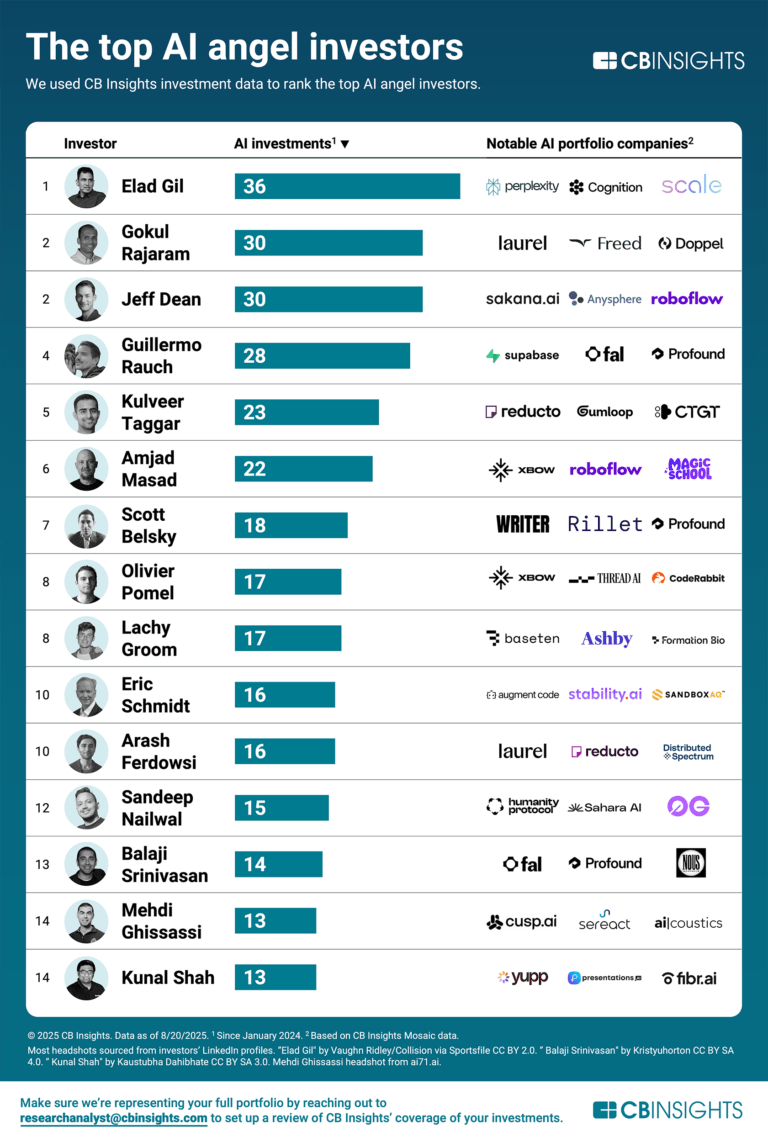
CB Insights Intelligence Analysts have mentioned Sundial in 1 CB Insights research brief, most recently on Aug 22, 2025.
Aug 22, 2025
The top angel investors in AIExpert Collections containing Sundial
Expert Collections are analyst-curated lists that highlight the companies you need to know in the most important technology spaces.
Sundial is included in 1 Expert Collection, including Artificial Intelligence (AI).
Artificial Intelligence (AI)
20,629 items
Latest Sundial News
Sep 23, 2025
Julie Zhuo This story is available exclusively to Business Insider subscribers. Become an Insider and start reading now. Have an account? Log in Some of the hottest AI companies are scaling by "good instincts and good vibes," said a former Facebook VP. Julie Zhuo, now cofounder of AI analytics startup Sundial, said these startups need data as a check. "Data helps you figure out what's actually happening," Zhuo said. Some of the hottest AI companies are scaling by "good instincts and good vibes" without much of a data foundation, a former Facebook vice president said. Julie Zhuo, the former VP of design at Facebook who cofounded the AI analytics startup Sundial, said many startups riding the AI boom have grown at such a breakneck pace that they haven't had time to build proper data infrastructure. "We see companies that are growing insane, and they're still about 10 people or two people," she said. "They've got hundreds of millions in ARR and hundreds of millions of users, and you know what, they don't actually have all of that infrastructure, that logging, to be able to truly do data analysis," she added, speaking of annual recurring revenue. Traditionally, companies didn't hit 100 million users overnight. Slower growth gave teams years to build out logging systems, hire a data team, and develop "observability" — the ability to understand what's actually driving user behavior and revenue, Zhuo said. But Zhuo warned that the growth won't last forever. When the curve flattens, these startups will be "scrambling" to answer basic questions like why users churn, which features people value, and what levers really drive the business, she said. "At that point, that's usually when people start investing a ton in data," she added. "Data helps you figure out what's actually happening." Zhuo also said it's important to rethink how success is measured in the AI era, especially given the speed at which some companies are growing. Products built around chatbots or conversational interfaces need new analytical methods. Instead of counting clicks or page views, "we have to probably use an LLM or a machine learning model to bucket user intent," she said. Zhuo did not respond to a request for comment from Business Insider. Related stories Business Insider tells the innovative stories you want to know Business Insider tells the innovative stories you want to know The boom of AI companies The breakneck pace Zhuo described reflects a broader trend across the industry. AI startups have been raising record amounts of money and soaring in valuations, with more than $35 billion raised in 2024, Business Insider reported last year. A number of investors are concerned that the AI market might be overheating and that we're at risk of reliving the dot-com bubble burst in 2000. Some are wondering whether large language models are actually powerful enough to develop the long-desired superintelligence; some fear tech companies' massive expenditures won't pay off; and some are worried that less experienced investors are getting caught up in the hype. OpenAI CEO Sam Altman said last month that it's "insane" and "not rational" that some tiny AI startups are getting funding at high valuations. "Are we in a phase where investors as a whole are overexcited about AI? My opinion is yes," he told reporters , per The Verge. "Is AI the most important thing to happen in a very long time? My opinion is also yes." Read next
Sundial Frequently Asked Questions (FAQ)
When was Sundial founded?
Sundial was founded in 2021.
Where is Sundial's headquarters?
Sundial's headquarters is located at 700 El Camino Real, Menlo Park.
What is Sundial's latest funding round?
Sundial's latest funding round is Series A.
How much did Sundial raise?
Sundial raised a total of $16M.
Who are the investors of Sundial?
Investors of Sundial include Tribe Capital, Javier Olivan, Drew Houston, Slow Ventures, Tobias Lutke and 22 more.
Who are Sundial's competitors?
Competitors of Sundial include Sigma Computing and 7 more.
Loading...
Compare Sundial to Competitors
Synctactic.ai is a platform focused on artificial intelligence and machine learning in the data science and DevOps sectors. The company offers services that integrate various data sources, deploy pipelines, automate data pipelines, and integrate machine learning for continuous optimization. It primarily caters to businesses needing data management and machine learning solutions. It is based in Bangalore, India.

Plotly specializes in app development and data visualization within the technology sector. The company offers a platform for building, scaling, and deploying data apps in Python and maintains open-source graphing libraries that enable interactive data visualization in web browsers. Plotly's solutions are primarily utilized by data science teams to integrate complex Python analytics into business operations for real-time data sharing and decision-making. It was founded in 2013 and is based in Montreal, Canada.

GoodData works in data intelligence and business intelligence within the technology sector. Their platform includes analytics, conversational analytics, and embedded analytics, which can be integrated into applications, offering users dashboards and data visualization tools. GoodData's services are applicable to various industries, including software, healthcare, finance, and e-commerce. It was founded in 2007 and is based in San Francisco, California.

Tableau specializes in business intelligence and analytics. The company offers a platform that allows users to connect to various databases, create visualizations, and share insights, making data more understandable and actionable. It primarily serves the business intelligence and data analytics industry. It was founded in 2003 and is based in Seattle, Washington.
DataCater is a developer-friendly ETL platform focusing on real-time data transformation within the data and development sectors. The company offers a platform for building and managing streaming data pipelines, with features such as no-code transformations, custom Python scripting, and integration with Apache Kafka. DataCater primarily serves data engineers and development teams looking to streamline their data pipeline processes. It was founded in 2020 and is based in Schoneck, Germany.
Enso Analytics operates as a data preparation platform that focuses on workflow-based analytics within the data analytics industry. The company provides a no-code canvas for team collaboration, which includes cross-platform support, built-in scheduling, granular version history, and encrypted secrets management, aimed at facilitating data preparation. Enso Analytics serves sectors that require data analytics and preparation tools. It was founded in 2015 and is based in Wilmington, Delaware.
Loading...