

Skyline Partners
Founded Year
2017Stage
Seed VC | AliveTotal Raised
$1.75MLast Raised
$1.75M | 3 yrs agoMosaic Score The Mosaic Score is an algorithm that measures the overall financial health and market potential of private companies.
-127 points in the past 30 days
About Skyline Partners
Skyline Partners specializes in providing custom-crafted, data-driven insurance products for various sectors. The company offers services such as data sourcing, policy design, calculation services, underwriting management, and claims notification and management, focusing on transforming data streams into transparent, reactive protection. Skyline Partners primarily serves re/insurers, brokers, underwriting and distribution agents, affinity partners, and government agencies. It was founded in 2017 and is based in London, United Kingdom.
Loading...
Skyline Partners's Product Videos

Skyline Partners's Products & Differentiators
Tropical Cyclones
frequency and intensity of hurricanes typhoons peril increase in the context of climate change
Loading...
Research containing Skyline Partners
Get data-driven expert analysis from the CB Insights Intelligence Unit.
CB Insights Intelligence Analysts have mentioned Skyline Partners in 1 CB Insights research brief, most recently on Mar 1, 2024.
Mar 1, 2024
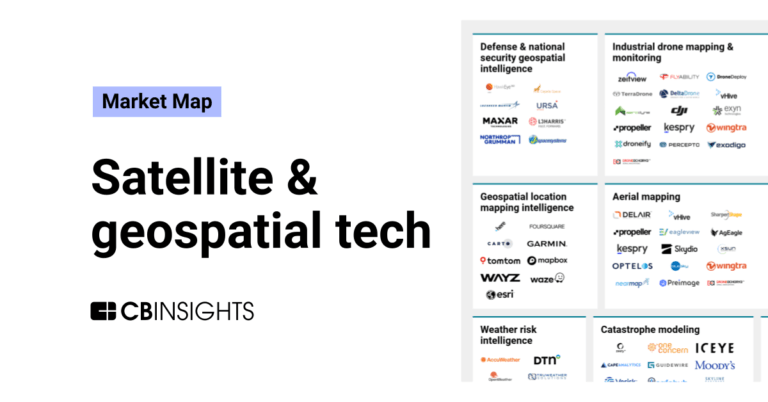
The satellite & geospatial tech market mapExpert Collections containing Skyline Partners
Expert Collections are analyst-curated lists that highlight the companies you need to know in the most important technology spaces.
Skyline Partners is included in 1 Expert Collection, including Insurtech.
Insurtech
4,636 items
Companies and startups that use technology to improve core and ancillary insurance operations. Companies in this collection are creating new product architectures, improving underwriting models, accelerating claims and creating a better customer experience
Latest Skyline Partners News
Jul 2, 2025
Print this Article Construction worker Everson Ferrari drank water while working on replacing water pipes in Boston during intense heat on June 24.David L Ryan/ Globe Staff When a hurricane or a wildfire strikes, the economic damage is usually very visible — roofs are ripped off or charred homes line roads. Heat waves cause financial damage, too, but it’s more diffuse: Farm crops might wither, construction workers pause, or data centers sputter out, forcing customers offline. Climate risk models, which are widely used in the insurance industry, can estimate the likelihood that fires or floods will affect a specific place in the United States, even down to the address level, and how much damage that would wreak. So far, the models don’t typically make detailed projections for extreme heat. For one thing, heat is less of a threat to real estate than it is to health, energy infrastructure, and the food supply. But cities, businesses, and insurers need the financial risks to be outlined more clearly, and some believe a new market for heat insurance — driven in part by artificial intelligence and the need to cool data centers — is around the corner. Get Starting Point Advertisement The property information firm Cotality, previously known as CoreLogic, recently started offering heat-hazard modeling on its widely used risk-analysis platform. And Mercer, a unit of Marsh & McLennan Cos Inc., in May launched a climate health cost forecaster tool evaluating how extreme heat and other risks could impact companies’ health insurance costs. It draws on historical incidence data, medical claim codes associated with climate events, and published research. “The health cost is but one of many,” said Tracy Watts, Mercer’s US leader for health care policy. “You’ve got increased workers’ compensation cost, disability issues, life insurance, absentee issues.” Advertisement These newer tools follow the emergence of hedging instruments like weather derivatives, forward contracts, and parametric insurance. Using a forward contract, for example, a utility might agree to buy extra electricity from a producer at a certain price for the summer. If temperatures stay low, they lose; if they soar, they win. Parametric insurance pays out only if predetermined physical criteria are reached — say, temperatures above 95 degrees Fahrenheit for five days running. “I think when we look more closely at extreme heat,” said Garrett Bradford, a principal at Milliman Inc., an actuarial and management consulting firm, “we will find the risk often isn’t taken sufficiently into account” in insurance, “and the downside of a major heat event is potentially significant.” Last year was the hottest ever recorded, and the United States has experienced deadly heat waves this decade such as the 2021 heat dome in the Pacific Northwest that killed hundreds of people. Heat waves in US cities have become more frequent and the heat season has gotten longer, according to the US Environmental Protection Agency. As doctors and public officials tackle the rise in dangerous health effects, there are early efforts to assess heat’s financial toll. In California alone, the state found in a study published last year that seven extreme events over a 10-year period from 2013 to 2022 caused $7.7 billion in economic harm, including $44 million in lost milk production from a single 2017 heat wave in the Central Valley. (Cows produce less milk in very hot conditions.) One challenge for predicting a heat wave’s impacts, said Anand Srinivasan, a Cotality executive who develops climate change-related products, is that heat damage is relatively complex to model. Many different variables determine its impact. For starters: How long does the heat wave last? Is it dry or wet heat? Does it cool down at night? And the risks are industry-specific. A business with an outdoor workforce has much more to worry about than one whose employees have air conditioning. Advertisement As of last year, Cotality models not just “acute” perils like wildfires and floods but also “chronic” ones: extreme heat, drought, cold waves, and extreme precipitation. The first edition of its chronic-peril modeling tool offers risk indices for heat down to an address level but doesn’t estimate the monetary impact of a heat event. “What we can do is provide the analytics and data for people,” Srinivasan said. “That way, a typical [company] risk manager would say, ‘OK, do I keep my office open during this heat wave? What kind of extra support do I need to provide to my personnel?’” Srinivasan said he expects modeling of heat waves’ financial consequences, industry by industry, will follow eventually. The data firm Skyline Partners, which has offices in Colorado and the UK, has developed metrics for a custom parametric insurance policy covering dairy cows stressed by heat. Laurent Sabatié, Skyline’s cofounder and executive director, said figuring it out required a “substantial amount of analysis.” Wildfire and hurricane models have been “commoditized” to a certain extent, he said, but heat prediction is still “bespoke” since it is industry-specific as much as place-based. In the past, insurance companies have sometimes perceived changes in climate risk too late and ended up paying out dearly after outsized events. Two examples are Hurricane Andrew in Florida in 1992 and Northern California’s Camp Fire in 2018. In both cases, insurers sustained losses far outside the expected parameters; each disaster led to investments in far more accurate modeling of hurricanes and wildfires, respectively (and then in higher premiums for customers). Advertisement The technology to run a full hazard analysis on heat for any industry or city is there, said Cole Mayer, who runs parametric products for Aon Plc, a risk management firm. But clients’ appetite to pay for more insurance is still limited. “There’s a risk perception evolution that needs to happen,” Mayer said. AI and crypto, with their dependence on heat-sensitive data centers, may propel the growth of the market, he adds: “These are exposures that didn’t exist to the same extent 10 years ago.” Dave Bigelow, a climate risk adviser for Aon, thinks time alone will do it. “We’ve got hundreds of years of records of floods and hurricanes and acute perils,” he notes. “But for heat, we’re just starting to see it” in the data. Follow Us
Skyline Partners Frequently Asked Questions (FAQ)
When was Skyline Partners founded?
Skyline Partners was founded in 2017.
Where is Skyline Partners's headquarters?
Skyline Partners's headquarters is located at 32 Threadneedle Street, London.
What is Skyline Partners's latest funding round?
Skyline Partners's latest funding round is Seed VC.
How much did Skyline Partners raise?
Skyline Partners raised a total of $1.75M.
Who are the investors of Skyline Partners?
Investors of Skyline Partners include West Hill Capital, Lloyd's Lab and OneAdvent.
Who are Skyline Partners's competitors?
Competitors of Skyline Partners include Descartes Underwriting and 7 more.
What products does Skyline Partners offer?
Skyline Partners's products include Tropical Cyclones and 3 more.
Loading...
Compare Skyline Partners to Competitors

Kettle provides insurance and reinsurance products for property owners facing risks from catastrophic climate events. Their products include commercial property insurance and parametric reinsurance for wildfires and hurricanes. Kettle serves sectors that require risk management due to environmental challenges, such as resorts, homeowners associations, and high-value properties. It was founded in 2020 and is based in Hamilton, Bermuda.
15Rock provides investment research and capital planning within the financial services sector. The company offers a platform that monitors and analyzes climate and sustainability risks for investment portfolios, using artificial intelligence to process data into usable information. 15Rock serves asset managers, pension funds, and corporate strategists with services that include market monitoring, capital planning, and risk assessment. It was founded in 2019 and is based in Toronto, Canada.

Arbol is a FinTech company that focuses on climate risk management through parametric insurance solutions. The company offers a platform that provides insurance coverage based on data triggers, using artificial intelligence for underwriting and blockchain technology for operational efficiency. Arbol serves sectors such as agriculture, energy, and travel, providing insurance and derivatives solutions to address climate-related risks. It was founded in 2018 and is based in New York, New York.

Balbix operates in the cybersecurity domain, focusing on cyber risk and exposure management. The company provides a platform that assesses cyber risk, manages attack surfaces, and identifies vulnerabilities. Balbix serves sectors including finance, manufacturing, telecommunications, energy, utilities, and healthcare. It was founded in 2015 and is based in San Jose, California.

Trifacta develops data-wrangling software for data exploration and self-service data preparation for analysis. It offers flexibility to connect data from any source to any application, thereby enabling users to evaluate, correct, and validate data quality, accelerate data transformation, and automate data pipelines. The company serves the financial sector, telecommunication sector, life science sector, and more. It was founded in 2012 and is based in San Fransico, California. In January 2022, Trifacta was acquired by Alteryx.

C2SEC specializes in cybersecurity management and operates within the technology sector. Their primary offering is the Extended Security Posture Management (XSPM) platform, a cloud-based solution that provides visibility and control over an organization's cybersecurity landscape. The platform includes features such as external attack surface management, cloud and SaaS posture management, and supply chain security. It was founded in 2016 and is based in Beijing, Beijing.
Loading...