

Pomelo Care
Founded Year
2021Stage
Series B | AliveTotal Raised
$79.04MLast Raised
$46M | 1 yr agoMosaic Score The Mosaic Score is an algorithm that measures the overall financial health and market potential of private companies.
-1 points in the past 30 days
About Pomelo Care
Pomelo Care is a virtual medical practice focused on maternity and women's health. The company provides access to a care team that offers support and care plans for individuals before, during, and after pregnancy. Pomelo Care serves patients through partnerships with health plans, employers, and labor unions. It was founded in 2021 and is based in New York, New York.
Loading...
Pomelo Care's Product Videos
ESPs containing Pomelo Care
The ESP matrix leverages data and analyst insight to identify and rank leading companies in a given technology landscape.
The virtual & hybrid women's health care market leverages virtual and hybrid models to provide women's health services across multiple specialties. These models incorporate digital technologies and telemedicine solutions to enhance accessibility, convenience, and overall healthcare experiences for women. Key features include telehealth services, mobile health apps, remote monitoring devices, onlin…
Pomelo Care named as Challenger among 15 other companies, including Maven, Hims, and Midi.
Loading...
Research containing Pomelo Care
Get data-driven expert analysis from the CB Insights Intelligence Unit.
CB Insights Intelligence Analysts have mentioned Pomelo Care in 2 CB Insights research briefs, most recently on Dec 3, 2024.
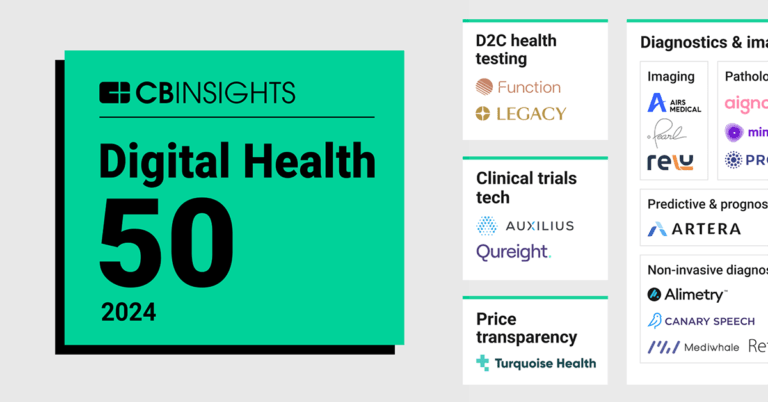
Dec 3, 2024 report
Digital Health 50: The most promising digital health startups of 2024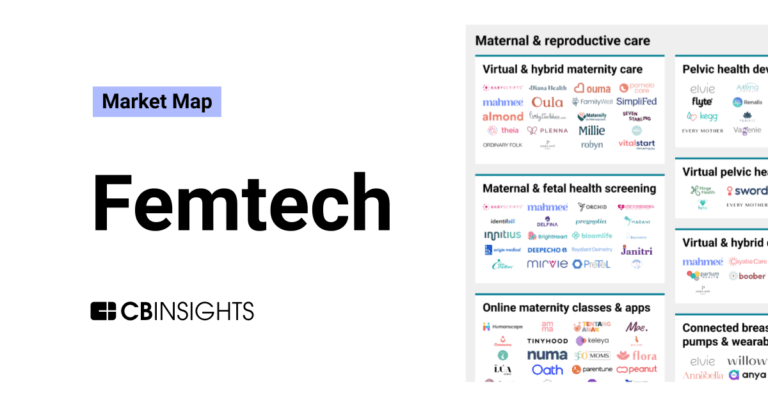
Mar 28, 2024
The femtech market mapExpert Collections containing Pomelo Care
Expert Collections are analyst-curated lists that highlight the companies you need to know in the most important technology spaces.
Pomelo Care is included in 4 Expert Collections, including Digital Health.
Digital Health
12,122 items
The digital health collection includes vendors developing software, platforms, sensor & robotic hardware, health data infrastructure, and tech-enabled services in healthcare. The list excludes pureplay pharma/biopharma, sequencing instruments, gene editing, and assistive tech.
Women's Health Tech
713 items
This collection includes companies applying technology to address a spectrum of physical, mental, and social well-being concerns specific to women. Examples include companies in reproductive health, maternal care, fertility tracking, and menopause support.
Telehealth
3,123 items
Companies developing, offering, or using electronic and telecommunication technologies to facilitate the delivery of health & wellness services from a distance. *Columns updated as regularly as possible; priority given to companies with the most and/or most recent funding.
Digital Health 50
50 items
Latest Pomelo Care News
Aug 20, 2025
To embed, copy and paste the code into your website or blog: <iframe frameborder="1" height="620" scrolling="auto" src="//www.jdsupra.com/post/contentViewerEmbed.aspx?fid=61a50a6a-1f23-49d7-8522-a77cde7a2cb6" style="border: 2px solid #ccc; overflow-x:hidden !important; overflow:hidden;" width="100%"></iframe> For years, women’s health was often siloed into OB/GYN care and absent from mainstream investment theses, but that landscape is changing. New platforms and care models are addressing women’s health in a more comprehensive manner. From fertility and reproductive health to maternal health, postpartum care, menopause, wellness and beyond, women’s health sectors draw increased investor interest driven by changing demographics, rising consumer expectations, developing reimbursement models and growing demand from employers and payers. The numbers tell a compelling story. McKinsey estimates that by 2040, investments addressing the women’s health gap could add years to women’s lives while boosting the global economy by $1 trillion. These verticals offer mission-driven impact and attractive financial returns. This alert is the first of a series exploring the verticals of women’s health, providing a high-level snapshot into key subsectors investors should consider. Maternal Health Maternal health remains a critical and evolving frontier within women’s health, marked by persistent challenges and emerging opportunities for innovation and investment. Despite advances in medical technology and increased awareness, the United States faces disparities in maternal outcomes and has the highest maternal mortality rate among developed nations. This stark reality underscores the market’s need for scalable solutions, and the fragmented maternal health sector presents a compelling opportunity for providers, payers and investors to drive patient-centric impact and financial returns. Solutions that integrate medical, behavioral and social care while leveraging technology for scalability, such as Pomelo Care and Poppy Seed Health, are well-positioned for growth. Payers increasingly see the incentive to reduce preventable maternal morbidity and mortality, and employers seek comprehensive maternity benefits to attract and retain talent. As value-based care models expand, platforms that demonstrate improved outcomes and cost savings will be attractive. However, as maternal health solutions increasingly incorporate data analytics and AI, attention to data privacy, informed consent and algorithmic bias will be critical to building trust and ensuring equitable care. Fertility and Reproductive Health While the fertility and reproductive health sector has matured, it remains full of opportunity and white space for modernization and investment. The average age of first-time mothers in the United States is 30, up from 27 in 1990, and the Centers for Disease Control and Prevention estimates that 13.4% of women experience infertility. Employers are expanding benefits coverage to infertility treatments, partnering with companies such as Progyny, with surveys showing that nearly 40% of large employers offer fertility benefits. Employers’ expansion of fertility benefits fuels investor interest, with large investments in integrated fertility and women’s health platforms. With the proliferation of high-margin elective procedures and adjacent services such as egg freezing, genetic testing and donor coordination, fertility remains a prime target for innovation. Postpartum Care U.S. healthcare has long neglected the postpartum period, defined as the first 12 weeks after birth. Approximately one in eight women experience postpartum depression, yet most go unscreened and untreated. Medicaid covers nearly 40% of U.S. births — the equivalent of nearly 1.5 million births in 2023 alone. Postpartum coverage often lapses quickly, but this may no longer be the norm as the vast majority of states have extended postpartum Medicaid coverage to 12 months. Investors notice these changes. For example, startups such as Mahmee, backed by Serena Williams and Mark Cuban, Partum Health and Almavie Postpartum Care are bridging the gap with tech-enabled platforms that offer nurse triage, lactation consulting, doula care, home care, behavioral health and more. These solutions appeal to payers and health systems aiming to reduce maternal morbidity and hospital readmissions. As Medicaid policy evolves, platforms with strong care coordination and virtual capabilities are well-positioned for growth. Lactation Support The American Academy of Pediatrics recommends breastfeeding for at least the first six months of an infant’s life; however, 50% of mothers stop earlier than planned, often due to a lack of individualized assistance. Clinical lactation services are not widely available, and insurance reimbursement is inconsistent, but, access is improving. CMS and many commercial payers recognize International Board of Certified Lactation Consultant services as reimbursable preventive care. Companies such as Nest Collaborative, who recently raised $6 million in funding to scale operations and deepen payer integration, use telehealth to provide on-demand lactation support and are gaining traction with employers and health plans. These platforms offer scalable access to clinicians and help reduce neonatal complications, making them attractive to investors. Menopause and Midlife Health Every day, approximately 6,000 women reach menopause in the United States. Menopause is linked to higher risks of osteoporosis, cardiovascular disease and mood disorders, yet fewer than 20% of OB/GYN physicians receive formal menopause training, leaving many women underserved and in need of medical services. As awareness about the health risks associated with menopause grows, so will the need for innovations and services. Forecasters project that the global menopause market will reach $24 billion by 2030. Direct-to-consumer platforms such as Midi Health, Elektra Health and Rosy, a platform formed to support women through menopause and midlife with evidence-based education, mental health tools and sexual wellness resources, are stepping in, offering healthcare services tailored to midlife women. Certain of these models appeal to health plans by focusing on chronic condition management — key drivers of healthcare costs. Virtual Women’s Health Platforms Virtual-first care now is mainstream, and women are leading its adoption. Women are more likely than men to use digital health solutions, and platforms tailored to their needs are seeing high engagement. Companies such as Tia (and others mentioned above) combine OB/GYN, primary care and mental health, reshaping how women access care. Maven Clinic, the first female-focused health unicorn, partners with major employers to deliver fertility, maternity and menopause care. Their B2B2C model offers long-term contract value, high renewal rates and scalability with low fixed costs. Wellness, Aesthetics and Preventive Care The intersection of wellness, aesthetics and preventive care opens new investment opportunities, especially in cash-pay services such as weight management (including GLP-1s), hormone optimization, pelvic floor therapy and medical aesthetics. U.S. medical aesthetics alone surpassed $15 billion in 2023, with women accounting for over 90% of the demand. More and more brands are blending medical care with wellness services, often marketed directly to consumers or through concierge models. Investors are drawn to these models for their high margins, strong brand loyalty and cross-sell potential. Medspa roll-ups and functional medicine groups also are building scalable, multisite platforms in affluent urban markets, offering margin-rich revenue and deep patient engagement. The Investment Outlook Women’s health is no longer a niche; it’s a core pillar of diversified healthcare investment strategies. What sets these subsectors apart is the combination of strong unit economics, fragmented markets, loyal consumer demand, and growing alignment with public policy and employer priorities. Payers increasingly see the financial incentive of reducing maternal morbidity, preventing chronic disease and integrating behavioral health, areas in which women’s health solutions excel. Investors who understand lifecycle care, payer dynamics and patient acquisition are well-positioned to build category-defining platforms. Whether through new models, acquisitions or tech-enabled legacy practices, the opportunity to modernize women’s health is significant and overdue.
Pomelo Care Frequently Asked Questions (FAQ)
When was Pomelo Care founded?
Pomelo Care was founded in 2021.
Where is Pomelo Care's headquarters?
Pomelo Care's headquarters is located at 169 Madison Avenue, New York.
What is Pomelo Care's latest funding round?
Pomelo Care's latest funding round is Series B.
How much did Pomelo Care raise?
Pomelo Care raised a total of $79.04M.
Who are the investors of Pomelo Care?
Investors of Pomelo Care include First Round Capital, SV Angel, BoxGroup, Andreessen Horowitz, Operator Partners and 8 more.
Who are Pomelo Care's competitors?
Competitors of Pomelo Care include ProgenyHealth and 4 more.
Loading...
Compare Pomelo Care to Competitors

Babyscripts focuses on improving maternal health outcomes through technology and operates within the healthcare sector. The company offers a risk detection program that includes remote patient monitoring, perinatal education, and mental health assessments to support expectant and new mothers. Babyscripts primarily serves healthcare providers, including hospitals, physicians, midwives, birth centers, and health plans, with virtual tools designed to enhance patient care and outcomes in maternity care. It was founded in 2014 and is based in Washington, District of Columbia.
NeoPredics specializes in clinical decision support powered by predictive analytics, focusing on the healthcare sector. The company offers software solutions for predicting health risks in maternal and neonatal care, facilitating intervention and personalized medicine. NeoPredics primarily serves the healthcare industry, aiming to enhance patient outcomes and lower costs for hospitals and families. It was founded in 2020 and is based in Regensburg, Germany.
Kinhub is a people performance platform that focuses on employee well-being and team cohesion within the corporate sector. The company provides coaching and training on mental health, neurodiversity, menopause, and other relevant topics to support employees and address HR issues. Kinhub serves the human resources and corporate wellness sectors, offering tools aimed at increasing engagement and productivity in the workplace. Kinhub was formerly known as Kami. It was founded in 2019 and is based in London, England.
Villyge is a company that focuses on human-centric leadership and emotional intelligence within the management sector. The company provides services that facilitate open communication between managers and employees, offer nudges for managers to support their team's personal challenges, and aim to create a productive and empathetic environment. Villyge primarily serves the human resources and organizational development sectors, with the goal of improving workplace relationships, increasing employee retention, and managing risks associated with employee management. It was founded in 2021 and is based in Roslyn, New York.

Natural Cycles operates as a health technology company providing a digital method of birth control within the women's health sector. The company offers an app-based solution that utilizes an algorithm to detect and predict ovulation and fertility, serving as an alternative to hormonal contraceptives. Natural Cycles targets individuals who want to understand and manage their reproductive health. It was founded in 2013 and is based in Stockholm, Sweden.

Family First provides guidance and resources in the areas of parenting, marriage, and family relationships. Its main offerings include the All Pro Dad program, which helps fathers become more involved in their children's lives, and the Family Minute with Mark Merrill, a daily radio feature offering advice on family matters. Family First also offers the iMOM program, which provides information for mothers to impact their children positively. Family First was formerly known as VillagePlan. It was founded in 1988 and is based in Spokane, Washington.
Loading...