

PhotoRoom
Founded Year
2019Stage
Series B | AliveTotal Raised
$63.33MValuation
$0000Last Raised
$43M | 2 yrs agoRevenue
$0000Mosaic Score The Mosaic Score is an algorithm that measures the overall financial health and market potential of private companies.
-30 points in the past 30 days
About PhotoRoom
Photoroom provides AI-powered photo editing tools for the visual content creation industry. The company offers services including background removal, retouching, and background generation, focusing on product and portrait photography. Photoroom's tools assist in creating images for applications such as e-commerce, social media, and marketing campaigns. It was founded in 2019 and is based in Paris, France.
Loading...
PhotoRoom's Product Videos


ESPs containing PhotoRoom
The ESP matrix leverages data and analyst insight to identify and rank leading companies in a given technology landscape.
The generative AI — photo & video tools market provides software that uses machine learning algorithms to automate and enhance image and video creation and editing. Companies in this market offer solutions that automatically generate visual content, enhance image quality, restore details, remove backgrounds, correct colors, and process media significantly faster than traditional methods. These too…
PhotoRoom named as Leader among 15 other companies, including Canva, Synthesia, and Stability AI.
PhotoRoom's Products & Differentiators
Remove Background
PhotoRoom uses AI to automatically delete the background from your photo, allowing you to easily customize and edit your images.
Loading...
Research containing PhotoRoom
Get data-driven expert analysis from the CB Insights Intelligence Unit.
CB Insights Intelligence Analysts have mentioned PhotoRoom in 4 CB Insights research briefs, most recently on Oct 17, 2024.
Oct 17, 2024
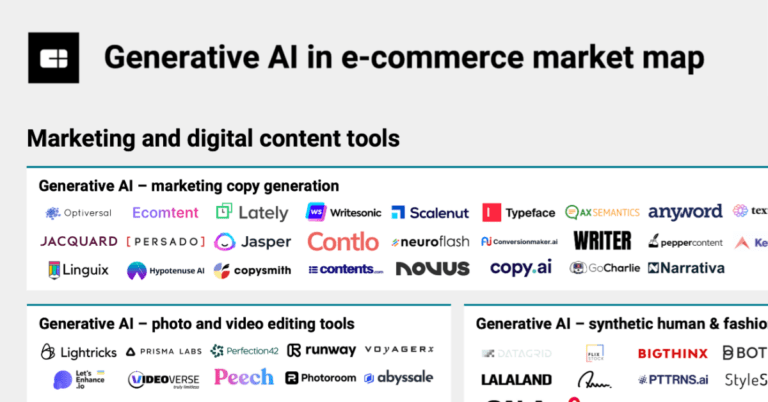
The generative AI for e-commerce market map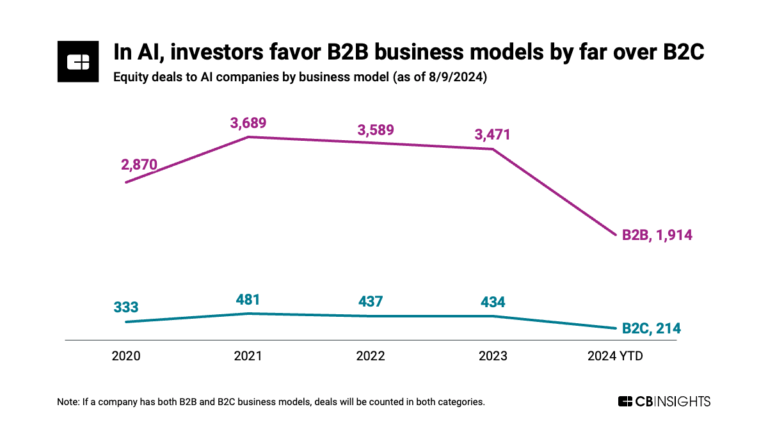
Expert Collections containing PhotoRoom
Expert Collections are analyst-curated lists that highlight the companies you need to know in the most important technology spaces.
PhotoRoom is included in 3 Expert Collections, including Artificial Intelligence (AI).
Artificial Intelligence (AI)
16,578 items
Companies developing artificial intelligence solutions, including cross-industry applications, industry-specific products, and AI infrastructure solutions.
Digital Content & Synthetic Media
1,771 items
The Digital Content collection includes companies that use technology to create, manage, and distribute digital content under all forms, including images, videos, audio, and text, among others.
Generative AI
2,951 items
Companies working on generative AI applications and infrastructure.
Latest PhotoRoom News
Oct 31, 2025
ZeeOctober 31, 2025 AI may be one of the main forces behind modern progress for the tech world, but it is also becoming one of the hungriest users of electricity and water. NTT DATA’s new white paper, Sustainable AI for a Greener Tomorrow, says AI workloads could make up over 50% of all data centre power use by 2028. Cooling systems also demand huge amounts of water, while producing hardware depends on rare earth minerals that leave behind pollution and waste. David Costa, who leads Sustainability Innovation at NTT DATA, said that AI’s fast expansion has serious environmental consequences. But he added that the same technology could also manage power grids, model climate risks and improve water use if it is built with efficiency at its core. The report says sustainability needs to be part of AI design from the very start, not added later. That means tracking electricity, carbon and water use with shared tools such as the AI Energy Score and the Software Carbon Intensity system. The paper also calls for “lifecycle thinking”, which is designing hardware to last longer, using recyclable parts and reducing e-waste through refurbishment. NTT DATA says the responsibility cannot sit with one group. Hardware makers, data centre operators, cloud providers and users all need to rethink how AI systems are built and maintained. Running AI tasks when renewable energy is available, refurbishing old equipment and using modular components are all small steps that could make AI cleaner and less wasteful. Costa said that sustainability should no longer compete with performance targets. “Efficiency must be treated as a design principle,” he said, “because technology cannot thrive on a damaged planet.” More experts have shared how startups in the uK in particular can ensure sustainable AI… “UK startups have a major problem with operational sustainability. Too many brilliant ideas are buried under procedural clutter. Most teams adopt AI reactively, chasing quick wins without thinking about integration or long-term business growth. The result is fragmented systems, duplicated costs, and no clear understanding of where data flows or what’s actually driving value. Sustainable AI adoption isn’t about using less tech, it’s about using it wisely, with clarity, accountability, and intention. Here’s how founders can set themselves up for success. “Map out all of the software tools in use across your organisation – then regularly review your AI stack to remove duplication and complexity. A small number of well-integrated tools will almost always outperform a pile of disconnected experiments. “Know your purpose. Every AI tool should have a clear reason to exist: team members should know exactly what problem it solves and what outcome you expect. If you can’t define that in a sentence, it’s probably not worth adopting. “Give each AI system a clear owner responsible for maintaining it, measuring impact, and ensuring it integrates properly with the rest of your workflow. “Build for the long term. Treat AI as part of your operational backbone, not a side project. Sustainable growth comes from continuous iteration, not from chasing the newest tool.” “Sustainable AI use for UK start-ups is not about your carbon footprint; it’s about discipline and integration. True sustainability is achieved when building tools and tech solutions that are transparent, data-efficient and that actually solve a legitimate problem. We see too many start-ups bolt-on AI as a shiny new feature to ensure they aren’t left behind but fail to make it part of their core infrastructure; this is unsustainable. Bolt-on’s are easily recognisable as unsustainable AI practice. “To benefit from AI properly, it should be crucial to the success of their business, not an optional extra. Sustainable AI use will be seen in companies using it to truly improve their business, by increasing automation, improving accuracy and accelerating operations, while also reducing waste. We see it in more complex markets, like global trade or B2B procurement, where AI becomes essential precisely because of the value it creates, improving efficiency, trust and long-term resilience.” “At JoinDig, we see first-hand how AI can transform consumption. By connecting shoppers to both new and pre-loved products, we extend product lifecycles and reduce the carbon footprint of manufacturing. “Sustainable choices should be convenient. By using machine learning to aggregate and analyse millions of listings, AI makes it easier for consumers to find the best-value, eco-friendly options instantly. “UK startups like ours are proving that AI can do more than optimise ads. It can underpin smarter, circular economies where conscious shopping becomes the default. “AI is helping to remove the barriers eco-conscious shoppers face: lack of transparency, time-consuming searches, and uncertainty about quality or authenticity. “By embedding sustainability into technology, UK startups can show that innovation and environmental responsibility are not mutually exclusive; they’re complimentary. “The next era of commerce will be defined by ‘conscious convenience,’ where sustainable choices are as easy, affordable, and attractive as unsustainable ones, and AI is central to that shift . “For businesses, insights from AI-driven resale platforms can inform circular supply chain strategies, helping brands design products that retain value and can be efficiently reintroduced into the market. “With AI as an ally, the future of shopping can finally align with the future of our planet.” “GenAI is here to stay, but UK start-ups can cut their footprints without sacrificing speed. They should begin by auditing their AI use and identifying where models are embedded, who is using them, and how often. Start-ups should also ask tough questions of their AI providers: where the models are hosted, how energy is sourced, and what transparency exists around emissions. “Next, it’s about choosing the right model for the task. Large language models (LLMs) are not always the answer. Smaller, domain-specific models are faster, more affordable, and far less energy-intensive, especially if you are training the models on your own data and intelligence rather than asking an agent to scan the whole internet for knowledge for each query For more advanced applications, improving prompt efficiency and reducing unnecessary processing can significantly cut emissions. “Finally, sustainability should be treated as a performance metric alongside speed and cost. When teams see CO₂ per request fall without compromising quality, behaviour changes naturally. Using AI more sustainably shouldn’t limit innovation – it should make progress measurable, proving that smarter, more efficient systems can drive both productivity and sustainability.” “It’s complicated, because “sustainable AI” almost feels like an oxymoron. The thing itself eats energy. But for start-ups, I think it starts with being deliberate, not just doing what’s fastest or cheapest. If you never ask where the power’s coming from, you’re part of the problem. There are greener options now (e.g. Carbon3.ai) but you have to care enough to look. “What we need is restraint. Everyone wants to build the biggest, flashiest model, but most of the time you don’t need it. A smaller model that does one thing well is better than a bloated one that needs a warehouse of GPUs to keep it alive. I think we’ve started to confuse scale with brilliance, and that’s a mistake. “Measurement is also important. Hardly anyone tracks the energy their systems use, they just assume it’s fine. But once you start actually measuring it, you can’t un-see it. It changes how you build. “Maybe what’s more hopeful is using AI to fix the things it breaks. There are lots of start-ups using it to cut energy waste, predict renewable output, automate sustainability reporting. That feels like a fair trade-off, using the tool to offset its own footprint.” “At Photoroom, we’ve always believed efficient AI is better AI. Smaller architectures, faster inference, less wasted compute – that focus pushes you to build smarter. It’s how we scale powerful visual tools without the environmental or financial overhead of heavier models. “For AI start-ups, building sustainably isn’t a constraint: it’s a win for performance, cost, and the planet. Every technical choice – your model size, data source, and cloud provider – compounds over time, shaping not only your carbon footprint and cost base but also the user experience. Leaner systems run faster, feel more responsive, and are easier to maintain as you grow. Transparency also matters. Sharing how your models work, what data trains them, and what their real impact is builds trust – something every company in AI will need for the long term.” “As AI becomes central to business operations, sustainability should be part of its foundation, not an afterthought. Companies can start by selecting energy-efficient infrastructure. Hosting AI workloads on servers powered by renewable energy or in data centres that repurpose excess heat can significantly reduce carbon impact. “Next, they should prioritise model efficiency over scale. Instead of training massive models from scratch, organisations can fine-tune existing open-source models for their specific needs. This approach reduces computational and environmental costs while improving transparency. “Data governance also plays a key role. Using curated, bias-monitored datasets prevents wasteful retraining cycles and supports fairness, which is an important aspect of social sustainability. “Companies should measure and disclose their AI footprint, including energy usage and emissions, just as they would for any ESG metric. Transparency drives accountability and encourages innovation toward greener practices. “Finally, sustainability is cultural as much as technical. Embedding environmental and ethical considerations into AI governance frameworks ensures long-term alignment with both corporate and societal goals. “Responsible, sustainable AI is not only good for the planet but also a strategic advantage for organisations that want to innovate with integrity.” “Through our La Fosse Academy, which helps organisations upskill their people for the digital age, we’ve seen that sustainable AI use starts with people, not platforms. The real differentiator isn’t which tool a start-up adopts – it’s whether teams have the capability to use AI responsibly. That means understanding how to question outputs, spotting bias, and identifying potential risks before they escalate. “AI is developing faster than most organisations’ skill frameworks, so continuous learning and adaptability need to be built into the culture. Start-ups that focus on building AI literacy and confidence across their teams, rather than chasing efficiency or short-term wins, tend to achieve far more lasting and responsible outcomes. “Ultimately, embedding AI responsibly is as much a cultural challenge as it is a technological one. Creating an environment where people feel supported, equipped, and empowered to use AI thoughtfully encourages innovation while minimising risk. Sustainable AI isn’t about the tools you use, it’s about the skills, awareness, and confidence you build across your organisation to ensure it has a positive impact for the long term.” “UK start-ups are getting smarter with how they build and train models, focusing on approaches that cut energy use without compromising accuracy. Techniques like model pruning and quantisation help shrink models so they use less power and memory, which directly lowers computational costs. “Another prominent change we’re seeing is in data handling. By streamlining data pipelines and removing redundancies early, start-ups avoid unnecessary processing. And that’s something that often drains the most energy. Cloud platforms with renewable energy commitments are also becoming a standard part of tech stacks, letting smaller firms scale responsibly. “The practical side of sustainability comes down to habits. For instance, clean coding, regular performance audits, and tracking metrics like carbon intensity per model run. Those details add up. Investors, regulators, and clients increasingly expect visibility on these factors, so building efficiency into your AI systems from day one isn’t just environmentally responsible anymore, it actually makes good business sense.” “Sustainable AI use starts with a clear sense of purpose. Most start-ups rush into using large models because they can, not because they should. The most responsible approach is to design AI systems to address a real business need while using data efficiently and avoiding unnecessary computational load. The goal is to come up with scalable and reliable systems that can be easily maintained. “From a technical perspective, focusing on lightweight architectures, optimized cloud deployment, and selective fine-tuning can reduce the use of resources without losing capability. Sustainability also involves transparently sourcing data, testing models responsibly and managing bias. Far from being a constraint, sustainable AI should be seen as an advantage for UK start-ups. It controls costs and nurtures long-term innovation while cementing the trust that customers need before wholeheartedly embracing AI-driven products.” “Regardless of personal opinions, Sam Altman was right about one thing: there’s never been a better time to start a company. AI has torn down what used to be barriers to entry for entrepreneurs and innovators; what once required an entire workforce to operate can now be done by a single individual focused on precision and speed of output. “This democratisation is the climate opportunity. If all emerging AI companies were focused not only on valuation but on carbon removal, the combined global effect would be transformational. Yes, AI has a significant energy bill, but its potential is far more substantial. If every watt spent training a language model is put towards finding solutions to offset climate change , AI’s footprint becomes a down payment on a cleaner future. “AI is arguably the most intelligent thing humanity has ever developed; it only makes sense to put that intelligence towards solving humanity’s biggest problem.” “A challenge many fast-growing startups face is balancing rapid innovation with the dual demands of being secure and compliant. As new regulations emerge across regions and sectors, startups often struggle to scale while maintaining consistent data protection and governance standards. “Security and compliance shouldn’t be seen as obstacles to growth but as foundations for it. Embedding automation and continuous monitoring into cloud infrastructure allows young companies to build secure environments from day one, reducing human error and ensuring regulatory readiness as they expand. “For startups, the goal isn’t simply to tick compliance boxes, but to create resilient systems that can adapt as threats and rules evolve. By integrating security into development and operational workflows, teams can innovate confidently, knowing they’re protecting customers, data, and reputation in equal measure. Ultimately, sustainable growth in the digital economy depends on treating compliance and security as inseparable parts of the same mission.” Related Articles
PhotoRoom Frequently Asked Questions (FAQ)
When was PhotoRoom founded?
PhotoRoom was founded in 2019.
Where is PhotoRoom's headquarters?
PhotoRoom's headquarters is located at Paris.
What is PhotoRoom's latest funding round?
PhotoRoom's latest funding round is Series B.
How much did PhotoRoom raise?
PhotoRoom raised a total of $63.33M.
Who are the investors of PhotoRoom?
Investors of PhotoRoom include Balderton Capital, Y Combinator, Aglae Ventures, Adjacent, Sebastian Knutsson and 22 more.
Who are PhotoRoom's competitors?
Competitors of PhotoRoom include Bria, Runway, ClipDrop, Blend, Terra and 7 more.
What products does PhotoRoom offer?
PhotoRoom's products include Remove Background and 3 more.
Loading...
Compare PhotoRoom to Competitors
Alpaca focuses on the intersection of artificial intelligence and art and operates within the technology and creative industries. The company offers a suite of AI tools designed to assist artists in their creative process, enabling them to generate images, refine concepts, and experiment with style and composition. Alpaca primarily serves the creative industry, particularly artists and designers. It is based in Montreal, Canada.

Bria specializes in visual generative artificial intelligence (AI) solutions for commercial use across different sectors. The company offers a platform for AI image generation and editing, tailored to the needs of businesses and developers. Its services include foundation models, source-available models, and a suite of application programming interfaces designed for applications, with a focus on helping organizations build and deploy AI solutions. It was founded in 2020 and is based in Tel Aviv, Israel.

Runway focuses on advancing the fields of art, entertainment, and human creativity through artificial intelligence. The company offers tools that enable the creation of visual and multimedia content, leveraging artificial intelligence (AI) to provide users with control over stylistic elements in their projects. Runway primarily serves the creative industries, providing solutions for filmmakers, artists, and storytellers. It was founded in 2018 and is based in Dover, Delaware.

Topaz Labs develops software for photo and video editing. The company offers tools for denoising, sharpening, and upscaling images, as well as stabilizing and processing video content. Topaz Labs' products are used by photographers and videographers, including professionals in the tech, entertainment, and aerospace sectors. It was founded in 2006 and is based in Addison, Texas.

Facet is a company that focuses on artificial intelligence and operates in the image generation and editing industry. The company offers a generative imagery tool that assists creative professionals in generating and editing images, with features such as custom model training, automatic prompt variations, and collaborative canvases. Facet primarily serves the creative and professional photography sectors. It was founded in 2017 and is based in San Francisco, California.
Neural Love is a company that focuses on artificial intelligence tools for creators and businesses across various sectors. The company's offerings include image generation and enhancement tools, as well as a collection of public domain images. It was founded in 2020 and is based in Harju maakond, Estonia.
Loading...