

Pathway
Founded Year
2020Stage
Acquired | AcquiredTotal Raised
$4.94MValuation
$0000About Pathway
Pathway focuses on AI-driven clinical decision support in the healthcare industry. The company provides a tool for point-of-care reference that allows access to guideline summaries and algorithms for medical professionals. Pathway's services are used by healthcare professionals and institutions. It was founded in 2020 and is based in Montreal, Canada. In July 2025, Pathway was acquired by Doximity at a valuation between $26M and $63M.
Loading...
Pathway's Products & Differentiators
Clinical Decision Support System
Pathway's primary service is an AI-powered clinical decision support system, providing up-to-date, evidence-based medical guidance to healthcare professionals. It integrates seamlessly into the daily workflow of physicians, helping them make informed decisions quickly.
Loading...
Research containing Pathway
Get data-driven expert analysis from the CB Insights Intelligence Unit.
CB Insights Intelligence Analysts have mentioned Pathway in 1 CB Insights research brief, most recently on Oct 28, 2025.
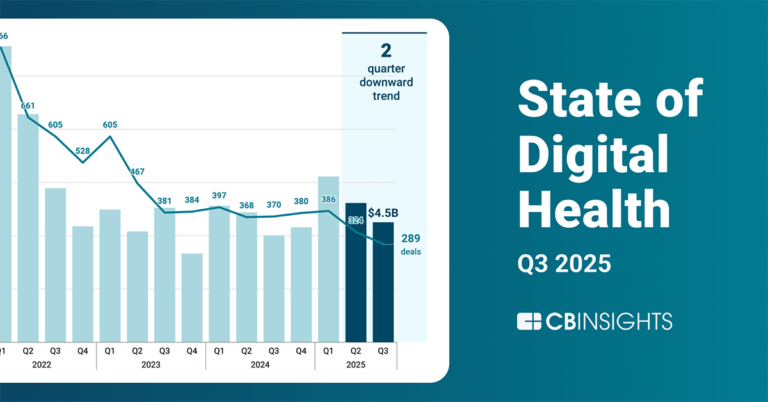
Oct 28, 2025 report
State of Digital Health Q3’25 ReportExpert Collections containing Pathway
Expert Collections are analyst-curated lists that highlight the companies you need to know in the most important technology spaces.
Pathway is included in 1 Expert Collection, including Digital Health.
Digital Health
12,122 items
The digital health collection includes vendors developing software, platforms, sensor & robotic hardware, health data infrastructure, and tech-enabled services in healthcare. The list excludes pureplay pharma/biopharma, sequencing instruments, gene editing, and assistive tech.
Latest Pathway News
Oct 24, 2025
To embed, copy and paste the code into your website or blog: <iframe frameborder="1" height="620" scrolling="auto" src="//www.jdsupra.com/post/contentViewerEmbed.aspx?fid=1d736e8f-d1c8-4035-a911-e1636768ae22" style="border: 2px solid #ccc; overflow-x:hidden !important; overflow:hidden;" width="100%"></iframe> Trade Secrets and AI — Calculating the Odds of Protection This article is part of the “Defending the Algorithm™” series and was written by Pittsburgh, Pennsylvania Business and IP Trial Lawyer Acacia B. Perko, Esq., with research and drafting assistance from OpenAI’s GPT-5. The series explores the evolving intersections of artificial intelligence, intellectual property, and the law. GPT-5 may generate errors, but the author has verified all facts and analysis for accuracy and completeness. In our continuing Defending the Algorithm™ series examining AI litigation and emerging risks, we now turn to trade secret protection. Following the previous analysis of the Anthropic copyright settlement, which deemed the training of LLM’s on legally obtained copyrighted materials as fair use, an important question arises in the other direction: What are the real odds that trade secret law will protect AI innovation? A groundbreaking Massachusetts case — OpenEvidence v. Pathway Medical Inc. — is giving us the first concrete data points to help answer that question. Trade Secrets and AI Collide in OpenEvidence v. Pathway Medical Inc., Case No. 1:25-cv-10471 (D. Mass. ), in the U.S. District Court for the District of Massachusetts. Artificial intelligence is reshaping industries — from healthcare to finance to e-commerce. It’s also reshaping how companies protect innovation. The OpenEvidence lawsuit, filed in February 2025 (Case No. 1:25-cv-10471, U.S. District Court for the District of Massachusetts, Judge Myong J. Joun), represents the first meaningful test of whether the hidden architecture of an AI model — specifically its AI system prompts — can qualify as a trade secret. These prompts are the embedded instruction sets that shape how large language models (LLMs) reason, respond, and maintain consistency. They’re the “rules of engagement” written by developers to control tone, structure, and behavior — never visible to the end user, but critical to how the model functions. The case also breaks new ground by asking whether so-called prompt injection attacks — queries deliberately designed to trick an AI system into disclosing those hidden instructions known as AI system prompts — amount to trade secret misappropriation. In essence, the court is being asked to decide whether manipulating an AI’s interface can constitute digital theft. In the 143 paragraph Original Complaint, Plaintiff OpenEvidence Inc. alleges numerous federal and state claims, including misappropriation of trade secrets under 18 USC § 1836 et seq. ; violation of computer fraud and abuse act under 18 USC § 1030, breach of contract, violation of digital millennium copyright act under 17 USC § 1201; and unfair competition and unfair deceptive acts in conduct of trade or commerce under Mass. G.L. ch. 93A § 11. In sum, Plaintiffclaims that Defendant Pathway Medical Inc. intentionally exploited its AI platform through a series of engineered prompts to extract proprietary instructions, later using them to accelerate development of a competing medical AI product. Defendant, in turn, argues that no trade secrets were taken — claiming that the AI system prompts, once exposed through user interactions, lose any reasonable expectation of secrecy and fall outside traditional trade secret protection. A Modern Framework: Updating Our “Odds” of Protection In traditional trade secret cases, protection is often viewed in binary terms: either information is secret, or it isn’t. But AI complicates that equation. Borrowing from Bayesian reasoning — a concept foundational to modern AI — we can think of trade secret protection as a “prior probability” that evolves as new facts and case law emerge. Each decision, like OpenEvidence, provides data that helps businesses and their lawyers update their understanding of how courts are likely to treat AI-driven innovation and its intersection with data privacy. Before OpenEvidence, the idea of protecting AI systems under trade secret law was like a model trained on incomplete data — theoretically sound, but untested in the wild. The doctrine fit AI systems well on paper, but we lacked real-world examples of how courts would treat the secret inner workings of an algorithm. Now, as judges begin to grapple with whether AI system prompts qualify as trade secrets, we’re finally seeing those theories tested in practice. Why Trade Secrets Are Becoming a Go-To for AI Innovation Copyrights and patents come with significant AI-specific limitations, but the law on patent eligibility in particular is rapidly evolving as the technology advances: The U.S. Copyright Office refuses to register works created entirely by AI. The USPTO requires human inventors, and courts frequently reject patents where AI contributions can’t be separated from human invention (although the trend at the USPTO may be in the opposite direction as AI becomes more ubiquitous). By contrast, trade secret law doesn’t depend on authorship. Under both the Pennsylvania Uniform Trade Secrets Act (12 Pa.C.S. § 5301 et seq.) and the federal Defend Trade Secrets Act (18 U.S.C. § 1836), a trade secret is protectable if it: Derives independent economic value from remaining secret, and Is subject to reasonable efforts to maintain secrecy. That flexibility makes trade secrets particularly useful for protecting data that may not qualify for copyright or patent protections, or which inventors do not wish to disclose in a public patent application or issued patent such as: Model architecture and algorithms Proprietary output structures and response frameworks Teaching Point: Think of trade secrets as the “secret recipe” of AI innovation. Coca-Cola never patented its formula, yet has protected it for over a century through secrecy. AI developers can do the same — if they treat their data, prompts, and methods with the same rigor. The OpenEvidence Case: Testing the Boundaries OpenEvidence, Inc., based in Massachusetts, developed an AI tool that provides medical professionals with real-time answers to clinical questions. Its value rested on carefully crafted AI system prompts — hidden instructions that guided the LLM in how the AI reasoned and responded. In its Original Complaint,PlaintiffOpenEvidence Inc. alleges that the AI system prompts have independent economic value by claiming: “The system prompt is code that provides the LLM with its core, and critical, background and situational context. A system prompt also sets the LLM’s role, “personality,” and subject matter expertise. And it contains a set of governing rules and boundaries for interacting with users and providing responses. It is the constitutional framework of any LLM, and it is—accordingly—a proprietary and extremely valuable asset for any AI company”. Further, Plaintiff alleges that its competitor, Defendant Pathway Medical, Inc., intentionally probed its system through prompt injection attacks to extract those instructions and speed development of its own competing product. The case alleges violations of:
Pathway Frequently Asked Questions (FAQ)
When was Pathway founded?
Pathway was founded in 2020.
Where is Pathway's headquarters?
Pathway's headquarters is located at 253 AV Laurier O, Montreal.
What is Pathway's latest funding round?
Pathway's latest funding round is Acquired.
How much did Pathway raise?
Pathway raised a total of $4.94M.
Who are the investors of Pathway?
Investors of Pathway include Doximity, Amplify Capital, BoxOne Ventures, Formentera Capital, Verge Capital Management and 10 more.
Who are Pathway's competitors?
Competitors of Pathway include Medwise AI and 2 more.
What products does Pathway offer?
Pathway's products include Clinical Decision Support System and 2 more.
Loading...
Compare Pathway to Competitors
iMedExchange is a company that focuses on healthcare, technology, and business. The company provides insights and advice on the integration of technology in medical practices, including trends in healthcare devices and tools assisting physicians. iMedExchange also offers guidance on business strategies and financial metrics for medical professionals. It is based in Seattle, Washington.

Sermo is a social networking platform for physicians, focusing on peer-to-peer collaboration and knowledge exchange within the medical community. The platform allows physicians to engage in discussions, solve patient cases, participate in medical research studies, and access a database of physician drug reviews. Sermo serves the healthcare sector, providing a space for medical professionals. It was founded in 2000 and is based in New York, New York.

MedShr is a case discussion platform that focuses on medical education and professional development within the healthcare industry. The platform allows healthcare professionals to discover, discuss, and share clinical cases and medical images. It serves the medical community, including doctors, healthcare professionals, and medical students. It was founded in 2015 and is based in London, United Kingdom.
LeagueMed specializes in a digital community that connects healthcare professionals and the medical technology industry. The company provides access to private investment opportunities in healthcare and medical technology companies, with options for low minimum investments. It offers benefits such as continuing medical education, practice management news, and services for physicians and healthcare professionals. It was founded in 2022 and is based in Holmdel, New Jersey.

HealthTap is a tech-enabled virtual physician practice operating in the healthcare sector. The company provides primary care through a direct-to-consumer model and partnerships with various healthcare entities, offering services like urgent care access. HealthTap's platform is designed to integrate into existing patient workflows and electronic medical records (EMRs), facilitating ongoing relationships between patients and doctors. It was founded in 2010 and is based in Sunnyvale, California.
Ryte is a company that offers AI-driven solutions for the healthcare sector. Their main offerings include a platform that uses artificial intelligence to match individuals and organizations with healthcare providers and medical experts based on criteria such as subspecialty, disease, treatment, and location. The platform aggregates and analyzes data on healthcare providers and facilities globally. It was founded in 2019 and is based in Toronto, Ontario.
Loading...