

PathAI
Founded Year
2016Stage
Series C | AliveTotal Raised
$255MLast Raised
$165M | 4 yrs agoMosaic Score The Mosaic Score is an algorithm that measures the overall financial health and market potential of private companies.
+39 points in the past 30 days
About PathAI
PathAI provides artificial intelligence (AI)-powered research tools and services for pathology. It delivers the diagnosis and treatment of cancer by leveraging modern approaches in machine learning. The company offers biopharmacy lab services, clinical development services, drug and diagnostic development, and more. It was founded in 2016 and is based in Boston, Massachusetts.
Loading...
ESPs containing PathAI
The ESP matrix leverages data and analyst insight to identify and rank leading companies in a given technology landscape.
The digital pathology for general diagnostics market refers to the use of digital imaging technology and computational tools to analyze and interpret pathology specimens for diagnostic purposes. Instead of using traditional glass slides, digital pathology involves digitizing tissue samples and creating high-resolution images that can be viewed and analyzed on computer screens. These digital images…
PathAI named as Leader among 15 other companies, including Philips, Proscia, and Ibex.
Loading...
Research containing PathAI
Get data-driven expert analysis from the CB Insights Intelligence Unit.
CB Insights Intelligence Analysts have mentioned PathAI in 4 CB Insights research briefs, most recently on Nov 27, 2024.
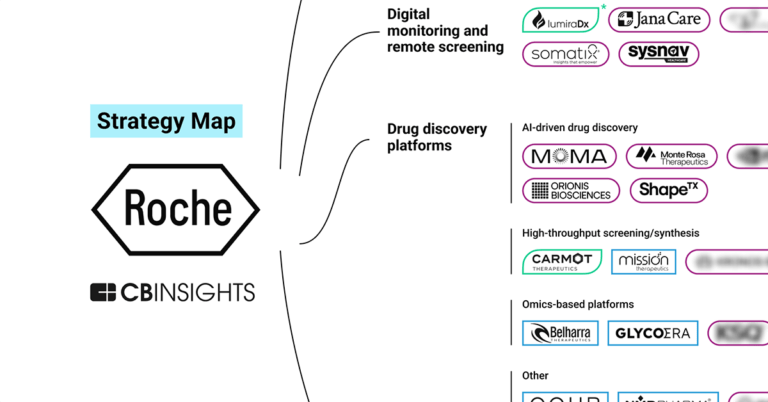
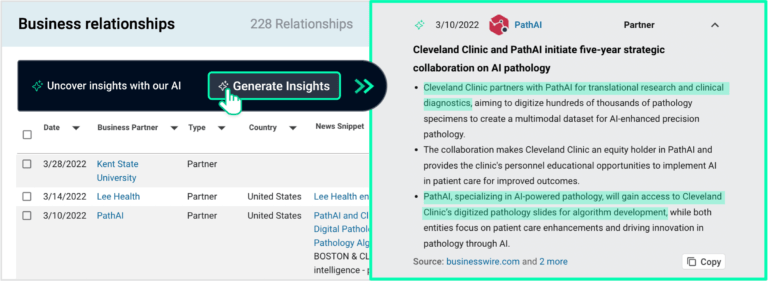
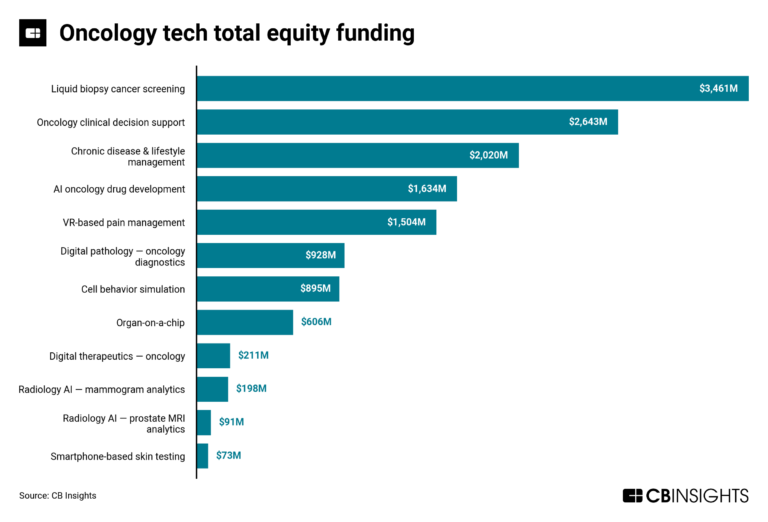

Expert Collections containing PathAI
Expert Collections are analyst-curated lists that highlight the companies you need to know in the most important technology spaces.
PathAI is included in 5 Expert Collections, including Artificial Intelligence (AI).
Artificial Intelligence (AI)
37,243 items
Companies developing artificial intelligence solutions, including cross-industry applications, industry-specific products, and AI infrastructure solutions.
Digital Health 50
450 items
The most promising digital health startups transforming the healthcare industry
Digital Health
12,122 items
The digital health collection includes vendors developing software, platforms, sensor & robotic hardware, health data infrastructure, and tech-enabled services in healthcare. The list excludes pureplay pharma/biopharma, sequencing instruments, gene editing, and assistive tech.
Oncology Tech
571 items
This collection includes companies applying technology to cancer care, diagnosis, and treatment. Examples include vendors offering cancer detection and diagnosis, oncology clinical decision support, real-world data, and AI oncology drug discovery.
Generative AI
2,951 items
Companies working on generative AI applications and infrastructure.
PathAI Patents
PathAI has filed 18 patents.
The 3 most popular patent topics include:
- machine learning
- artificial neural networks
- clusters of differentiation
Application Date | Grant Date | Title | Related Topics | Status |
|---|---|---|---|---|
2/1/2022 | 12/24/2024 | Diseases of liver, Hepatology, Continuous distributions, Artificial neural networks, Machine learning | Grant |
Application Date | 2/1/2022 |
|---|---|
Grant Date | 12/24/2024 |
Title | |
Related Topics | Diseases of liver, Hepatology, Continuous distributions, Artificial neural networks, Machine learning |
Status | Grant |
Latest PathAI News
Nov 4, 2025
| Valuates Reports News provided by Share this article What is the Market Size of AI-Powered Pathology Market? The global AI-Powered Pathology Market is projected to grow significantly in the coming years. It was valued at USD 184 Million in 2023 and is forecast to reach USD 382 Million by 2030, representing a robust compound annual growth rate (CAGR) of 11.7% during 2024–2030. AI slide analysis is accelerating diagnostics by improving image interpretation speed and accuracy. Integration with genomics is advancing precision medicine through multimodal data insights. Regulatory approvals are boosting clinical adoption of AI pathology tools. Cloud platforms and big data are enhancing model accuracy and scalability. Rising demand for efficiency and personalization is driving investments in AI diagnostics. TRENDS INFLUENCING THE GROWTH OF THE AI-POWERED PATHOLOGY MARKET: The integration of AI tools for digital slide analysis is revolutionizing the way pathologists process and interpret whole-slide images. Advanced image recognition algorithms enable faster and more accurate detection of abnormalities in tissue samples, improving diagnostic efficiency and reducing human error. These tools are being increasingly deployed in hospitals and diagnostic centers to automate repetitive tasks such as cell segmentation, feature extraction, and tumor grading. As laboratories transition toward digital pathology platforms, AI-powered slide analysis solutions are becoming a cornerstone of modern diagnostic workflows, driving rapid adoption across clinical and research environments. AI is enabling a convergence between pathology, genomics, and clinical data, allowing for multimodal diagnostic models that deliver comprehensive insights into disease biology. By combining histopathological images with molecular profiles and patient data, these systems can identify correlations that inform treatment decisions and therapeutic targets. The growing emphasis on personalized medicine is amplifying this trend, as healthcare providers seek tools that connect morphological and genomic information for more accurate prognostic assessments. This integration is expected to significantly enhance the predictive power of diagnostic systems and open new frontiers in cancer and rare-disease analysis. An increasing number of AI pathology solutions are receiving regulatory clearances from health authorities, paving the way for their use in clinical settings. These approvals validate the safety and efficacy of AI tools for diagnostic purposes, boosting confidence among healthcare providers and investors alike. As regulatory frameworks mature, vendors are focusing on developing explainable and transparent AI systems that comply with clinical governance standards. The rising number of approved AI algorithms is expected to fuel large-scale deployment in pathology labs worldwide, supporting the shift from pilot projects to routine clinical use. The proliferation of cloud computing and data-sharing infrastructures is enabling the creation of vast, high-quality annotated datasets that are essential for AI model training. These datasets enhance the precision of deep learning algorithms, allowing them to recognize complex tissue patterns and rare disease features with higher reliability. Cloud-based pathology platforms also facilitate remote collaboration, enabling pathologists and researchers to access and analyze slides from anywhere in real time. The growing ecosystem of interoperable cloud solutions is therefore a critical driver for scalable, cost-efficient AI model deployment across healthcare networks. Healthcare systems worldwide are under pressure to deliver personalized, high-quality care while optimizing operational efficiency. AI-powered pathology addresses both objectives by offering rapid, standardized, and data-driven diagnostics that improve patient outcomes. Hospitals, diagnostic centers, and research institutes are investing in AI tools to handle rising case volumes, reduce turnaround times, and improve resource utilization. This dual focus on clinical accuracy and productivity is accelerating the adoption of AI in pathology, positioning the technology as a key enabler of next-generation precision healthcare. Predictive Modeling – Fastest Growth AI-based predictive modeling tools—used for applications such as cancer prognostics and treatment response prediction—are the fastest-growing segment. These systems apply machine learning to large-scale histopathology datasets to forecast disease outcomes. Growth in this segment is propelled by the increasing focus on personalized medicine and patient-specific risk stratification. Although it currently represents a smaller share than image-analysis tools, predictive modeling is expanding at the highest rate. Disease Classification – Rapid Growth AI algorithms designed for disease classification from tissue images are also witnessing strong growth. These tools enhance diagnostic accuracy by distinguishing between benign and malignant cases or identifying disease subtypes. The demand for faster, more accurate pathology workflows is accelerating adoption, positioning this segment as one of the major growth drivers of the AI pathology market. Automated Image Analysis – Largest Share, Moderate Growth Automated digital image analysis systems currently hold the largest share of the AI pathology market. These platforms automate repetitive slide-analysis tasks such as cell counting, tissue segmentation, and biomarker quantification. While this segment remains dominant in revenue share due to widespread adoption, its growth rate has slowed compared to the emerging predictive and classification-based AI tools. In essence, automated image analysis provides the established backbone of the market but is expanding at a steadier pace. Which application segment is expanding the fastest in the AI-Powered Pathology Market? Diagnostic Centers – Fastest Growth Independent diagnostic centers and pathology laboratories are adopting AI technologies at the fastest rate. The integration of AI into diagnostic workflows helps reduce turnaround times and enhances service differentiation. As these facilities increasingly leverage AI to handle high volumes and improve accuracy, they represent the most rapidly expanding end-use segment in the market. Laboratories & Research Institutes – Steady Growth Hospital-affiliated laboratories and research institutions are gradually integrating AI pathology solutions for high-throughput analysis, biomarker discovery, and clinical trial support. Growth in this segment remains steady, driven by innovation and R&D investments, although adoption is more measured compared to commercial diagnostic centers due to existing in-house expertise and infrastructure. Hospitals – Largest Share, Slower Growth Hospitals and clinics continue to account for the largest share of the AI pathology market, as the majority of biopsy and pathology tests originate from hospital-based laboratories. AI tools are extensively used to improve operational efficiency and reduce workload pressures. However, because hospital pathology departments are typically well established, their growth trajectory is slower than that of independent centers. Hospitals thus maintain market dominance in terms of value but exhibit more moderate expansion. Key Companies: Which region dominates the AI Powered Pathology Market? The AI-Powered Pathology Market is currently dominated by North America, which accounts for the largest share of global revenue. This dominance is attributed to the region's early adoption of digital pathology solutions, robust healthcare infrastructure, and growing investments in AI-driven diagnostic technologies. The United States leads the market, supported by favorable regulatory frameworks such as FDA approvals for AI pathology systems and the strong presence of key industry players including Paige AI, PathAI, and Proscia. Moreover, large-scale cancer research programs, academic collaborations, and precision medicine initiatives across the U.S. and Canada continue to accelerate the integration of AI into pathology workflows. SUBSCRIPTION We have introduced a tailor-made subscription for our customers. Please leave a note in the Comment Section to know about our subscription plans. What are some related markets to the AI-Powered Pathology Market? - Digital Pathology Market revenue was USD 729 Million in 2022 and is forecast to a readjusted size of USD 1742.7 Million by 2029 with a CAGR of 13.1% during the review period (2023-2029). - Digital Pathology Scanner Market was valued at USD 618 Million in the year 2024 and is projected to reach a revised size of USD 1015 Million by 2031, growing at a CAGR of 7.4% during the forecast period. DISCOVER OUR VISION: VISIT ABOUT US! Valuates offers in-depth market insights into various industries. Our extensive report repository is constantly updated to meet your changing industry analysis needs. Our team of market analysts can help you select the best report covering your industry. We understand your niche region-specific requirements and that's why we offer customization of reports. With our customization in place, you can request for any particular information from a report that meets your market analysis needs. To achieve a consistent view of the market, data is gathered from various primary and secondary sources, at each step, data triangulation methodologies are applied to reduce deviance and find a consistent view of the market. Each sample we share contains a detailed research methodology employed to generate the report. Please also reach our sales team to get the complete list of our data sources. Contact Us
PathAI Frequently Asked Questions (FAQ)
When was PathAI founded?
PathAI was founded in 2016.
Where is PathAI's headquarters?
PathAI's headquarters is located at 1325 Boylston Street, Boston.
What is PathAI's latest funding round?
PathAI's latest funding round is Series C.
How much did PathAI raise?
PathAI raised a total of $255M.
Who are the investors of PathAI?
Investors of PathAI include General Catalyst, Refactor Capital, Merck Global Health Innovation Fund, 8VC, Bristol-Myers Squibb and 22 more.
Who are PathAI's competitors?
Competitors of PathAI include Primaa, Deciphex, Aiosyn, Azra AI, Imagene AI and 7 more.
Loading...
Compare PathAI to Competitors

Owkin is an AI biotechnology company that employs artificial intelligence to improve drug discovery and development in the biopharmaceutical sector. The company specializes in AI-based identification of new treatments, clinical trial optimization, and diagnostic tool creation, while ensuring patient privacy through federated learning techniques. Owkin serves the biopharma and academic research communities. It was founded in 2016 and is based in New York, New York.

Ibex specializes in AI-based cancer diagnostics within the healthcare technology sector. The company offers AI-powered diagnostic solutions that assist pathologists in providing accurate and efficient cancer diagnoses. Its solutions are developed using advanced algorithms and digital workflows to detect cancer with clinical-grade accuracy. It was founded in 2016 and is based in Tel Aviv, Israel.

Proscia focuses on the development of software for the pathology sector. The company offers include a digital pathology platform and artificial intelligence (AI)-powered applications to facilitate routine pathology operations, research breakthroughs, and patient outcomes. Proscia primarily serves the life sciences and diagnostics sectors. It was founded in 2014 and is based in Philadelphia, Pennsylvania.

AIRA Matrix provides Artificial Intelligence solutions for the Life Sciences sector, focusing on pathology laboratory workflows. The company offers products and services that aim to improve efficiency, diagnostic accuracy, and turnaround times in pathology, as well as provide diagnostic, prognostic, and predictive options for cancer care. AIRA Matrix serves hospitals, pharmaceutical companies, contract research organizations (CROs), and research labs globally. It was founded in 2011 and is based in Mumbai, India.

Visiopharm provides precision pathology software for the research and diagnostics sectors. The company offers tools that assist scientists and pathologists in producing data for tissue-based research and provides decision support through IVDR certified applications. Visiopharm serves the healthcare and research industries with its software. It was founded in 2001 and is based in Hoersholm, Denmark.

DeepBio develops AI-powered technology for cancer diagnostics in the healthcare sector. The company provides digital pathology solutions aimed at assisting medical professionals in diagnosing and grading cancer through the analysis of medical images. DeepBio's products focus on tools for prostate and breast cancer detection. It was founded in 2015 and is based in Seoul, South Korea.
Loading...