

Particle Health
Founded Year
2018Stage
Series B - II | AliveTotal Raised
$49.34MLast Raised
$10M | 1 yr agoMosaic Score The Mosaic Score is an algorithm that measures the overall financial health and market potential of private companies.
+1 points in the past 30 days
About Particle Health
Particle Health specializes in healthcare data interoperability and analytics within the healthcare industry. The company offers a clinical platform that gives access to patient medical records and synthesizes clinical insights to support various healthcare needs. The company provides services to payers and developers seeking to utilize healthcare data. It was founded in 2018 and is based in New York, New York.
Loading...
Particle Health's Product Videos
ESPs containing Particle Health
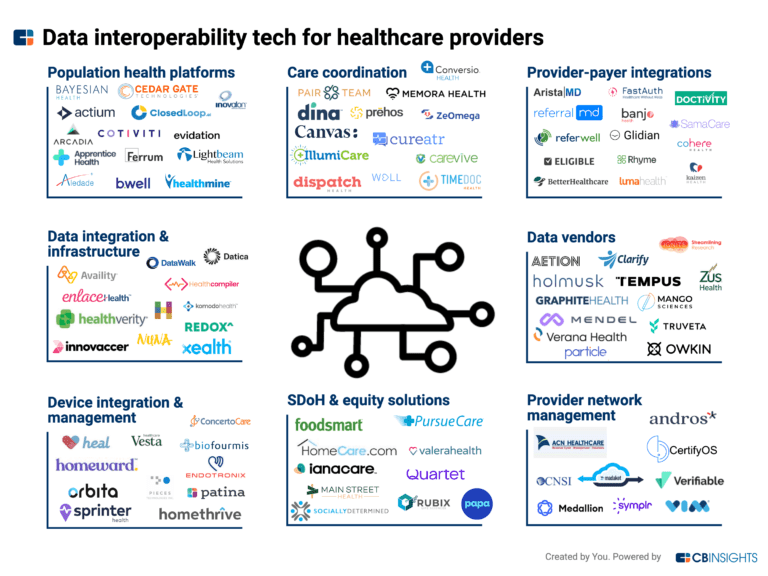
The ESP matrix leverages data and analyst insight to identify and rank leading companies in a given technology landscape.
The patient data exchange market addresses the problem of data silos in the healthcare industry, which limit healthcare providers' ability to access and share health information outside of their respective networks. This results in financial waste, patient dissatisfaction, and disrupted continuity of care. The market offers various solutions such as clinical data exchange platforms, AI and NLP-pow…
Particle Health named as Challenger among 15 other companies, including Moxe, Health Gorilla, and Innovaccer.
Particle Health's Products & Differentiators
Particle Health API
Particle Health’s modern API platform unifies records from over 270 million patients across the United States. We provide a single, secure access point for the data you need to fuel digital healthcare innovations rapidly and at scale. Plus, it’s a snap for developers to use.
Loading...
Research containing Particle Health
Get data-driven expert analysis from the CB Insights Intelligence Unit.
CB Insights Intelligence Analysts have mentioned Particle Health in 2 CB Insights research briefs, most recently on Mar 3, 2023.

Expert Collections containing Particle Health
Expert Collections are analyst-curated lists that highlight the companies you need to know in the most important technology spaces.
Particle Health is included in 5 Expert Collections, including Blockchain.
Blockchain
8,887 items
Companies in this collection build, apply, and analyze blockchain and cryptocurrency technologies for business or consumer use cases. Categories include blockchain infrastructure and development, crypto & DeFi, Web3, NFTs, gaming, supply chain, enterprise blockchain, and more.
Conference Exhibitors
5,302 items
Cybersecurity
11,251 items
These companies protect organizations from digital threats.
Digital Health
12,122 items
The digital health collection includes vendors developing software, platforms, sensor & robotic hardware, health data infrastructure, and tech-enabled services in healthcare. The list excludes pureplay pharma/biopharma, sequencing instruments, gene editing, and assistive tech.
Digital Health 50
200 items
2022's cohort of the most promising digital health startups transforming the healthcare industry. Winners were chosen based on several factors, including data submitted by the companies, proprietary Mosaic scores, company business models and momentum in the market.
Particle Health Patents
Particle Health has filed 1 patent.
The 3 most popular patent topics include:
- data management
- electronic health records
- health informatics
Application Date | Grant Date | Title | Related Topics | Status |
|---|---|---|---|---|
1/7/2020 | Health informatics, Electronic health records, Data management, Medical terminology, NoSQL | Application |
Application Date | 1/7/2020 |
|---|---|
Grant Date | |
Title | |
Related Topics | Health informatics, Electronic health records, Data management, Medical terminology, NoSQL |
Status | Application |
Latest Particle Health News
Sep 18, 2025
To embed, copy and paste the code into your website or blog: <iframe frameborder="1" height="620" scrolling="auto" src="//www.jdsupra.com/post/contentViewerEmbed.aspx?fid=f5f95828-dc98-4dda-b6d6-33d4a0201d09" style="border: 2px solid #ccc; overflow-x:hidden !important; overflow:hidden;" width="100%"></iframe> While Monopolization claims hold up, court trims claims of conspiracy to restrain trade. A recent decision from Judge Naomi Reice Buchwald in the Southern District of New York has set the framework for a closely watched antitrust case in the $13 billion digital health records space. The case, Particle Health Inc. v. Epic Systems Corp., pits a health tech startup against the largest provider of electronic health record (EHR) software in the United States, raising critical questions about competition, data access, and market power in healthcare technology. Epic Systems, a dominant force in EHR software, launched its Epic Payer Platform (EPP) in 2021, enabling health insurers (“payers”) to efficiently retrieve and analyze medical records at scale. Particle Health, a startup, entered the market in 2023 with its own platform, targeting “payviders”—entities that both pay for and provide healthcare services. The dispute centers on Epic’s alleged efforts to block Particle’s access to EHRs, slow onboarding of Particle’s customers, and disparage Particle’s business practices. The Companies Particle Health is a venture-backed health data interoperability startup founded in 2018. Its estimated annual revenue is $20.5 million as of 2025. The company has raised more than $39 million in funding and employs between 45 and 70 people, depending on the source. (Sources:CompWorth, PitchBook, and Tracxn.) Epic Systems, founded in 1979 and headquartered in Verona, Wisconsin, is one of the largest and most dominant EHR software vendors in the United States. Epic’s annual revenue is reportedly $4.9 billion for 2024. Epic employs approximately 13,000 to 14,000 people and controls a significant share of the U.S. hospital EHR market. (Sources: Forbes, KLAS Research, and Datanyze.) The Allegations: Anticompetitive Conduct and Market Exclusion Particle alleges that Epic used its market power to: 1) Cut off access to Epic-stored EHRs for Particle’s customers unless they stopped using Particle’s platform. 2) Slow the onboarding process for new Particle customers, requiring burdensome approvals and information not demanded of others. 3) Launch a “market-wide disparagement campaign” against Particle, including public statements raising privacy and security concerns. 4) Initiate a dispute within the Carequality interoperability framework, allegedly manipulating the outcome to Particle’s detriment. These actions, Particle claims, led to lost customers, revenue decline, and a chilling effect on new business opportunities. The Court’s Findings Judge Buchwald’s decision grants in part and denies in part Epic’s motion to dismiss. The key outcomes: 1) Section 1 Sherman Act and Donnelly Act claims dismissed: The court found insufficient evidence of agreements or conspiracies between Epic and other entities to restrain trade. 2) Section 2 Sherman Act claims survive: The court held that Particle plausibly alleged monopolization, attempted monopolization, and monopoly leveraging. Epic’s alleged conduct—cutting off access, slowing onboarding, and disparaging Particle—could constitute exclusionary behavior not justified by legitimate business concerns. 3) Tortious interference with contract survives: Epic’s alleged inducement of Particle’s customer XCures to breach its contract was sufficiently pled. 4) Other state law claims (business relations, defamation, trade libel) dismissed: The court found the allegations too generalized or lacking in special damages. Why This Matters: Competition and Data Access in Healthcare This case highlights the tension between innovation and market power in healthcare technology. As EHR platforms become central to data-driven healthcare, the ability of startups to compete—and of payers to access records—depends on fair market practices. The court’s decision signals that dominant firms cannot use their position to exclude rivals without facing antitrust scrutiny. The EHR Market at a Glance The U.S. electronic health records (EHR) market is valued at nearly $13 billion in 2024 and is expected to grow steadily over the next several years, according to market research firms such as Grand View Research and MarketsandMarkets. Growth is driven by government incentives, technological innovation, and the increasing need for centralized healthcare data management. EHR adoption is nearly universal among U.S. healthcare providers, with the Office of the National Coordinator for Health Information Technology reporting that 88% of office-based physicians use EHR systems. Adoption rates are similarly high in hospitals and clinics nationwide. The market is highly consolidated, with Epic Systems and Oracle Cerner controlling roughly half of the U.S. market, as noted in industry analyses by KLAS Research and Becker’s Hospital Review. Other significant vendors include MEDITECH, Allscripts, NextGen Healthcare, McKesson, eClinicalWorks, Greenway Health, and CPSI. Large-scale client portfolios, high switching costs, and regulatory requirements reinforce the dominance of these established vendors. EHR systems are segmented by deployment (cloud-based vs. on-premise), application (clinical, administrative, reporting), and end-user (hospitals, clinics, ambulatory centers). Cloud-based solutions are gaining market share due to their cost-effectiveness and scalability, as highlighted in recent reports from HIMSS and HealthIT.gov. Key industry trends include ongoing government initiatives such as the HITECH Act, which accelerated EHR adoption, and technological advancements like AI integration and improved interoperability. Mergers and acquisitions among vendors and healthcare organizations continue to reshape the competitive landscape, according to coverage in Modern Healthcare and Fierce Healthcare. Security and privacy remain top concerns, with HIPAA and HITECH regulations driving investment in compliance and data protection. Despite widespread adoption, challenges persist. Interoperability remains a major issue, with many systems still struggling to communicate seamlessly, impacting care coordination. High switching costs discourage competition, and privacy breaches continue to be a concern for providers and vendors.
Particle Health Frequently Asked Questions (FAQ)
When was Particle Health founded?
Particle Health was founded in 2018.
Where is Particle Health's headquarters?
Particle Health's headquarters is located at 36 West 20th Street, New York.
What is Particle Health's latest funding round?
Particle Health's latest funding round is Series B - II.
How much did Particle Health raise?
Particle Health raised a total of $49.34M.
Who are the investors of Particle Health?
Investors of Particle Health include Menlo Ventures, Story Ventures, PruVen Capital, Canvas Ventures, Company Ventures and 11 more.
Who are Particle Health's competitors?
Competitors of Particle Health include Connective Health, Patientory, emTRUTH, 1upHealth, Zus Health and 7 more.
What products does Particle Health offer?
Particle Health's products include Particle Health API and 4 more.
Who are Particle Health's customers?
Customers of Particle Health include XCures, Somatus and Omada .
Loading...
Compare Particle Health to Competitors

Redox offers an application program interface technology. It provides a modern application programming interface (API) for healthcare, allowing software to easily and securely interoperate with electronic health records (EHRs) in a health system infrastructure. The company offers various products, such as Nova, which has real-time data in the cloud, Chroma, which has patient identity records, and more. It was founded in 2014 and is based in Madison, Wisconsin.

Health Gorilla focuses on health information exchange and interoperability solutions. The company offers products such as electronic health record data access and lab data automation, aimed at improving data connectivity within the healthcare ecosystem. Health Gorilla serves sectors including digital health, electronic health records, health information exchanges, lab vendors, payers, providers, and life insurance. It was founded in 2014 and is based in Miami, Florida.

Zus Health focuses on healthcare data interoperability within the health tech industry. It offers a shared health data platform that facilitates access to patient data at the point of care, utilizing APIs, embedded components, and direct Electronic Health Record (EHR) integrations. The company's services are primarily targeted towards healthcare organizations looking to streamline patient care and data management processes. Zus Health was formerly known as Zeus Healthcare Technologies. It was founded in 2020 and is based in Boston, Massachusetts.

Patientory focuses on personal health data management within the healthcare sector. The company offers a digital health data wallet that allows users to store and manage their medical records on a blockchain network and provides tools for tracking health metrics and participating in clinical trials. It primarily serves the healthcare sector. The company was founded in 2015 and is based in Atlanta, Georgia.

Vim provides healthcare integration solutions within the health technology sector. The company offers a platform that integrates data, insights, and applications into electronic health record (EHR) workflows. It provides solutions to various sectors including value-based care, point-of-care services, ACOs, provider enablers, payers, providers, EHRs, and developers. Vim was formerly known as BookMD. It was founded in 2015 and is based in San Francisco, California.

eClinicalWorks focuses on electronic health records (EHR) and practice management. The company provides products including telehealth services, population health management, patient engagement, and revenue cycle management. eClinicalWorks serves the healthcare sector, providing solutions for various medical specialties. It was founded in 1999 and is based in Westborough, Massachusetts.
Loading...