

Paige
Founded Year
2017Stage
Acquired | AcquiredTotal Raised
$239.5MValuation
$0000About Paige
Paige specializes in diagnostic artificial intelligence (AI) for the healthcare sector, focusing on cancer care. The company provides artificial intelligence (AI) assisted applications for cancer detection, subtyping, and molecular biomarker discovery, along with technology and services intended to support research and development in computational pathology. Paige serves the healthcare and life sciences sectors with its artificial intelligence (AI) technology and services. It was founded in 2017 and is based in New York, New York. In August 2025, Paige was acquired by Tempus.
Loading...
ESPs containing Paige
The ESP matrix leverages data and analyst insight to identify and rank leading companies in a given technology landscape.
The digital pathology for oncology diagnostics market digitizes and obtains high-resolution images of cancerous tissue samples. These digital images can be easily stored, shared, and accessed remotely by pathologists, enabling more efficient collaboration and second opinions. The market includes various hardware and software solutions for scanning, storing, analyzing, and managing digital patholog…
Paige named as Outperformer among 15 other companies, including Microsoft, Roche, and NVIDIA.
Paige's Products & Differentiators
Paige Prostate
Paige Prostate is a clinical-grade AI-based diagnostic software which is CE-marked for the clinical detection, grading and quantification of prostate cancer. Studies have shown Paige Prostate reduced time to diagnosis and lower rates of unnecessary tests ordered, meaning faster turnaround times for clinicians and patients while ensuring an accurate read. In June 2021, Paige, Oxford University and its UK National Health Service (NHS) partners won government funding to evaluate Paige Prostate prospectively in a real-world cancer laboratory setting. The prestigious award will enable Paige and its partners to demonstrate clinical or economic utility of Paige Prostate with respect to its real-world implementation and use in the NHS.
Loading...
Research containing Paige
Get data-driven expert analysis from the CB Insights Intelligence Unit.
CB Insights Intelligence Analysts have mentioned Paige in 4 CB Insights research briefs, most recently on Sep 8, 2025.
Aug 10, 2023
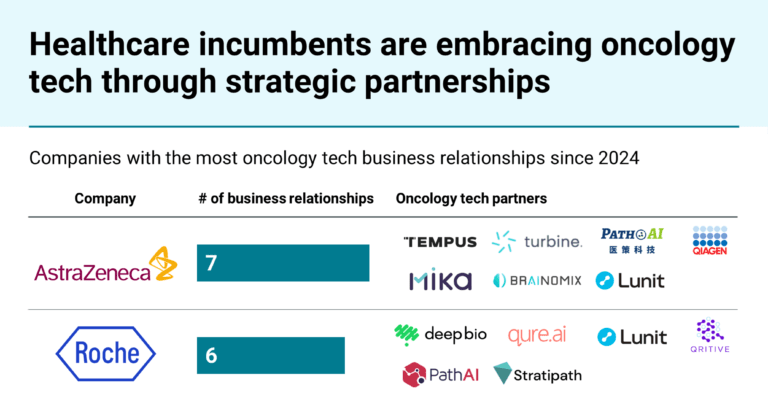
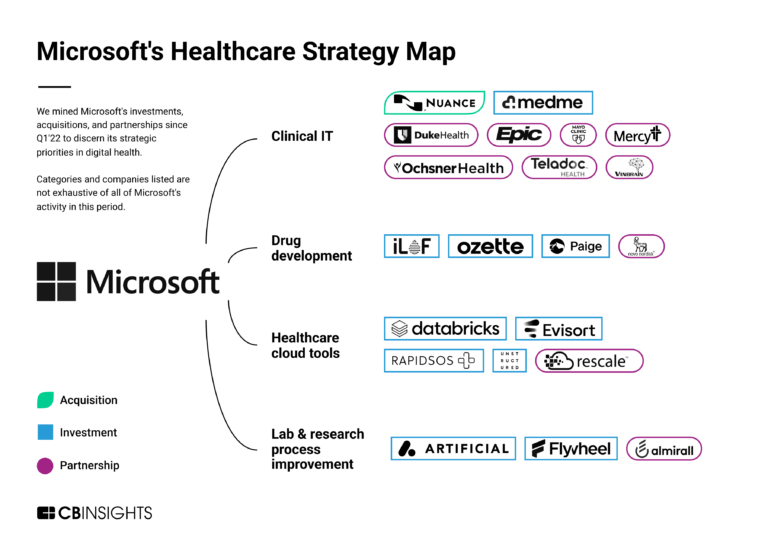
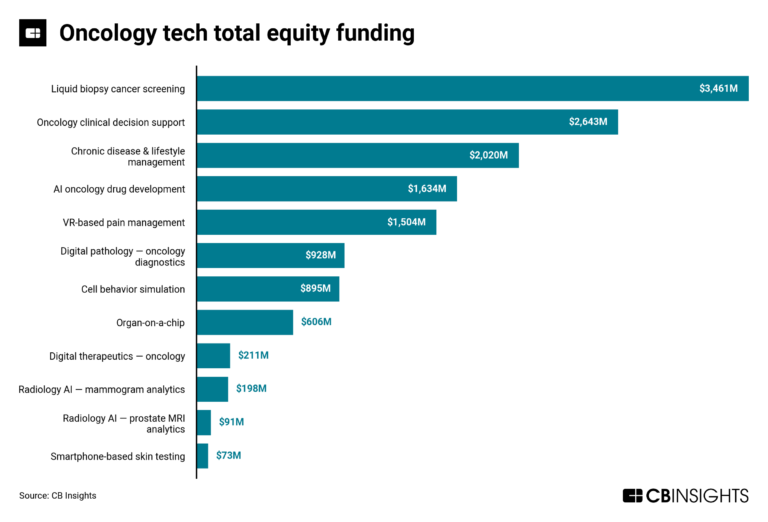
The oncology tech market map
Expert Collections containing Paige
Expert Collections are analyst-curated lists that highlight the companies you need to know in the most important technology spaces.
Paige is included in 5 Expert Collections, including AI 100 (All Winners 2018-2025).
AI 100 (All Winners 2018-2025)
200 items
Digital Health 50
450 items
The most promising digital health startups transforming the healthcare industry
Digital Health
12,122 items
The digital health collection includes vendors developing software, platforms, sensor & robotic hardware, health data infrastructure, and tech-enabled services in healthcare. The list excludes pureplay pharma/biopharma, sequencing instruments, gene editing, and assistive tech.
Oncology Tech
571 items
This collection includes companies applying technology to cancer care, diagnosis, and treatment. Examples include vendors offering cancer detection and diagnosis, oncology clinical decision support, real-world data, and AI oncology drug discovery.
Artificial Intelligence (AI)
20,628 items
Paige Patents
Paige has filed 146 patents.
The 3 most popular patent topics include:
- image processing
- pathology
- medical imaging
Application Date | Grant Date | Title | Related Topics | Status |
|---|---|---|---|---|
9/9/2020 | 4/1/2025 | Transcription factors, Molecular biology, Clusters of differentiation, Genetics, Tyrosine kinase receptors | Grant |
Application Date | 9/9/2020 |
|---|---|
Grant Date | 4/1/2025 |
Title | |
Related Topics | Transcription factors, Molecular biology, Clusters of differentiation, Genetics, Tyrosine kinase receptors |
Status | Grant |
Latest Paige News
Oct 22, 2025
Beyond Pink Ribbons: How Personalized AI is Revolutionizing Breast Cancer Care Every two minutes, someone in the US receives a breast cancer diagnosis. But beyond the statistics, lies a growing movement – a shift away from standardized treatment and towards hyper-personalized care, fueled by artificial intelligence. This isn’t just about earlier detection; it’s about predicting risk, tailoring therapies, and ultimately, empowering patients to navigate their journey with greater agency and hope. The Evolving Narrative: From “Warrior” to Whole-Person Care Recent stories from France and across Europe – from Pierrette’s hopeful testimony to Sandrine’s planned “fiesta” marking the end of hormone therapy – highlight a crucial point: the traditional “battle” metaphor for cancer is increasingly being challenged. These narratives, and those of Adèle and the women of Saône-et-Loir and Landes, emphasize the importance of individual experiences and the need for support that extends beyond the clinical setting. This desire for a more holistic approach is driving demand for solutions that address not just the disease, but the emotional, psychological, and social impacts of a breast cancer diagnosis. Predictive AI: Identifying Risk Before Symptoms Appear The future of breast cancer care isn’t just reactive; it’s proactive. AI algorithms are now capable of analyzing mammograms with greater accuracy than radiologists alone, detecting subtle anomalies that might otherwise be missed. But the real breakthrough lies in predictive modeling. By integrating genomic data, lifestyle factors, and family history, AI can assess an individual’s lifetime risk of developing breast cancer, allowing for earlier and more targeted screening. Companies like Paige are leading the charge in this area, developing AI-powered pathology solutions that are already improving diagnostic accuracy. The Role of Liquid Biopsies and Circulating Tumor Cells Traditional biopsies are invasive and only provide a snapshot of the tumor at a single point in time. Liquid biopsies, which analyze circulating tumor cells (CTCs) in the bloodstream, offer a non-invasive alternative. AI is being used to analyze these CTCs, identifying genetic mutations and predicting treatment response with increasing precision. This allows oncologists to adjust therapies in real-time, maximizing effectiveness and minimizing side effects. Personalized Treatment Plans: Beyond One-Size-Fits-All The days of standardized chemotherapy regimens are numbered. AI is enabling the development of personalized treatment plans based on the unique genetic profile of each tumor. This includes identifying which patients are most likely to benefit from specific therapies, and which are not, avoiding unnecessary toxicity and improving outcomes. Furthermore, AI is accelerating drug discovery, identifying novel targets and designing more effective cancer drugs. The Rise of Immunotherapy and AI-Driven Biomarker Discovery Immunotherapy, which harnesses the power of the immune system to fight cancer, has shown remarkable promise in recent years. However, not all patients respond to immunotherapy. AI is being used to identify biomarkers – measurable indicators of a biological state – that predict which patients are most likely to benefit from these therapies. This ensures that immunotherapy is used strategically, maximizing its impact and minimizing wasted resources. The Patient Empowerment Revolution: Digital Tools and Support Networks Technology is also empowering patients to take control of their own care. Mobile apps and wearable devices are being used to track symptoms, monitor treatment side effects, and connect patients with support networks. AI-powered chatbots can provide personalized information and emotional support, answering questions and addressing concerns in real-time. This increased access to information and support is helping patients navigate the complexities of breast cancer with greater confidence and resilience. Metric What role will genomics play in future breast cancer treatment? Genomics will be central. AI will analyze a patient’s genomic data to identify specific mutations driving their cancer, allowing for targeted therapies and personalized risk assessments. How will AI impact the cost of breast cancer care? Initially, AI-driven technologies may be expensive. However, by improving diagnostic accuracy, reducing unnecessary treatments, and accelerating drug discovery, AI has the potential to lower the overall cost of care in the long run. Will AI replace doctors in breast cancer care? No. AI will augment the capabilities of doctors, providing them with powerful tools to make more informed decisions. The human element – empathy, communication, and clinical judgment – will remain essential. What are the ethical considerations surrounding AI in breast cancer care? Data privacy, algorithmic bias, and equitable access to these technologies are key ethical concerns that must be addressed to ensure that AI benefits all patients. The future of breast cancer care is undeniably intertwined with the advancements in artificial intelligence. As these technologies continue to evolve, we can expect to see even more personalized, proactive, and effective approaches to prevention, diagnosis, and treatment, ultimately leading to improved outcomes and a brighter future for those affected by this disease. What are your predictions for the integration of AI in oncology? Share your insights in the comments below! Share this:
Paige Frequently Asked Questions (FAQ)
When was Paige founded?
Paige was founded in 2017.
Where is Paige's headquarters?
Paige's headquarters is located at 33 Irving Place, New York.
What is Paige's latest funding round?
Paige's latest funding round is Acquired.
How much did Paige raise?
Paige raised a total of $239.5M.
Who are the investors of Paige?
Investors of Paige include Tempus, Breyer Capital, Casdin Capital, Microsoft, NHS England and 11 more.
Who are Paige's competitors?
Competitors of Paige include Deciphex, Aiosyn, Azra AI, Imagene AI, Gestalt Diagnostics and 7 more.
What products does Paige offer?
Paige's products include Paige Prostate and 1 more.
Who are Paige's customers?
Customers of Paige include Grupo Oncoclinicas and Inform Diagnostics.
Loading...
Compare Paige to Competitors

PathAI provides artificial intelligence (AI)-powered research tools and services for pathology. It delivers the diagnosis and treatment of cancer by leveraging modern approaches in machine learning. The company offers biopharmacy lab services, clinical development services, drug and diagnostic development, and more. It was founded in 2016 and is based in Boston, Massachusetts.

Ibex specializes in AI-based cancer diagnostics within the healthcare technology sector. The company offers AI-powered diagnostic solutions that assist pathologists in providing accurate and efficient cancer diagnoses. Its solutions are developed using advanced algorithms and digital workflows to detect cancer with clinical-grade accuracy. It was founded in 2016 and is based in Tel Aviv, Israel.

AIRA Matrix provides Artificial Intelligence solutions for the Life Sciences sector, focusing on pathology laboratory workflows. The company offers products and services that aim to improve efficiency, diagnostic accuracy, and turnaround times in pathology, as well as provide diagnostic, prognostic, and predictive options for cancer care. AIRA Matrix serves hospitals, pharmaceutical companies, contract research organizations (CROs), and research labs globally. It was founded in 2011 and is based in Mumbai, India.

Owkin is an AI biotechnology company that employs artificial intelligence to improve drug discovery and development in the biopharmaceutical sector. The company specializes in AI-based identification of new treatments, clinical trial optimization, and diagnostic tool creation, while ensuring patient privacy through federated learning techniques. Owkin serves the biopharma and academic research communities. It was founded in 2016 and is based in New York, New York.

DeepBio develops AI-powered technology for cancer diagnostics in the healthcare sector. The company provides digital pathology solutions aimed at assisting medical professionals in diagnosing and grading cancer through the analysis of medical images. DeepBio's products focus on tools for prostate and breast cancer detection. It was founded in 2015 and is based in Seoul, South Korea.

Proscia focuses on the development of software for the pathology sector. The company offers include a digital pathology platform and artificial intelligence (AI)-powered applications to facilitate routine pathology operations, research breakthroughs, and patient outcomes. Proscia primarily serves the life sciences and diagnostics sectors. It was founded in 2014 and is based in Philadelphia, Pennsylvania.
Loading...