

OpenAI
Founded Year
2015Stage
Corporate Minority - IV | AliveTotal Raised
$64.1BLast Raised
$22.5B | 11 days agoRevenue
$0000Mosaic Score The Mosaic Score is an algorithm that measures the overall financial health and market potential of private companies.
-38 points in the past 30 days
About OpenAI
OpenAI offers artificial intelligence (AI) research and deployment focused on ensuring that AI benefits all of humanity. Its main offerings include developing AI technologies with a commitment to safety, alignment with human values, and broad societal benefits. Its products and services are designed to address global challenges and promote the equitable distribution of AI advantages. It was founded in 2015 and is based in San Francisco, California.
Loading...
Loading...
Research containing OpenAI
Get data-driven expert analysis from the CB Insights Intelligence Unit.
CB Insights Intelligence Analysts have mentioned OpenAI in 75 CB Insights research briefs, most recently on Nov 3, 2025.
Nov 3, 2025 report
Tech IPO Pipeline 2026: Book of Scouting Reports
Oct 30, 2025 report
State of AI Q3’25 Report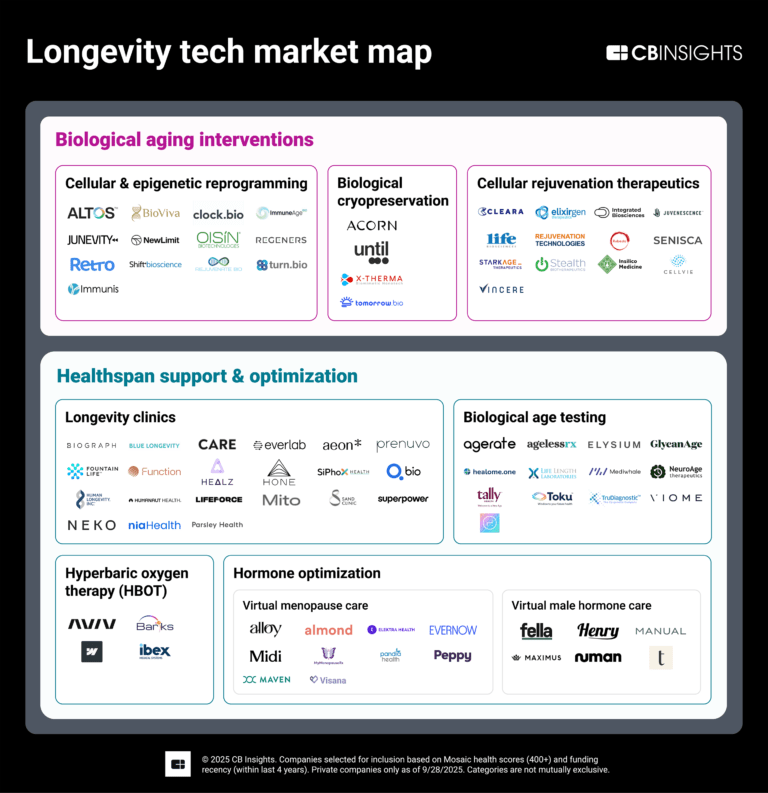
Oct 22, 2025
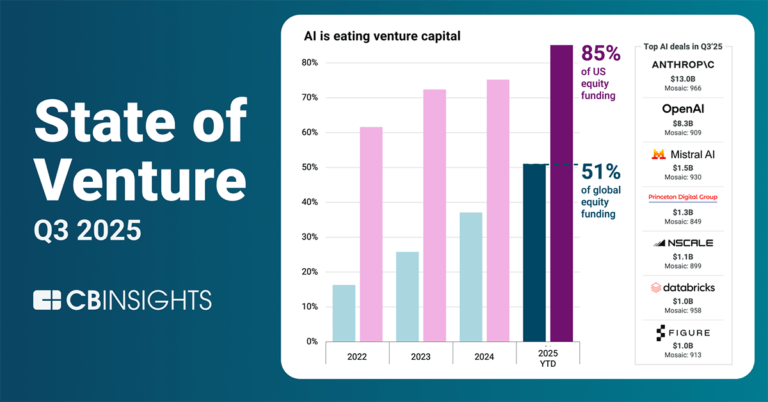
The longevity tech market map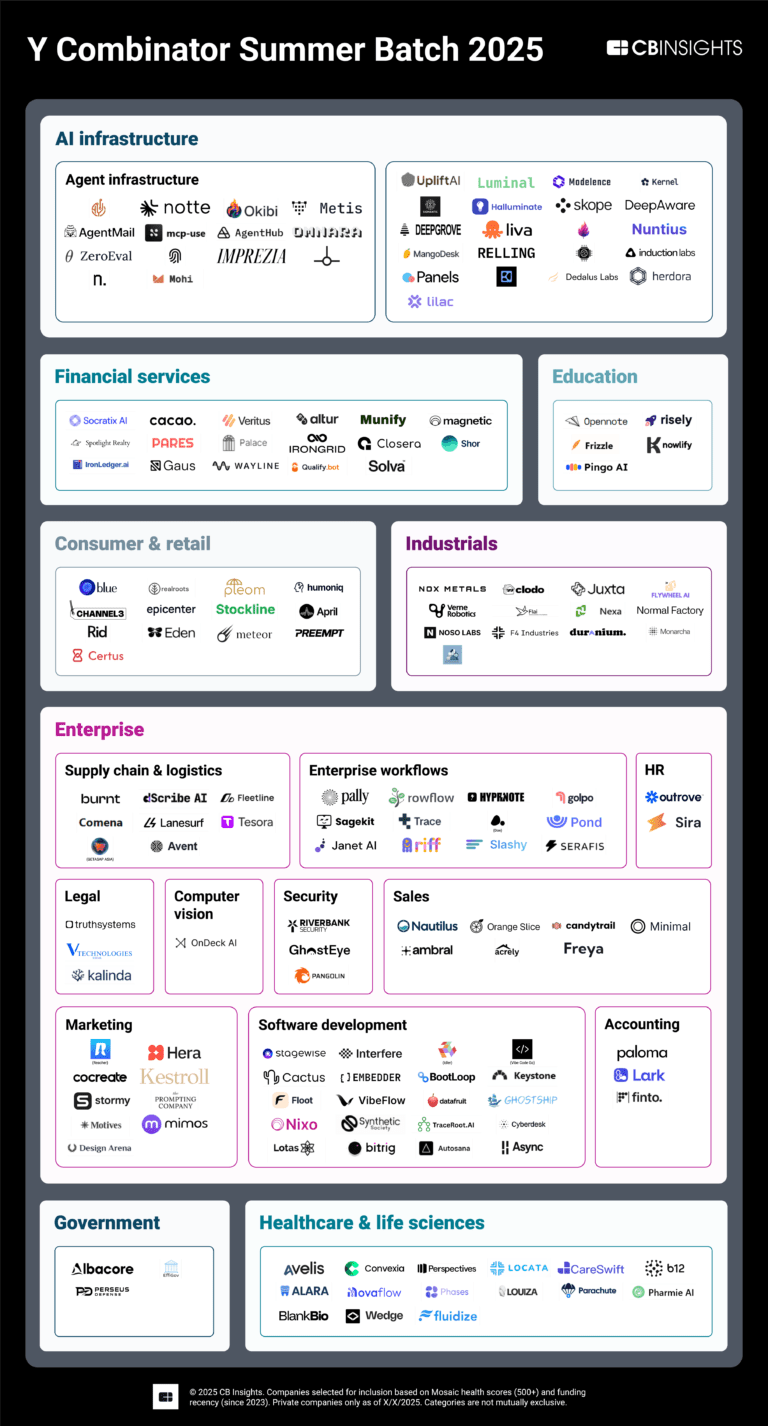
Oct 15, 2025 report
State of Venture Q3’25 Report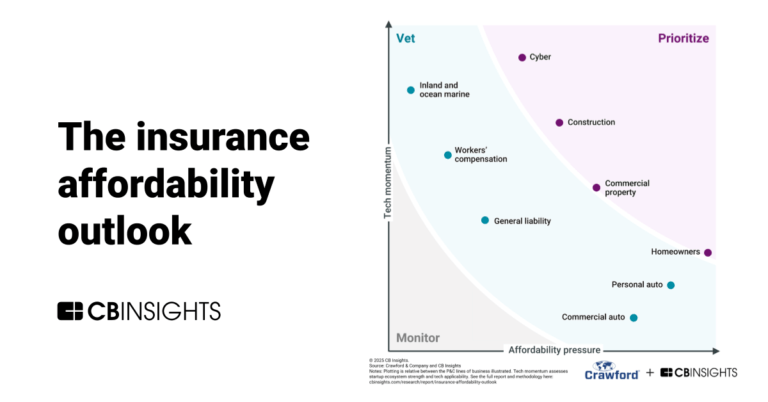
Expert Collections containing OpenAI
Expert Collections are analyst-curated lists that highlight the companies you need to know in the most important technology spaces.
OpenAI is included in 8 Expert Collections, including Unicorns- Billion Dollar Startups.
Unicorns- Billion Dollar Startups
1,297 items
Artificial Intelligence (AI)
37,233 items
Companies developing artificial intelligence solutions, including cross-industry applications, industry-specific products, and AI infrastructure solutions.
AI 100 (All Winners 2018-2025)
200 items
Generative AI 50
50 items
CB Insights' list of the 50 most promising private generative AI companies across the globe.
Generative AI
2,951 items
Companies working on generative AI applications and infrastructure.
AI 100 (2024)
100 items
OpenAI Patents
OpenAI has filed 27 patents.
The 3 most popular patent topics include:
- computational linguistics
- natural language processing
- machine learning

Application Date | Grant Date | Title | Related Topics | Status |
|---|---|---|---|---|
3/15/2024 | 12/10/2024 | Natural language processing, Computational linguistics, Artificial intelligence, Artificial intelligence applications, Chatterbots | Grant |
Application Date | 3/15/2024 |
|---|---|
Grant Date | 12/10/2024 |
Title | |
Related Topics | Natural language processing, Computational linguistics, Artificial intelligence, Artificial intelligence applications, Chatterbots |
Status | Grant |
Latest OpenAI News
Nov 4, 2025
Function (Sales & Marketing, Operations & Supply Chain, Finance & Accounting, HR), Integration Type, and End User – Global Forecast to 2031. The global conversational AI market is expected to reach USD 49.80 billion by 2031 from an estimated USD 17.05 billion in 2025, growing at a compound annual growth rate (CAGR) of 19.6% throughout the forecast period. Advances in natural language processing, growing digital adoption, and the need for automated, round-the-clock customer care have all contributed to the market's notable expansion for conversational AI. AI-powered chatbots and virtual assistants are being used by businesses to improve customer satisfaction, cut expenses, and grow operations effectively. These technologies are being used by sectors like telecommunications, BFSI, and e-commerce to increase engagement and personalize interactions. Conversational AI improves responsiveness and real-time decision-making when integrated with CRM systems and omnichannel platforms. Download PDF Brochure@ https://www.marketsandmarkets.com/pdfdownloadNew.asp?id=49043506 The expansion of the conversational AI market is influenced by various factors, including the rising demand for AI-powered customer support solutions, as businesses increasingly seek to enhance user experience while reducing operational costs. The widespread adoption of messaging apps and voice-enabled assistants has also accelerated market expansion, creating a fertile environment for chatbots and virtual agents. Additionally, the growing emphasis on omnichannel engagement strategies across industries such as e-commerce, banking, and healthcare fuels the integration of conversational AI. Advances in natural language processing (NLP) and machine learning technologies have significantly improved the accuracy and contextual understanding of AI systems, making them more effective in real-time interactions. By integration type, the internal enterprise systems segment is expected to register the largest market share during the forecast period The internal enterprise systems segment is expected to maintain the largest market share in the conversational AI market due to its deep integration into core business processes. Enterprises are increasingly embedding conversational AI into systems such as CRM, ERP, HRM, and ITSM platforms to automate routine tasks, improve employee experience, and enhance customer support. This integration allows businesses to unlock real-time insights, reduce operational bottlenecks, and drive data-driven decisions. Moreover, internal systems typically demand high levels of customization, data security, and regulatory compliance—areas where integrated conversational AI delivers robust value. As digital transformation accelerates, enterprises are prioritizing internal efficiencies, making this segment critical for scalable AI adoption. By product type, generative AI agents are poised for the highest growth rate during the forecast period. Generative AI agents are poised for the fastest growth during the forecast period in the conversational AI market due to their ability to produce intelligent, context-aware, and fluid responses. These agents leverage advanced deep learning models to interpret user intent, maintain conversational continuity, and generate personalized outputs in real time. Their scalability and adaptability make them suitable for diverse sectors such as healthcare, banking, retail, and enterprise support. Increasing demand for 24/7 automated customer service, combined with rising expectations for natural human-computer interaction, is driving their rapid adoption. Furthermore, advancements in language modeling, multilingual support, and emotional intelligence capabilities are expanding their use cases. As businesses seek to improve customer engagement and operational efficiency, investments in generative AI agents are expected to surge. By region, North America will account for the largest market during the forecast period. North America is projected to dominate the conversational AI market during the forecast period due to advanced technological infrastructure and high adoption of AI-driven solutions. The region hosts major AI companies and startups investing heavily in research and development. Additionally, strong demand from sectors like BFSI, healthcare, and retail fuels growth. Consumer awareness and integration of smart devices further support market expansion. Regulatory support and availability of skilled workforce also contribute to North America's leading position in this market. Request Sample Pages@ https://www.marketsandmarkets.com/requestsampleNew.asp?id=49043506 Unique Features in the Conversational AI Market The Conversational AI Market is characterized by advanced technologies that enable seamless human–machine interactions through natural language. One of its key features is the integration of natural language processing (NLP) and natural language understanding (NLU), allowing systems to comprehend user intent, context, and emotions with remarkable accuracy. This capability enhances customer experiences across various sectors such as retail, healthcare, and BFSI by delivering human-like conversational experiences. Another defining feature is the multi-lingual and omni-channel support offered by conversational AI platforms. These solutions can communicate in multiple languages and dialects while functioning seamlessly across voice assistants, chatbots, messaging apps, and social media platforms. This flexibility ensures broader user accessibility and consistent communication experiences regardless of the medium used. A third unique feature is the integration of AI with analytics and machine learning to enable continuous learning and improvement. Conversational AI systems can analyze past interactions, user behavior, and sentiment data to refine responses and personalize future conversations. This self-learning ability significantly enhances system efficiency and user satisfaction over time. Additionally, contextual and emotional intelligence has emerged as a powerful differentiator. Advanced systems are now capable of recognizing tone, sentiment, and intent to deliver empathetic and context-aware responses, making them more effective in customer support, HR management, and virtual assistant applications. Major Highlights of the Conversational AI Market The Conversational AI Market has witnessed significant growth due to the rising demand for personalized and efficient customer interactions across industries. Businesses are increasingly adopting AI-powered chatbots and virtual assistants to automate repetitive tasks, enhance customer engagement, and reduce operational costs. This adoption is driven by the need for round-the-clock customer support and the ability to handle large volumes of interactions simultaneously. Another major highlight is the rapid technological advancement in natural language processing (NLP), speech recognition, and sentiment analysis. These innovations have dramatically improved the accuracy and fluency of AI conversations, making interactions more natural and contextually relevant. The integration of generative AI models has further enhanced conversational capabilities, allowing systems to understand complex queries and generate human-like responses. The market is also witnessing growing integration of conversational AI with business intelligence and automation tools. Enterprises are leveraging AI-powered assistants not only for customer service but also for internal operations such as employee support, HR management, and sales enablement. This convergence of conversational AI and automation is helping organizations boost productivity and streamline workflows. Furthermore, there is a surge in multi-lingual and cross-platform conversational AI solutions, enabling global companies to serve diverse customer bases efficiently. Cloud-based solutions are gaining traction as they offer scalability, flexibility, and faster deployment, making them ideal for enterprises of all sizes. Inquire Before Buying@ https://www.marketsandmarkets.com/Enquiry_Before_BuyingNew.asp?id=49043506 Top Companies in the Conversational AI Market The major players in the conversational AI market include Microsoft (US), IBM (US), Google (US), OpenAI (US), Baidu (China), Boost.ai (Norway), Verloop.io (India), OneReach.ai (US), Omilia (Cyprus), and Aisera (US). Microsoft Microsoft is a leading player in the conversational AI market, driven by its strong cloud ecosystem and integration of AI across its product suite. Through its various offerings, Microsoft offers tools for speech recognition, language understanding, and bot development, enabling businesses to create intelligent conversational agents. Its AI capabilities are embedded in widely used products like Microsoft Teams and Dynamics 365, enhancing customer support and productivity. Microsoft also emphasizes responsible AI development, with clear guidelines and compliance measures, appealing to enterprises concerned with data privacy and ethics. Its global reach and deep enterprise relationships further solidify its position in this competitive and fast-growing sector. Google Google is a dominant force in the conversational AI market, leveraging its advanced natural language processing (NLP) capabilities and vast data resources. Its key products, such as Google Assistant, Bard (now integrated with Gemini), and Dialogflow, showcase cutting-edge AI and deep learning models. Through continuous advancements in large language models like PaLM 2 and Gemini, Google enhances conversational context, multilingual support, and personalized interactions. Its AI is widely integrated across Android devices, smart home systems, and enterprise solutions, giving it extensive reach. Google's research leadership, coupled with its cloud AI services, positions it as a key innovator driving the evolution of conversational AI technology globally. IBM IBM is a significant player in the conversational AI market, with its Watson Assistant platform leading the way. This AI-driven solution enables businesses to build and deploy sophisticated chatbots and virtual assistants that understand natural language and provide personalized, scalable customer support. Watson Assistant leverages IBM's AI and machine learning capabilities to help organizations automate interactions, improve customer service, and integrate seamlessly with existing systems. IBM also provides industry-specific solutions, such as Watson for healthcare and Watson for customer service, enhancing the flexibility and applicability of conversational AI across various sectors. Additionally, IBM focuses on ethical AI, ensuring that its conversational AI solutions align with privacy standards and fairness guidelines. Through these initiatives, IBM continues to shape the conversational AI landscape for enterprises globally. OpenAI OpenAI is a key player in the conversational AI market, best known for its GPT models, which power a wide range of natural language processing applications, including chatbots, virtual assistants, and customer service solutions. The company's flagship product, ChatGPT, has gained widespread adoption for its ability to engage in dynamic, context-aware conversations across various industries. OpenAI's models are integrated into enterprise solutions through partnerships, most notably with Microsoft, where they enhance tools like Microsoft Copilot and Azure OpenAI Service. By offering highly scalable, customizable AI models, OpenAI is driving advancements in conversational AI, enabling businesses to automate customer interactions, improve service efficiency, and provide personalized experiences at scale. The company's focus on ethical AI development ensures its conversational solutions are aligned with transparency, privacy, and fairness standards. Baidu Baidu, a leading Chinese tech company, is actively expanding its presence in the conversational AI market with its Ernie Bot, a generative AI chatbot based on its proprietary Ernie 4.0 language model. Launched as part of Baidu's broader strategy to integrate AI into various sectors, Ernie Bot offers advanced natural language understanding and generation capabilities, supporting a wide range of applications from customer service to content creation. Baidu leverages its strengths in AI research and cloud computing to enhance Ernie Bot's conversational abilities, providing businesses with tools to create intelligent chatbots and virtual assistants. The company's conversational AI solutions are integrated into its Baidu Cloud platform, enabling enterprises to deploy scalable AI systems across industries such as healthcare, finance, and e-commerce. Through these innovations, Baidu is playing a pivotal role in shaping the future of conversational AI in China and beyond. Media Contact Company Name: MarketsandMarkets™ Research Private Ltd. Contact Person: Mr. Rohan Salgarkar Email: Send Email Phone: Address: 1615 South Congress Ave. Suite 103, Delray Beach, FL 33445 City: Florida State: Florida Country: United States Website: https://www.marketsandmarkets.com/Market-Reports/conversational-ai-market-49043506.html
OpenAI Frequently Asked Questions (FAQ)
When was OpenAI founded?
OpenAI was founded in 2015.
Where is OpenAI's headquarters?
OpenAI's headquarters is located at 3180 18th Street, San Francisco.
What is OpenAI's latest funding round?
OpenAI's latest funding round is Corporate Minority - IV.
How much did OpenAI raise?
OpenAI raised a total of $64.1B.
Who are the investors of OpenAI?
Investors of OpenAI include SoftBank, Thrive Capital, Dragoneer Investment Group, MGX, T. Rowe Price and 90 more.
Who are OpenAI's competitors?
Competitors of OpenAI include Reflection AI, Mistral AI, xAI, Perplexity, Anthropic and 7 more.
Loading...
Compare OpenAI to Competitors

DeepSeek focuses on the development of artificial general intelligence (AGI) within the technology sector. The company offers a platform that facilitates application programming interface (API) calls for integrating AI (artificial intelligence) capabilities and a chat interface for exploring AGI applications. DeepSeek's products are designed to serve as efficient AI assistants for various user needs. It was founded in 2023 and is based in Hangzhou, China.

Anthropic focuses on artificial intelligence (AI) safety and research within the AI sector. It offers AI models, including Opus, Sonnet, and Haiku, for various applications such as coding, customer support, and education. The company primarily serves sectors that require AI solutions, including technology, education, and customer service industries. It was founded in 2021 and is based in San Francisco, California.

01.AI operates as a company focused on technology and applications in the artificial intelligence (AI) sector through foundational model developments. The company provides enterprise AI agents and applications built on AI 2.0 technology, with the goal of improving human productivity and generating economic and societal value. 01.AI serves sectors that are integrating AI into their business models and applications. It was founded in 2023 and is based in Beijing, China.

Hugging Face operates as an open-source machine learning platform focused on artificial intelligence within the technology sector. The company provides a space for the machine learning community to develop models, share datasets, and host artificial intelligence (AI) applications, and offers enterprise solutions. Hugging Face was formerly known as Hugging Face. It was founded in 2016 and is based in Paris, France.

Inflection AI focuses on enterprise artificial intelligence, providing artificial intelligence (AI) model training and tuning while addressing data security and cost efficiency for enterprise clients. The company's solutions integrate into business operations. It was founded in 2022 and is based in Palo Alto, California.

Mistral AI focuses on the development of open-source artificial intelligence models in the technology sector. Its main offerings include efficient, adaptable artificial intelligence (AI) models that allow for full customization by users without requiring their data. Its models are primarily used in the technology industry. It was founded in 2023 and is based in Paris, France.
Loading...