

Multiverse Computing
Founded Year
2019Stage
Series B | AliveTotal Raised
$339.91MLast Raised
$215M | 5 mos agoRevenue
$0000Mosaic Score The Mosaic Score is an algorithm that measures the overall financial health and market potential of private companies.
-8 points in the past 30 days
About Multiverse Computing
Multiverse Computing works in quantum artificial intelligence (AI) and focuses on optimization within various sectors. The company provides AI model compression technology aimed at improving the performance of AI systems. Multiverse Computing serves sectors such as finance, energy, manufacturing, health and life sciences, engineering, aerospace, cybersecurity, defense, and chemistry. It was founded in 2019 and is based in San Sebastian, Spain.
Loading...
Multiverse Computing's Product Videos

Loading...
Research containing Multiverse Computing
Get data-driven expert analysis from the CB Insights Intelligence Unit.
CB Insights Intelligence Analysts have mentioned Multiverse Computing in 7 CB Insights research briefs, most recently on Oct 20, 2025.

Oct 20, 2025 report
Book of Scouting Reports: 2025’s Digital Health 50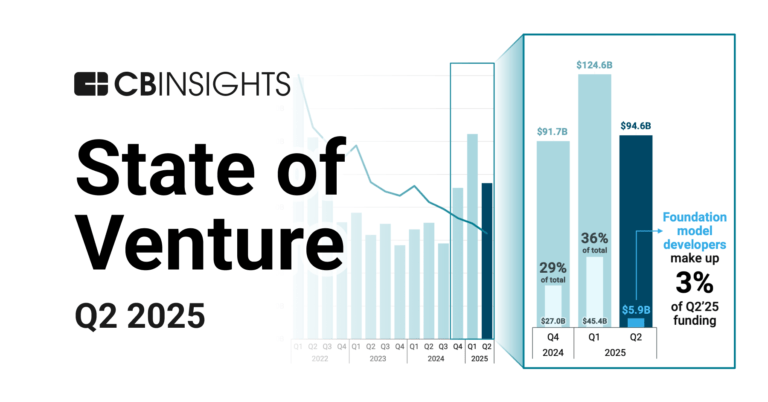
Jul 10, 2025 report
State of Venture Q2’25 Report

May 16, 2025 report
Book of Scouting Reports: 2025’s AI 100
Apr 24, 2025 report
AI 100: The most promising artificial intelligence startups of 2025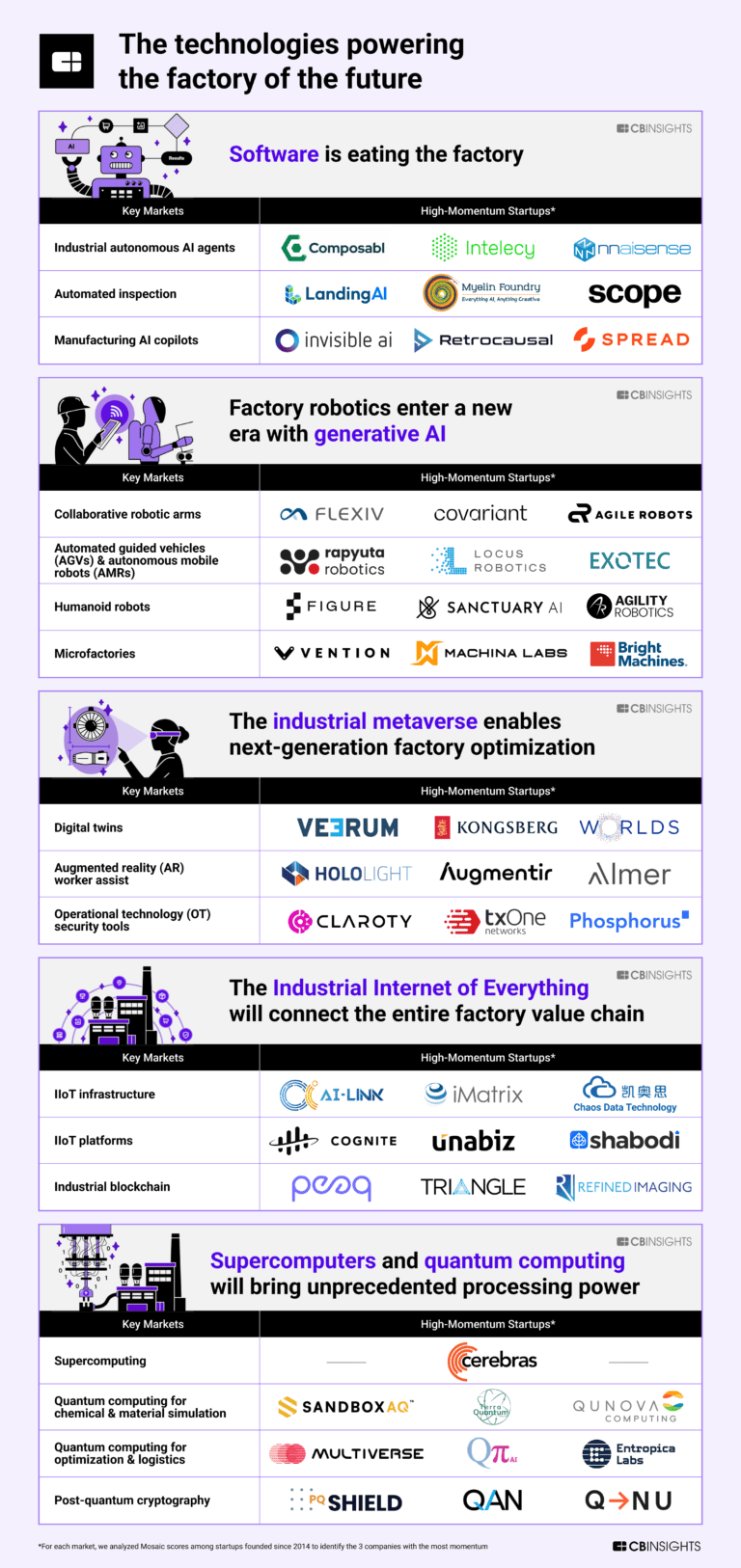
Expert Collections containing Multiverse Computing
Expert Collections are analyst-curated lists that highlight the companies you need to know in the most important technology spaces.
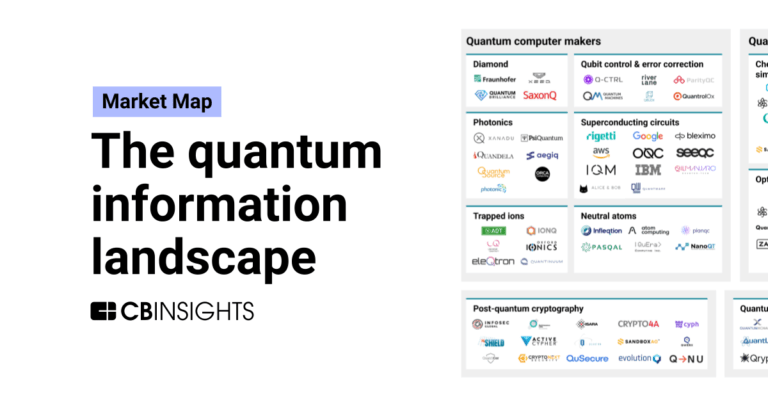
Multiverse Computing is included in 8 Expert Collections, including Quantum Tech.
Quantum Tech
628 items
This Expert Collection contains private and recently exited companies working on quantum computing, quantum communication, post-quantum cryptography, quantum sensors, and other quantum tech.
Grid and Utility
2,383 items
Companies that are developing and implementing new technologies to optimize the grid and utility sector. This includes, but is not limited to, distributed energy resources, infrastructure security, utility asset management, grid inspection, energy efficiency, grid storage, etc.
Artificial Intelligence (AI)
16,604 items
Companies developing artificial intelligence solutions, including cross-industry applications, industry-specific products, and AI infrastructure solutions.
Semiconductors, Chips, and Advanced Electronics
7,494 items
Companies in the semiconductors & HPC space, including integrated device manufacturers (IDMs), fabless firms, semiconductor production equipment manufacturers, electronic design automation (EDA), advanced semiconductor material companies, and more
AI 100 (All Winners 2018-2025)
200 items
Generative AI
2,951 items
Companies working on generative AI applications and infrastructure.
Multiverse Computing Patents
Multiverse Computing has filed 40 patents.
The 3 most popular patent topics include:
- quantum information science
- machine learning
- quantum mechanics
Application Date | Grant Date | Title | Related Topics | Status |
|---|---|---|---|---|
9/1/2021 | 3/19/2024 | Quantum information science, Classification algorithms, Mathematical optimization, Units of information, Machine learning | Grant |
Application Date | 9/1/2021 |
|---|---|
Grant Date | 3/19/2024 |
Title | |
Related Topics | Quantum information science, Classification algorithms, Mathematical optimization, Units of information, Machine learning |
Status | Grant |
Latest Multiverse Computing News
Oct 22, 2025
Insider Brief Senior defense leaders and technologists at The City Quantum & AI Summit in London said quantum and artificial intelligence will be decisive in maintaining NATO’s strategic advantage amid rising geopolitical tensions. Panelists including representatives from Multiverse Computing, Aquark Technologies, BAE Systems, and MBDA highlighted how quantum sensing, AI assurance, and collaboration between startups and defense contractors are reshaping deterrence and resilience. Speakers warned that Europe’s quantum ambitions are constrained by funding and regulation, emphasizing the need for faster innovation, stronger public-private partnerships, and sustained defense investment before it is too late. At a time when technology defines national power, senior defense leaders and technologists say quantum and artificial intelligence could prove decisive in maintaining strategic advantage across the NATO alliance. Speaking at The City Quantum & AI Summit’s defense panel discussion chaired by General Sir Patrick Sanders, the high-level defence panel explored how quantum sensing, AI assurance and public-private collaboration are reshaping deterrence and resilience in an increasingly hostile world.The summit, one of the premier summits bringing together Quantum, Defense and the Financial Sector, was celebrating its Fifth Anniversary in London. General Sanders, who led the discussion, framed the debate with a historical perspective. Drawing on thinkers from Gramsci to Kissinger, he warned that nations and institutions risk “a strange defeat” when they fail to adapt to technological and ideological shifts. He argued that defense organizations must avoid this fate by embracing innovation at speed: To that end, Sanders convened four leaders working at the frontiers of quantum and AI transformation: Enrique Lizaso of Multiverse Computing, Andrei Dragomir of Aquark Technologies, Rob Flanders of BAE Systems, and Edwin Bowden-Peters of MBDA. A Dual Challenge: Competing and Securing Rob Flanders, Head of Threat and Incident Response at BAE Systems, described a defense environment shaped by what he called a “dipolar threat landscape.” He pointed to active conflict on NATO’s borders and long-term strategic competition with China as defining pressures. “So we’re faced with a literal war on the border, combined with a much longer term geostrategic threat that essentially sits behind lots of the technologies that we’re looking at, discussing and adopting today,” said Flanders. “So I think it’s from our perspective, very much a dipolar threat landscape that we need to be aware of and be concerned about.” Flanders said that emerging capabilities like AI-assisted quantum systems demand rigorous assurance before being fielded. “In defense, high assurance isn’t optional,” he added, explaining that engineers must know the provenance of data that trains AI systems. “If you put garbage in, you might well get garbage out – and that’s the last thing you want on a strategic program,” Flanders added. Quantum Sensing and the Return of Deterrence For Andrei Dragomir, founder and CEO of Aquark Technologies, quantum sensing is already transforming how NATO nations approach navigation, timing, and infrastructure resilience. His company, the first quantum investment of the NATO Innovation Fund, builds compact cold-atom clocks and sensors that work in GPS-denied environments. Dragomir said that the key advantage of quantum sensing is its ability to “collect good data rather than bad data” – eliminating noise at the source rather than filtering it afterward. That accuracy, he argued, underpins both deterrence and resilience. “So, having that technology and using it in a proper way can definitely be like the next bow and arrow of defense,” said Dragomir. “It’s also an indirect capability, where if you can navigate in GPS denied environments, eventually your enemy is going to stop spoofing your GPS, because it’s pointless, and therefore you can still rely on the existing infrastructure that you would otherwise have relied on today, and I think it’s going to have a huge impact.” He forecast that deployable quantum navigation systems could begin scaling within 12 to 36 months, emphasizing collaboration as essential to success. “I think it’s collaboration that is absolutely essential at this point in time,” said Dragomir. “There’s no single player that can build towards a vision like this by themselves. We need to have our doors very, very open.” Europe’s Quantum Investment Gap Enrique Lizaso, CEO and co-founder of Multiverse Computing, offered a candid view of Europe’s position in the quantum race. His firm develops hybrid quantum-AI algorithms for banks, defense manufacturers, and governments. Lizaso argued that Europe’s problem is not talent or ideas, but financing and regulation. “We have the technology, maybe even better,” said Lizaso, adding, “But the way to convert – to transform – that into something which is more than that, by which I mean create companies that are big enough – is a different way. This is a financial problem at the very, very, very core of the situation, particularly in Europe.” He also pointed to new defense applications of AI model compression, including lightweight multimodal neural networks that can run on small devices and recognize objects in the field. However, he warned that overly restrictive data-use rules could delay such innovations. Bridging the Gap Between Labs and Battlefields Edwin Bowden-Peters, UK Technology Watch Lead at MBDA, underscored how innovation is accelerating beyond traditional defense boundaries. “Access to technology has been completely democratized,” he said, noting that tools once confined to military labs are now commonplace in consumer electronics. MBDA, which has invested directly in Aquark, is testing new models of collaboration with startups. Bowden-Peters recalled that Aquark caught his team’s attention when they demonstrated a ruggedized quantum device that could be carried rather than confined to a lab bench. “They cared about it being ruggedized and real world and so immediately we knew that they cared about the same things as us,” Bowden-Peters said. “And so then what we did is we funded an experiment, and we said, can we push this further?” He added that defense must increase its risk appetite for performance — but never at the expense of safety. “If you come second in war, someone doesn’t go home,” he said. “That’s why we have to test to extremes.” Investing Before It’s Too Late General Sanders closed with a reminder that defense spending is not an indulgence but an insurance policy. In 1936, he noted, the U.K. spent 2.9% of GDP on defense; by 1939, that figure had risen to 10%, and by 1945, to 50%. “The sums we’re talking about today – half a percent, one percent of GDP – are nothing,” he said. “Prevention is a hell of a lot cheaper than cure.”
Multiverse Computing Frequently Asked Questions (FAQ)
When was Multiverse Computing founded?
Multiverse Computing was founded in 2019.
Where is Multiverse Computing's headquarters?
Multiverse Computing's headquarters is located at Paseo de Miramon 170, San Sebastian.
What is Multiverse Computing's latest funding round?
Multiverse Computing's latest funding round is Series B.
How much did Multiverse Computing raise?
Multiverse Computing raised a total of $339.91M.
Who are the investors of Multiverse Computing?
Investors of Multiverse Computing include Quantonation, CDP Venture Capital, Santander Asset Management, HP Tech Ventures, SPRI Group and 31 more.
Who are Multiverse Computing's competitors?
Competitors of Multiverse Computing include Mistral AI, Cohere, Classiq, QpiAI, Zapata Quantum and 7 more.
Loading...
Compare Multiverse Computing to Competitors

Classiq focuses on quantum computing software in the technology industry. The company offers a platform that enables the design, analysis, and execution of quantum circuits, transforming high-level functional models into optimized quantum circuits. The company primarily serves sectors such as optimization, machine learning, finance, and chemistry. It was founded in 2020 and is based in Tel Aviv, Israel.
Qedma develops software for the quantum computing industry. The company provides options for quantum error suppression and mitigation, along with characterization software for multi-qubit systems, which aim to support quantum computations. Its products are intended to work with existing quantum hardware across various platforms, targeting quantum hardware developers. It was founded in 2020 and is based in Tel Aviv, Israel.

SandboxAQ specializes in AI and advanced computing, focusing on large quantitative models across various sectors. Its primary offerings include AI simulation for drug discovery, materials science, cybersecurity, navigation, and medical diagnostics, all grounded in the laws of physics, chemistry, biology, and economics. SandboxAQ primarily serves sectors such as life sciences, financial services, and navigation, which require advanced computational models. It was founded in 2021 and is based in Palo Alto, California.
1QBit Information Technologies specializes in developing hardware-agnostic platforms for quantum and classical processors. It focuses on the intersection of quantum computing and artificial intelligence. The company offers services that include optimization, simulation, and machine learning solutions designed to improve alongside advancements in computational hardware. It was founded in 2012 and is based in Vancouver, Canada.

Kvantify specializes in advanced quantum computing solutions for various business sectors. The company offers off-the-shelf and custom software designed to tackle complex computational challenges, with a focus on being quantum-ready and leveraging cloud technology. Kvantify's primary customers include the life sciences, financial services, and logistics industries. It was founded in 2022 and is based in Kobenhavn, Denmark.
IQM specializes in superconducting quantum computers and operates within the quantum computing industry. The company offers a range of quantum computing products, including small-scale, advanced superconducting quantum computers with varying qubit counts, and a quantum cloud platform for research and development purposes. IQM primarily serves research laboratories, supercomputing centers, and industrial customers seeking to leverage quantum advantage. It was founded in 2018 and is based in Espoo, Finland.
Loading...