

M-Kopa
Founded Year
2011Stage
Series F | AliveTotal Raised
$649.05MRevenue
$0000Mosaic Score The Mosaic Score is an algorithm that measures the overall financial health and market potential of private companies.
+75 points in the past 30 days
About M-Kopa
M-KOPA is a company operating in the telecommunications sector. It provides products such as smartphone financing, digital loans, health insurance, device protection, and data plans. M-KOPA serves individuals seeking financial inclusion and access to digital services. M-Kopa was formerly known as M-KOPA Holdings Limited. It was founded in 2011 and is based in Nairobi, Kenya.
Loading...
Loading...
Research containing M-Kopa
Get data-driven expert analysis from the CB Insights Intelligence Unit.
CB Insights Intelligence Analysts have mentioned M-Kopa in 1 CB Insights research brief, most recently on Jan 18, 2024.
Jan 18, 2024 report
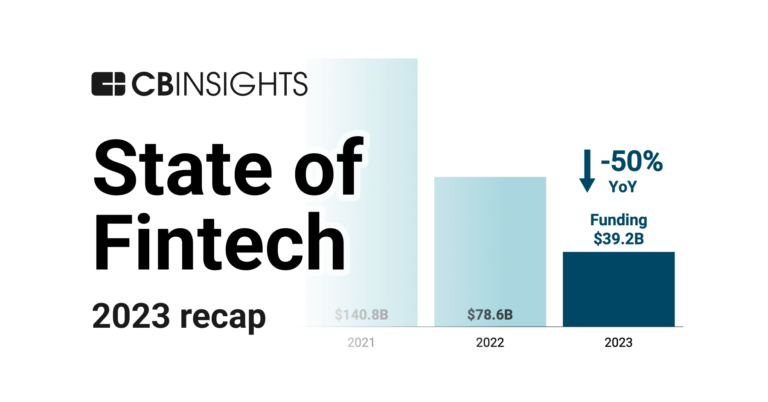
State of Fintech 2023 ReportExpert Collections containing M-Kopa
Expert Collections are analyst-curated lists that highlight the companies you need to know in the most important technology spaces.
M-Kopa is included in 2 Expert Collections, including Fintech.
Fintech
14,203 items
Excludes US-based companies
Digital Lending
197 items
Track and capture company information and workflow.
Latest M-Kopa News
Oct 21, 2025
However, a new report by TechCabal Insights says the next billion-dollar opportunities won't come from building more apps rather deepening the innovation in the invisible systems that power trade, compliance, finance, and business intelligence. Drawing on data from over 2,000 African businesses and insights from founders, investors, and policymakers, the report maps where innovation has taken root and where it still lags. While Africa's commerce is maturing, its critical “X areas” — the back-office and operational problems are largely untouched. Issues like regulatory compliance, business insurance, and turning transaction data into usable intelligence remain pain points for the sector. The report revealed that investment in commerce is already shifting in another direction. Since 2019, Africa's e-commerce sector has pulled in $2.27 billion, with retail tech taking nearly half of that. But investors are now more cautious, prioritising B2B “painkillers”, platforms that solve non-negotiable problems over “vitamins,” the flashy consumer startups that burn through capital. Venture firms like Ventures Platform and Capria Ventures told TC Insights that they are backing companies building the digital rails for trade: the fintech infrastructure, logistics, and compliance tools that make commerce truly scalable. “Capria has invested in companies that use Al to assess creditworthiness based on platform activity rather than bank statements, allowing them to underwrite and disburse loans in minutes, not weeks,” said Mobola da-Silva, Partner, Capria Ventures. This transition is partly driven by fatigue. Payments, logistics, and e-commerce in what the report calls the “Y areas” have become crowded “red oceans.” Margins are thinning, differentiation is fading, and every startup seems to be solving the same surface-level problem. “The frontier of value creation has shifted elsewhere,” said Ventures Platform's managing partner, Dotun Olowoporoku. Founders who once chased consumer growth are now turning inward to fix the fundamentals of how businesses make payments, move goods, insure stock, and make sense of their sales data. The future, according to the report, belongs to companies building the continent's trade backbone. It noted that these include startups digitising supply chains, embedding credit directly into retail platforms, and automating compliance across borders. For small shopkeepers and mid-sized enterprises, these services are not luxuries but necessities. In the report, Ismael Belkhayat, founder of Moroccan B2B platform Chari noted that businesses need to tackle the customer and B2B challenges in their operations. He said his company integrates inventory ordering with payments and micro-insurance, a model he said captures the essence of the next wave of bundling critical services into one ecosystem. “You cannot fix Africa's retail distribution without tackling financial inclusion,” he said. “The future of commerce is not in consumer apps, but in solving these deep operational problems.” The report noted that platforms like Jumia, Flutterwave, and M-Pesa have become symbols of an economy in motion, turning smartphones into banks and marketplaces, but the gaps could be filled by deep solutions to help millions of small and medium businesses to seamlessly operate. Across markets from Lagos to Nairobi to Casablanca, founders are quietly tackling the under-innovated parts of commerce with what TC Insights calls the “engine room.” These include deeper supply chain digitisation, embedded finance to compliance automation, post-purchase logistics, business insurance. It noted that Africa commerce doesn't need more ways to collect payments, it needs infrastructure that keeps trade flowing, data that powers decision-making, and systems that make businesses resilient. This shift, the report argues, is becoming visible across different markets. In Nigeria, OmniRetail has built a network that connects manufacturers, distributors, and over 150,000 retailers, enabling them to order inventory, access credit, and process digital payments on a single platform. By aggregating both goods and funds, the company achieved profitability in 2024, defying a market trend of high-burn startups. In North Africa, Morocco's Chari integrates payments, micro-insurance, and credit into its B2B commerce platform, proving that solving for depth is not just reach but creates stickier businesses. M-KOPA, the East African asset financier, extends the logic further by embedding finance directly into everyday devices like smartphones, helping informal workers build credit and connect to digital marketplaces. These companies represent a wider realignment in investor thinking as deeper innovations in the existing service are turning formal and informal economic activity into bankable data, closing a long-standing trust gap between SMEs and financiers and strengthening the next phase of growth. It also noted another defining shift is a trade pattern shift across markets from North–South to South–South trade corridors. As global supply chains realign, Africa's biggest trade flows are increasingly with China, India, Brazil, and the Gulf states. This evolution is creating an urgent need for new digital infrastructure to support cross-border payments, compliance, and logistics. “Supply chain digitisation and financing particularly in the South–South trade corridor—will define the next wave of African commerce,” Olowoporoku predicts. “Whoever cracks visibility, trust, and financing across these corridors won't just build a large company. They'll define the architecture of Africa's future commerce system.” That system for the next phase of growth will depend heavily on policy coordination. In an interview featured in the report, Nigeria's Minister of Trade and Investment, Dr. Jumoke Oduwole, notes that harmonising trade regulations across Africa is key to realising the promise of the African Continental Free Trade Area (AfCFTA). She added that private innovation can build the tools that improve commerce growth, but public policy must open the doors. The macro numbers also make the case for urgency. Africa's population is set to reach 1.55 billion by 2025, with nearly half connected to the internet. Yet despite rapid connectivity growth, the report's analysis of indices like the Africa Infrastructure Development Index and the ICT Development Index shows that weak logistics systems and uneven governance continue to constrain significant commerce growth. South Africa leads the continent in digital governance readiness, while nations like Nigeria and Kenya remain mid-tier performers. These gaps indicate how deeper innovation can shape trade, compliance, and expand.
M-Kopa Frequently Asked Questions (FAQ)
When was M-Kopa founded?
M-Kopa was founded in 2011.
Where is M-Kopa's headquarters?
M-Kopa's headquarters is located at 21 Riverside Paddocks, Nairobi.
What is M-Kopa's latest funding round?
M-Kopa's latest funding round is Series F.
How much did M-Kopa raise?
M-Kopa raised a total of $649.05M.
Who are the investors of M-Kopa?
Investors of M-Kopa include Sumitomo, U.S. International Development Finance Corporation, IFC, British International Investment, Standard Bank and 33 more.
Who are M-Kopa's competitors?
Competitors of M-Kopa include Messenger and 1 more.
Loading...
Compare M-Kopa to Competitors

TradeDepot provides supply chain solutions for the retail sector, focusing on helping manufacturers and distributors maintain stock in retail stores across Africa and other emerging markets. The company offers a B2B eCommerce platform that allows retail stores to order products at any time, along with services such as fleet management, trained drivers, and fulfillment for deliveries and inventory management. TradeDepot serves the retail industry by facilitating product availability and supply chain management. It was founded in 2016 and is based in San Francisco, California.

Wasoko focuses on revolutionizing access to essential goods and services. The company provides a mobile ordering and delivery service for small shops, offering a convenient and cost-effective way to access products and services, primarily serving the retail industry across Africa. Wasoko was formerly known as Sokowatch. It was founded in 2013 and is based in Nairobi, Kenya.
Sabi provides infrastructure for the distribution of goods and services within Africa's digital commerce sector. The company offers a platform that supports supply chain management, facilitates sourcing and distribution, ensures sustainability and compliance, and includes services aimed at financial inclusion. Sabi serves the e-commerce industry, the real estate tech industry, and the cloud computing industry. It was founded in 2021 and is based in Lagos, Nigeria.
Abmod is a company with over 25 years of experience specializing in business consulting and strategic planning within various sectors including finance and marketing. The company offers services such as business analysis, financial advice, and fintech analysis to support informed decision-making and sustainable growth. Abmod's clientele primarily consists of organizations seeking to enhance their corporate strategies and operational effectiveness. It was founded in 2015 and is based in Boulder, Colorado.

MAX focuses on revolutionizing transportation in Africa through technology and eco-friendly solutions. The company offers an on-demand motorcycle-taxi-hailing platform, designs and customizes electric vehicles for public transportation, and provides a suite of services aimed at empowering drivers and promoting sustainable growth. MAX primarily serves the transportation sector, with a particular emphasis on improving the motorcycle taxi industry and advancing electric mobility. It was founded in 2015 and is based in Lagos, Nigeria.

Moove is a global mobility fintech company that specializes in revenue-based vehicle financing and financial services within the transportation sector. The company offers vehicle financing solutions to mobility entrepreneurs, enabling them to own vehicles for use in various transportation services. Moove primarily serves the ride-hailing, logistics, mass transit, and instant delivery industries with its financial products. It was founded in 2019 and is based in Lagos, Nigeria.
Loading...