

Khazna
Founded Year
2019Stage
Series A - II | AliveTotal Raised
$54.7MLast Raised
$16M | 9 mos agoMosaic Score The Mosaic Score is an algorithm that measures the overall financial health and market potential of private companies.
+160 points in the past 30 days
About Khazna
Khazna is a financial technology company specializing in digital financial services. The company offers a financial super app that provides underbanked Egyptians with access to smartphone-based financial services. Khazna primarily serves the corporate sector by offering financial solutions to employees through a mobile application that allows them to access a portion of their earned salary as needed. It was founded in 2019 and is based in Cairo, Egypt.
Loading...
Khazna's Products & Differentiators
Earned wage access
Providing instant access to salaries for users
Loading...
Research containing Khazna
Get data-driven expert analysis from the CB Insights Intelligence Unit.
CB Insights Intelligence Analysts have mentioned Khazna in 2 CB Insights research briefs, most recently on Oct 23, 2025.
Oct 23, 2025 report
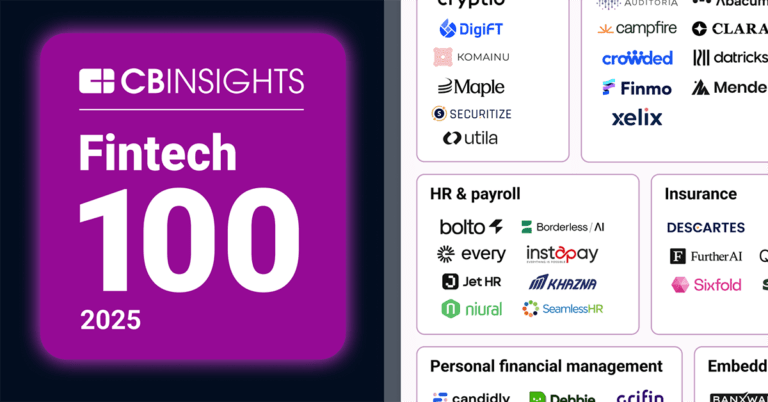
Fintech 100: The most promising fintech startups of 2025
Oct 23, 2025 report
Book of Scouting Reports: 2025’s Fintech 100Expert Collections containing Khazna
Expert Collections are analyst-curated lists that highlight the companies you need to know in the most important technology spaces.
Khazna is included in 3 Expert Collections, including HR Tech.
HR Tech
6,137 items
The HR tech collection includes software vendors that enable companies to develop, hire, manage, and pay their workforces. Focus areas include benefits, compensation, engagement, EORs & PEOs, HRIS & HRMS, learning & development, payroll, talent acquisition, and talent management.
Fintech
14,203 items
Excludes US-based companies
Fintech 100
100 items
Latest Khazna News
Oct 26, 2025
Funding Frenemies - Crypto and AI Crash the Party Forget Tiktoks of 2021 – investors’ flirtations have pivoted dramatically. In Q1’25, over half of the largest seed/A deals targeted blockchain and crypto infrastructure startups. (Yes, crypto – not the cute puppy coins – just massive cryptobanks and trading rails.) At the same time, fintech-focused AI companies are gobbling up a record share of funding: 16% of all deals in Q1, and jumping to 23% of funding dollars by Q3. Five of the top 10 deals in Q3 even went to AI-enabled finance platforms like Ramp and AppZen, cementing this trend. Another clear trend: bigger bets on fewer companies. After steady decline, total fintech funding actually perked back up to $10.3B in Q1’25 (its highest since early 2023), thanks largely to one $2B Binance megadeal. By Q3, funding was flat at ~$10.9B but mega-rounds (>$100M) made up a whopping 40% of that pile. In plain English, investors are flush with IPO regret, so they’re pouring more cash into fewer, later-stage deals. Indeed, mid-/late-stage rounds hit their highest deal share since 2022, while early-stage funding dipped below 70% of deals for the first time since 2020. (The median late-stage deal size is up 50% vs. 2024 – all those spreadsheet-crunching CFOs insisting on clear paths to profit.) Regionally, Silicon Valley still commands the lion’s share (US was ~39% of Q3 deals), but “unsexy” sectors have global players. Corporate VCs are all over crypto fintech: Coinbase Ventures led Q1 with 6 deals, OKX Ventures had 5. Meanwhile Asia, Latin America, and Africa are represented by success stories, even if their funding slices are smaller. (CB Insights’ Fintech 100 lists Uzum in Uzbekistan and Affinity in Ghana – so yes, fintech unicorns are popping up in “surprising” places.) The New Finance Workforce If you thought “AI in fintech” meant chatty bots for customer service, think again. Fintech 100 firms show that the real action is automating complex workflows. Eleven winners (across 8 categories!) are building purpose-built AI agents to handle finance tasks – debt collection, AML compliance, payroll approvals, you name it. For example, a startup called Borderless built an agent (on Cohere’s large language models) that automates global payroll and hiring, and Murphy’s agents boost debt recovery by ~40%. Catena Labs is even wiring up “agentic” payment rails so bots can pay invoices on our behalf. In short, specialized AI bots are now colleagues in the finance department, not just assistants. This wave is hitting accounting and operations particularly hard. Seventeen Fintech 100 companies (vs. only 10 last year) use AI to rip out manual chores in accounting, treasury, invoicing and payroll. Their pitch: speedier closes, real-time data, zero human error. (Campfire promises 95%-accurate reconciliations; Xelix’s agents hunt fraud and prevent duplicate payments; Niural’s “EMMA” runs payroll in 150 countries.) Crucially, these workflows are fast becoming “all-in-one” platforms: once you have an AI payroll engine, why not add banking, salaries-on-demand, and even corporate card features? Fintech 100 members Khazna (Egypt/Saudi earned-wage access) and InstaPay (Malaysia migrant payroll remittances) are proof-of-concept that embedded finance around payroll is the new normal. One quick aside: the hype cycle isn’t over – if it ever even started. Enterprises are still testing and integrating (as Manlio Carrelli points out, agent-only success is 1) high-quality data and 2) vendor management). But the scoreboard is clear: in the race between “traditional fintech” and “AI-first fintech,” the AI teams are pulling away. If you’re building fintech today, your odds of success probably involve AI in some way (just look: one in five new unicorns in 2025 is an “agent” startup).
Khazna Frequently Asked Questions (FAQ)
When was Khazna founded?
Khazna was founded in 2019.
Where is Khazna's headquarters?
Khazna's headquarters is located at Beside Greek Campus 11 Youssef El Guindy Street, Tahrir, Down Town, Cairo.
What is Khazna's latest funding round?
Khazna's latest funding round is Series A - II.
How much did Khazna raise?
Khazna raised a total of $54.7M.
Who are the investors of Khazna?
Investors of Khazna include Nclude, Disruptech Ventures, Khwarizmi Ventures, Quona, Speedinvest and 16 more.
Who are Khazna's competitors?
Competitors of Khazna include Tamara, Clair, Tabby, Paymob, MNT Halan and 7 more.
What products does Khazna offer?
Khazna's products include Earned wage access.
Loading...
Compare Khazna to Competitors

MNT Halan operates as a financial technology company focusing on digitizing traditional banking and cash-based markets. The company offers services, including digital payment solutions, lending services to the unbanked and underbanked, and an e-commerce platform. It primarily serves the financial sector and the e-commerce industry. MNT Halan was founded in 2017 and is based in Cairo, Egypt.

Tabby is a financial technology company that operates in the consumer financing sector, offering buy now pay later services. The company allows consumers to split their purchases into four monthly payments, with no fees for timely payments. Tabby provides services such as a rewards program, purchase protection, and a shopping assistant app. It was founded in 2019 and is based in Riyadh, Saudi Arabia.

Tamara operates in the financial technology sector. The company provides a mobile application offering flexible payment solutions and allows customers to divide their bills into multiple installments without delay fees. Tamara primarily serves the e-commerce industry, with global and regional brands to local small and medium businesses. It was founded in 2020 and is based in Riyadh, Saudi Arabia.
Cashew specializes in flexible payment solutions within the financial services sector. The company offers a range of products, including buy now, pay later options, interest-free installment plans, and comprehensive financial management services. Cashew primarily caters to individual consumers seeking manageable payment options for their purchases. It was founded in 2020 and is based in Dubai, United Arab Emirates.
Postpay is a financial services company that provides buy now pay later solutions. The company offers a service that allows customers to make purchases and pay for them in three installments without interest. Postpay primarily serves the retail sector and partners with various brands to provide payment options to consumers. It was founded in 2019 and is based in Dubai, United Arab Emirates.

Paymob develops a financial technology solution for financial service providers. It provides payment systems to banks and mobile operators that include online payment, point-of-sale (POS) solutions, installments, and digital wallets. It has also partnered with financial institutions to transform the payment procedure digitally. It was founded in 2015 and is based in Cairo, Egypt.
Loading...