

Helion Energy
Founded Year
2010Stage
Series F | AliveTotal Raised
$972.11MValuation
$0000Last Raised
$425M | 9 mos agoMosaic Score The Mosaic Score is an algorithm that measures the overall financial health and market potential of private companies.
+91 points in the past 30 days
About Helion Energy
Helion Energy develops fusion power technology within the energy sector. The company is dedicated to creating the world's first fusion power plant, aimed at providing unlimited clean electricity. Helion Energy's technology is designed for electricity production through a proven approach to fusion to enable a future of sustainable and reliable energy. It was founded in 2010 and is based in Everett, Washington.
Loading...
ESPs containing Helion Energy
The ESP matrix leverages data and analyst insight to identify and rank leading companies in a given technology landscape.
The nuclear fusion developers market develops technologies for commercial fusion energy generation using plasma confinement and compression approaches. Companies in this market create fusion reactors including tokamaks, stellarators, inertial confinement systems, and alternative configurations like field-reversed configurations and Z-pinch devices. These solutions serve utilities, data centers, an…
Helion Energy named as Leader among 15 other companies, including Commonwealth Fusion Systems, SHINE Technologies, and Tokamak Energy.
Loading...
Research containing Helion Energy
Get data-driven expert analysis from the CB Insights Intelligence Unit.
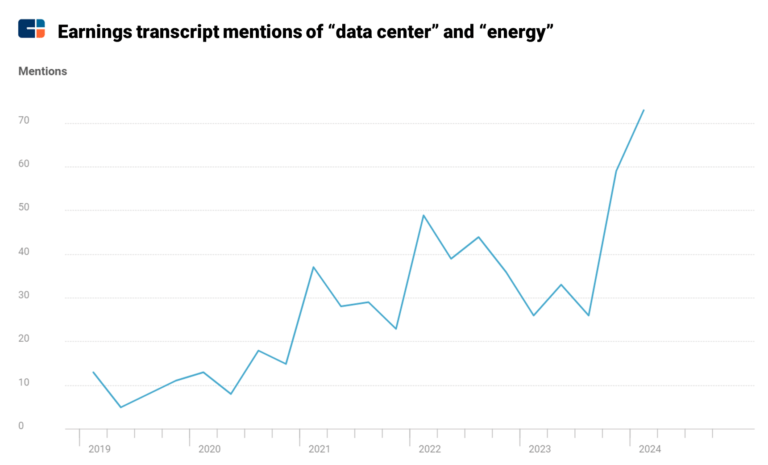
CB Insights Intelligence Analysts have mentioned Helion Energy in 5 CB Insights research briefs, most recently on Jul 10, 2025.
Expert Collections containing Helion Energy
Expert Collections are analyst-curated lists that highlight the companies you need to know in the most important technology spaces.
Helion Energy is included in 2 Expert Collections, including Unicorns- Billion Dollar Startups.
Unicorns- Billion Dollar Startups
1,296 items
Renewable Energy
4,865 items
Helion Energy Patents
Helion Energy has filed 16 patents.
The 3 most popular patent topics include:
- plasma physics
- electrical engineering
- electricity
Application Date | Grant Date | Title | Related Topics | Status |
|---|---|---|---|---|
2/6/2015 | 10/11/2022 | Fusion power, Nuclear fusion, Nuclear physics, Plasma physics, Nuclear technology | Grant |
Application Date | 2/6/2015 |
|---|---|
Grant Date | 10/11/2022 |
Title | |
Related Topics | Fusion power, Nuclear fusion, Nuclear physics, Plasma physics, Nuclear technology |
Status | Grant |
Latest Helion Energy News
Oct 22, 2025
To embed, copy and paste the code into your website or blog: <iframe frameborder="1" height="620" scrolling="auto" src="//www.jdsupra.com/post/contentViewerEmbed.aspx?fid=77be121e-291a-4717-b49a-9b0d16380185" style="border: 2px solid #ccc; overflow-x:hidden !important; overflow:hidden;" width="100%"></iframe> The race to commercialize fusion energy in the U.S. continues. On October 16, 2025, the U.S. Department of Energy (“DOE”) released a Fusion Science & Technology Roadmap (the “Roadmap”) outlining a national fusion energy strategy. The Roadmap bridges public and private efforts to see fusion commercialization on “the most rapid, responsible timeline in history”—targeting power on the grid by the mid-2030s. If achieved, these goals would reinforce the United States as a world leader in not only research and development (“R&D”), but in energy production and dominance. Fusion energy, the process that powers the sun and stars, has long been viewed as the “holy grail” of energy production—with its promise to produce immense amounts of clean, affordable energy. While some major technical hurdles remain , fusion energy has become remarkably close to a grid-powering reality. The Roadmap aims to ensure that vision becomes reality in the next decade. To do so, the Roadmap structures the national fusion strategy around a three-pronged approach called “Build-Innovate-Grow:” build key infrastructure to test materials and technology; innovate fusion science with industry-informed research; and grow the U.S. fusion ecosystem on a regional, national, and international level. Roadmap at 7. Through this model, DOE hopes to close near-term gaps, building on private progress, using “well-defined milestones and metrics.” Roadmap at 11. How did we get here? DOE has long been at the forefront of advancing fusion science and technology through its network of national laboratories . In 2022, DOE achieved a historic milestone at the National Ignition Facility by demonstrating fusion ignition —producing more energy than the energy input for the first time. Despite this breakthrough, DOE’s efforts have traditionally remained within the confines of the laboratory, focusing on the fundamental physics of fusion ignition rather than the applied engineering and commercialization pathways needed to realize a functional fusion power plant. But in parallel to the U.S. government’s efforts, over the past decade, the private sector fusion efforts have significantly expanded. A number of fusion startup companies have pioneered commercial-focused fusion development and raised $9.766 billion as of July 2025. U.S. companies are now developing pilot plants—Helion Energy in central Washington State and Commonwealth Fusion Systems (CFS) in Massachusetts—as well as making massive R&D investments like Pacific Fusion’s proposed campus in Albuquerque. Helion and CFS have also lined up commercial projects after their pilot projects—with Helion announcing the first fusion Power Purchase Agreement (“PPA”) with Microsoft for a 50 MW fusion plant, and CFS announcing its first commercial facility in Chesterfield, Virginia. In the last few years, fusion energy stakeholders have urged that successfully and timely building an entire fusion ecosystem requires these worlds to collide. Public-private partnerships like DOE’s Milestone-Based Program and INFUSE have leveraged public research capabilities to support private sector fusion development. The Fusion Energy Sciences Advisory Committee’s (“FESAC”) Long-Range Plan (2020) and the National Academies’ Bringing Fusion to the U.S. Grid (2021) identified additional ways DOE and industry could collaborate to realize fusion commercialization. The Roadmap: Build-Innovate-Grow The Roadmap takes these efforts—and more—and creates a “coordinated set of actions and milestones” to achieve widespread fusion commercialization. Roadmap at 11. With the input of over 600 scientists and engineers from 15+ companies, 10+ national laboratories, and allied nation organizations—and including a citation to our Atlantic Council paper on global deployment considerations—DOE identified ten key actions to implement the Build-Innovate-Grow strategy, described in more detail below. Build Deliver Fusion Science and Technology Infrastructure: DOE will spearhead research and testing to help close critical science and technology gaps. DOE plans to focus on two key areas—engineering for extreme environments and harnessing fusion power—to complement the ~$10 billion the private sector has already invested into fusion development. Roadmap at 14-16. Build the AI-Fusion Digital Convergence Platform: AI has become a “transformative tool” for fusion science modelling. Roadmap at 21. DOE will deploy AI-powered experiments and simulations to support breakthroughs in some of the toughest technical challenges for fusion energy. Roadmap at 21-22. Innovate Pursue Innovative and Transformative Research: DOE and private industry will continue researching four potentially transformative approaches to plasma generation as a way to mitigate risks with conventional commercial fusion approaches. Roadmap at 24-25. Advance Toward Cost-Competitive Fusion Power Plants: In contrast to prior large-scale efforts like ITER , which focus almost exclusively on tokamak technologies, the U.S. fusion strategy will support a variety of fusion machine designs to “deliver a fusion power plant at the lowest possible capital cost and at the earliest possible time.” Roadmap at 26. Grow Expand Public-Private Partnership Programs: By offering up public resources and expertise, DOE can create additional “risk-appropriate” opportunities for a wider range of fusion energy stakeholders to pursue advanced R&D, complementing the immense private investment in R&D to date. In addition to the existing programs, DOE envisions two additional possible public-private partnerships, subject to appropriations. Roadmap at 28-29. Seed Fusion Supply Chains: Building fusion power plants will require advanced materials to be made at a commercial scale. DOE notes where R&D must translate into large-scale manufacturing efforts. Roadmap at 30. Foster Talent by Enabling Fusion Workforce Pathways: DOE will help link universities, DOE national laboratories, and private companies to develop a workforce “at all levels,” such as trades, engineering, and advanced degrees. Roadmap at 30-31. Leverage Advanced Nuclear R&D and Deployment: Although fusion energy and nuclear (fission) energy are fundamentally different sciences, there are some areas of overlap between fusion and advanced nuclear—particularly in advanced manufacturing and simulation codes. Where applicable, DOE Office of Nuclear Energy-supported projects could support fusion energy projects. Roadmap at 31. Support a Practical Path to Fusion Energy Adoption: Many practical factors could impact how widely fusion energy is adopted, such as the lifetime of fusion components, regulatory frameworks, and export controls—the last of which we have published a paper on and DOE cited in this Roadmap. DOE can conduct research that helps eliminate some of the practical unknowns. Roadmap at 31-32. Provide a Path to Commercialization: DOE will eventually create an Office of Fusion Energy and Innovation, which will focus on applied fusion energy technologies compared to the science-focused FES. Roadmap at 32. In addition to these ten key actions, DOE identifies a multitude of technical metrics and milestones that must be met to commercialize fusion energy by the mid-2030s. These metrics and milestones are meant to be an adaptive tool to ensure the key actions are met on a timely manner. See Roadmap at 33-42. Making the Roadmap a reality Implementing the Roadmap will require both the public and private sectors to coordinate at a level not seen before in the fusion energy space. DOE may need additional appropriations to realize some of its key actions, such as new public-private partnerships or expanded research capabilities. However, the Roadmap reflects a major step in the right direction, reflecting years of effort by fusion stakeholders and proposing a potentially transformative framework for the U.S. fusion ecosystem.
Helion Energy Frequently Asked Questions (FAQ)
When was Helion Energy founded?
Helion Energy was founded in 2010.
Where is Helion Energy's headquarters?
Helion Energy's headquarters is located at 1415 75th Street South West, Everett.
What is Helion Energy's latest funding round?
Helion Energy's latest funding round is Series F.
How much did Helion Energy raise?
Helion Energy raised a total of $972.11M.
Who are the investors of Helion Energy?
Investors of Helion Energy include Mithril Capital Management, Sam Altman, Capricorn Investment Group, Nucor, SoftBank and 7 more.
Who are Helion Energy's competitors?
Competitors of Helion Energy include Proxima Fusion, General Fusion, Commonwealth Fusion Systems, Realta Fusion, Novatron and 7 more.
Loading...
Compare Helion Energy to Competitors

Renew Financial offers Property Assessed Clean Energy (PACE) financing for home improvements in energy efficiency, water conservation, and resiliency. The company provides options for financing various home upgrades, allowing repayment through property taxes. Renew Financial's services are applicable to homeowners who want to finance projects like solar panel installations and HVAC system upgrades. It was founded in 2008 and is based in Oakland, California.

Proton OnSite develops and manufactures electrolysers for various industrial applications, including alkaline and PEM electrolysers that produce hydrogen for power generation, lift gas generation, and industrial processes. The company's products are used in sectors that require hydrogen and nitrogen gas generation. It was founded in 1996 and is based in Wallingford, Connecticut. Proton OnSite operates as a subsidiary of NEL.

Fulcrum BioEnergy is a clean energy company that operates in the renewable fuels industry. The company's main service includes the production of renewable, low-carbon transportation fuels from landfill waste. Its primary market for Fulcrum BioEnergy's products is the aviation industry. It was founded in 2007 and is based in Pleasanton, California.

Choren Industrietechnik is involved in the engineering and licensing of synthesis gas production plants in the energy sector. The company provides services related to these plants, with a focus on coal gasification technology. Choren serves the energy and technology sectors, particularly in the Chinese market. It was founded in 1997 and is based in Dresden, Germany.
Green Energy Council is a domain name currently available for rent, indicating a focus on the renewable energy sector. The domain offers a digital identity for entities within the green energy industry, providing a platform for online presence and branding. The domain is positioned for use by businesses, organizations, or initiatives that operate within the renewable energy or environmental advocacy spaces. It is based in Washington, DC.
NovaSol Energy provides renewable energy solutions within the commercial and utility sectors. The company offers services including consulting, system design and engineering, turn-key project development, financing options, and operations and maintenance for solar systems. NovaSol Energy customizes its offerings to meet the specific objectives of its clients, providing energy storage and micro-grid solutions. It is based in Orlando, Florida.
Loading...