

Greenlite
Founded Year
2023Stage
Series A | AliveTotal Raised
$20.3MLast Raised
$15M | 6 mos agoMosaic Score The Mosaic Score is an algorithm that measures the overall financial health and market potential of private companies.
+78 points in the past 30 days
About Greenlite
Greenlite provides artificial intelligence (AI) driven solutions for financial compliance, operating within the fintech sector. The company offers automation tools for anti-money laundering (AML) processes, transaction monitoring, and customer due diligence, using artificial intelligence. Greenlite serves the banking, fintech, and credit union industries. It was founded in 2023 and is based in San Francisco, California.
Loading...
Greenlite's Products & Differentiators
Screening Alerts
Production-ready AI agents that automate sanction, PEP, and adverse media alert handling from screening system alert queues. Works 24/7 to investigate alerts, clearing false positives and escalating high risk alerts in seconds, allowing single analysts to handle what previously required entire teams. Deployment possible in under one week with API-based integration.
Loading...
Research containing Greenlite
Get data-driven expert analysis from the CB Insights Intelligence Unit.
CB Insights Intelligence Analysts have mentioned Greenlite in 3 CB Insights research briefs, most recently on Oct 23, 2025.
Oct 23, 2025 report
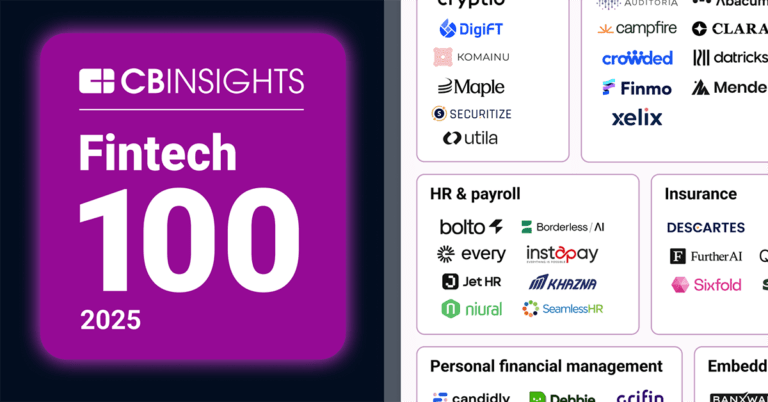
Fintech 100: The most promising fintech startups of 2025
Oct 23, 2025 report
Book of Scouting Reports: 2025’s Fintech 100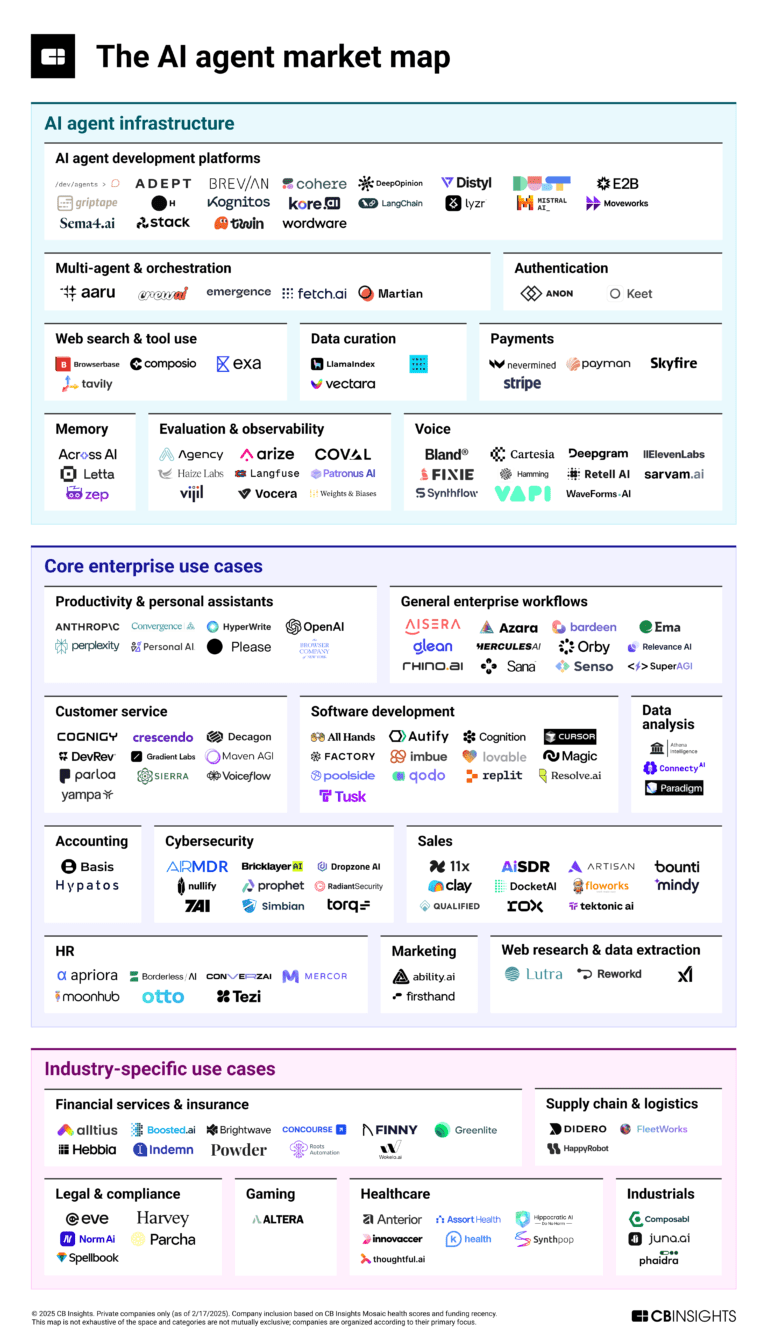
Mar 6, 2025
The AI agent market mapExpert Collections containing Greenlite
Expert Collections are analyst-curated lists that highlight the companies you need to know in the most important technology spaces.
Greenlite is included in 7 Expert Collections, including Digital Banking.
Digital Banking
937 items
Fintech
9,809 items
Companies and startups in this collection provide technology to streamline, improve, and transform financial services, products, and operations for individuals and businesses.
Artificial Intelligence (AI)
37,168 items
Companies developing artificial intelligence solutions, including cross-industry applications, industry-specific products, and AI infrastructure solutions.
AI Agents & Copilots Market Map (August 2024)
322 items
Corresponds to the Enterprise AI Agents & Copilots Market Map: https://app.cbinsights.com/research/enterprise-ai-agents-copilots-market-map/
AI agents
376 items
Companies developing AI agent applications and agent-specific infrastructure. Includes pure-play emerging agent startups as well as companies building agent offerings with varying levels of autonomy. Not exhaustive.
Generative AI
2,951 items
Companies working on generative AI applications and infrastructure.
Latest Greenlite News
Oct 30, 2025
October 30, 2025, 4:19 pm IST The recent MIT “State of AI in Business 2025” report, widely circulated and often misinterpreted, claims a staggering 95% failure rate for enterprise AI projects. Far from signaling AI’s inherent flaws, this statistic, as dissected by Y Combinator partners Garry Tan, Harj Taggar, Diana Hu, and Jared Friedman on their Lightcone podcast, illuminates a profound disconnect between large organizations and effective AI implementation, simultaneously unveiling a massive opportunity for nimble startups. This insightful discussion, featuring Y Combinator’s leadership, provided commentary on the real story behind the MIT findings. The panel argued that the perceived failure isn’t a indictment of AI technology itself, but rather a reflection of the systemic challenges inherent in large enterprises attempting to build and deploy advanced AI solutions in-house or through traditional consulting channels. Jared Friedman was quick to point out the misleading nature of the viral tweets summarizing the report, stating, “What really went viral was like tweets about this study… I think the tweets are actually quite misleading. The more I read the study, the more I realized it was actually confirming a lot of the things we’ve talked about here on this podcast about what AI agents are really like in the real world and what approaches and categories are working.” The report, when read beyond the headlines, validates the YC thesis: specialized AI agents, developed by agile teams deeply integrated into specific business processes, are the path to success. One of the primary reasons for enterprise AI failures, according to the panel, lies in the fundamental inadequacies of internal IT systems and the bureaucratic inertia of large organizations. Garry Tan highlighted this by quipping, “If anyone has ever used internal IT systems, generally, internal IT systems are bad.” He extended this to even the most resource-rich companies, noting that “Apple, a company with infinite resources and infinite access to the smartest people in the world, cannot make a good calendar app.” If Apple struggles with basic software, how can a typical enterprise expect to build complex AI solutions internally? Furthermore, large enterprises often rely on external consulting firms like Ernst & Young or Deloitte for AI implementation. Harj Taggar explained the inherent flaw in this approach: “Part of the reason I think these enterprises go to consultants is like you can go to an Ernst & Young and get them to like meet with like the data science team, the customer support team, the like IT team and like write up a bunch of docs about what everyone wants and sort of almost play like some sort of mediator role of, hey, like here’s kind of what we’re aligned on and here’s like the spec that will work for everyone.” The issue arises when these consultants, while adept at strategic alignment, frequently lack the deep technical expertise required to actually *build* and integrate the sophisticated software needed for effective AI. This leads to what Harj termed the “camel by committee” problem, where the resulting solution is a compromise that satisfies no one and performs poorly. A critical insight from Diana Hu underscored the unique advantage of startups in this landscape. Successful AI solutions, particularly in enterprise settings, demand more than a simple “plug and play” approach. They require founders and their teams to “embed themselves into the business processes and really grokking a lot of the internal systems of record and going deep, deep, deep in the integration.” This intimate understanding of legacy systems and operational workflows, coupled with a founder’s direct engagement, allows for the creation of truly transformative AI agents. This is a stark contrast to the often superficial, generalized solutions offered by traditional vendors or consultants. Related Reading The opportunity for startups is thus immense. Harj Taggar succinctly captured this sentiment: “If your engineers don’t believe in this, then how are you going to build a product that actually works? The knock-on effect for startups then is if you can actually build something that works, the enterprises will talk to you because they have no other option. Can’t build it internally, can’t go to an established company.” Startups that can navigate the complexities of deep integration and deliver tangible value are finding open doors to enterprise clients who are desperate for effective AI but incapable of producing it themselves. Examples like Taktile, a YC-backed company building a decision engine for banks, illustrate this point. Taktile offers real-time KYC (Know Your Customer) and AML (Anti-Money Laundering) solutions, which banks like Citi and JP Morgan have struggled to develop internally over years and with millions of dollars. Taktile, by contrast, delivered a robust REST API capable of integrating the latest AI models and making millions of decisions daily, all at a fraction of the cost and time. Similarly, Greenlite, another YC company, is providing trusted AI agents for financial crime, succeeding in an area where large banks often falter due to internal constraints and legacy systems. These successes highlight that the future of enterprise AI lies not in internal development or generic consulting, but in targeted, deeply integrated solutions provided by specialized startups. Don't miss a beat
Greenlite Frequently Asked Questions (FAQ)
When was Greenlite founded?
Greenlite was founded in 2023.
Where is Greenlite's headquarters?
Greenlite's headquarters is located at 870 Market Street, San Francisco.
What is Greenlite's latest funding round?
Greenlite's latest funding round is Series A.
How much did Greenlite raise?
Greenlite raised a total of $20.3M.
Who are the investors of Greenlite?
Investors of Greenlite include Y Combinator, Greylock Partners, Canvas Ventures, Thomson Reuters Ventures, Tim Mayopoulos and 4 more.
Who are Greenlite's competitors?
Competitors of Greenlite include Napier, Joist AI, Parcha, ComplyAdvantage, EcoVadis and 7 more.
What products does Greenlite offer?
Greenlite's products include Screening Alerts and 4 more.
Loading...
Compare Greenlite to Competitors

ComplyAdvantage provides solutions for financial crime and compliance management, focusing on the security of the financial system. The company offers a platform that supplies insights for managing risks and meeting compliance obligations. ComplyAdvantage serves sectors that require compliance and risk management, such as financial institutions and businesses dealing with sensitive financial data. ComplyAdvantage was formerly known as Mimiro. It was founded in 2014 and is based in London, United Kingdom.
Consilient specializes in federated learning technology within the financial sector, offering solutions for financial crime detection and risk management. Their services include a suite of federated models that enable financial institutions to collaborate while maintaining data privacy. Consilient's technology represents the next evolution in machine learning, aimed at combating financial crime globally. It was founded in 2020 and is based in Washington, DC.

Silent Eight specializes in leveraging artificial intelligence to combat financial crime within the financial technology sector. The company offers a suite of AI-driven solutions that streamline alert processing, enhance due diligence through name screening, and provide real-time transaction screening and continuous monitoring to detect suspicious activities. The company's solutions primarily serve financial institutions looking to comply with anti-money laundering and counter-terrorist financing regulations. It was founded in 2013 and is based in Singapore.
Facctum focuses on financial crime risk management and offers solutions in the compliance technology sector. The company provides tools for anti-money laundering (AML) and compliance, including real-time monitoring, watchlist management, and customer due diligence, using technologies such as artificial intelligence and parallel processing. Facctum serves the financial services industry, providing services aimed at regulatory compliance. It was founded in 2021 and is based in London, England.

Hawk specializes in anti-money laundering (AML) and counter-financial terrorism (CFT) technology, operating within the financial services sector. The company offers solutions for anti-money laundering (AML) transaction monitoring, payment screening, customer due diligence, and fraud prevention, focusing on risk coverage and operational efficiency for financial institutions. Hawk's products serve banks, payment companies, neobanks, fintechs, and the cryptocurrency industry. It was founded in 2018 and is based in Munich, Germany.
Mopso serves as a regtech company that provides anti-money laundering solutions within the financial services industry. The company offers software that utilizes open-source intelligence and algorithms to identify schemes related to money laundering and financial crimes. Mopso's solutions are applicable to the banking sector, offering tools for onboarding, continuous monitoring, and compliance with regulations such as GDPR and the upcoming eIDAS 2. It was founded in 2021 and is based in Milan, Italy.
Loading...