
Founded Year
1998Stage
IPO | IPOTotal Raised
$41.28MDate of IPO
8/19/2004Market Cap
3351.19BStock Price
277.54Revenue
$0000About Google
Google operates as a technology company with a focus on internet services and products. The company offers a search engine, online advertising services, cloud computing solutions, software development tools, and hardware products primarily in the internet services, advertising, cloud computing, and consumer electronics sectors. It was founded in 1998 and is based in Mountain View, California.
Loading...
ESPs containing Google
The ESP matrix leverages data and analyst insight to identify and rank leading companies in a given technology landscape.
The small language model (SLM) tools & development market includes companies and open-source projects that create, customize, and deploy compact AI language models optimized for efficiency and domain-specific use. These models deliver faster inference, lower costs, and on-device capabilities compared with large language models. The market includes model developers, fine-tuning and optimization pla…
Google named as Leader among 15 other companies, including Microsoft, Amazon, and IBM.
Loading...
Research containing Google
Get data-driven expert analysis from the CB Insights Intelligence Unit.
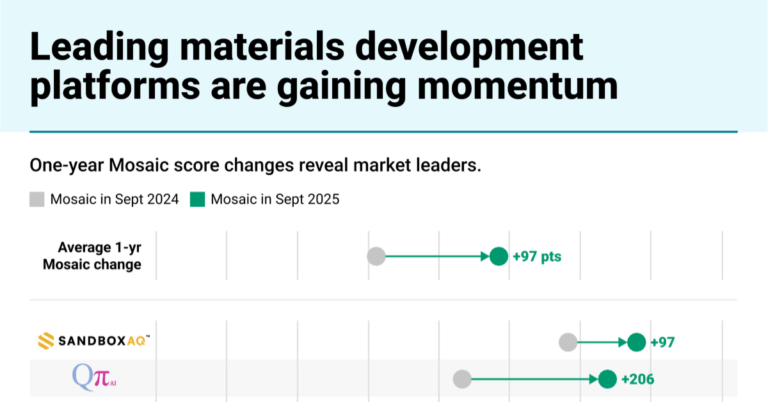
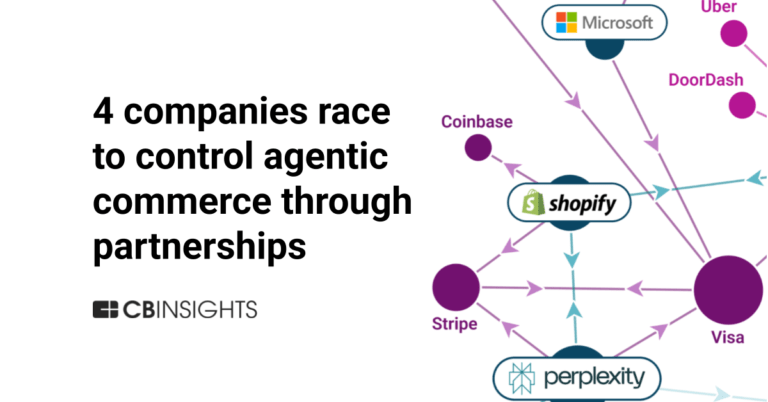
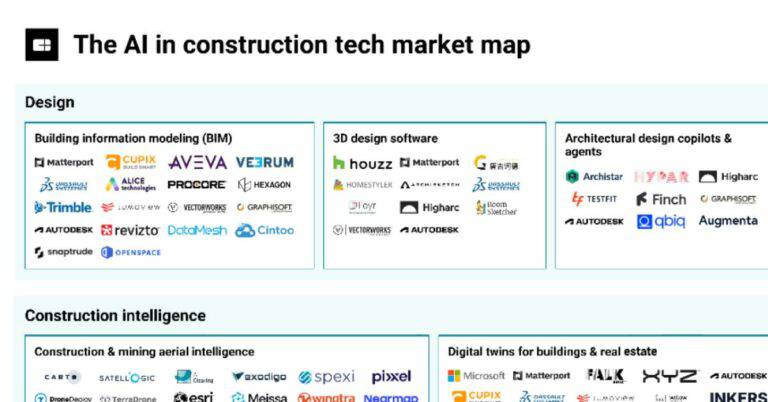
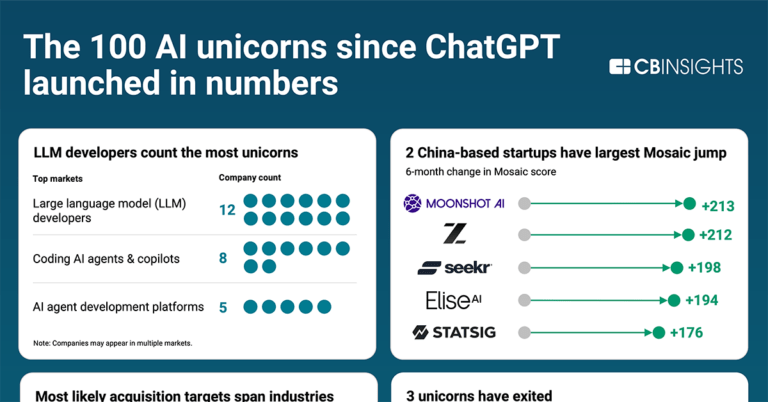
CB Insights Intelligence Analysts have mentioned Google in 75 CB Insights research briefs, most recently on Nov 3, 2025.
Expert Collections containing Google
Expert Collections are analyst-curated lists that highlight the companies you need to know in the most important technology spaces.
Google is included in 11 Expert Collections, including AR/VR.
AR/VR
33 items
Smart Cities
3,531 items
Fortune 500 Investor list
590 items
This is a collection of investors named in the 2019 Fortune 500 list of companies. All CB Insights profiles for active investment arms of a Fortune 500 company are included.
Conference Exhibitors
6,062 items
Companies that will be exhibiting at CES 2018
Retail Media Networks
324 items
Tech companies helping retailers build and operate retail media networks. Includes solutions like demand-side platforms, AI-generated content, digital shelf displays, and more.
Aerospace & Space Tech
4,277 items
These companies provide a variety of solutions, ranging from industrial drones to electrical vertical takeoff vehicles, space launch systems to satellites, and everything in between
Google Patents
Google has filed 10000 patents.
The 3 most popular patent topics include:
- artificial intelligence
- artificial neural networks
- machine learning
Application Date | Grant Date | Title | Related Topics | Status |
|---|---|---|---|---|
8/21/2020 | 4/8/2025 | Machine learning, Educational psychology, Pedagogy, Philosophy of education, Learning methods | Grant |
Application Date | 8/21/2020 |
|---|---|
Grant Date | 4/8/2025 |
Title | |
Related Topics | Machine learning, Educational psychology, Pedagogy, Philosophy of education, Learning methods |
Status | Grant |
Latest Google News
Nov 5, 2025
This story is available exclusively to Business Insider subscribers. Become an Insider and start reading now. Have an account? Log in Jad Tarifi, 42, worked at Google from 2012 to 2021 and was part of their first generative AI team. Tarifi relocated to Google's office in Tokyo in his final year with the company. He stayed in Japan to found Integral AI, an AI startup, in 2021. This as-told-to essay is based on a conversation with Jad Tarifi , the founder and CEO of the AI startup Integral AI. The following has been edited for length and clarity. Business Insider has verified his employment and academic history. When I graduated from the University of Florida with a Ph.D. in AI in 2012, I didn't see myself starting a company. My goal, both then and now, is to use AI to positively impact the world. That first led me to Google , where I worked for nearly a decade. Working at Google was a great experience. Many breakthroughs in the field that we see today, like the transformer , were either invented or developed at Google. A lot of my management philosophy comes from my experience at Google. At my startup, I try to empower my engineers by leading with compassion and creating a safe environment for them to voice their opinions. Google is good at generating revenue from advertising and is very much invested in that business model. But if you want to do something different, like build a personal AGI , that might not fit with their advertising model. It dawned on me that I needed to chart a path to pursue my interest in robotics. A startup would allow me to iterate fast, take risks, and be nimble. Moving to Japan In my final year at Google, I persuaded my manager to send me to Google's Tokyo office . That was in 2020, and I spent a year there before I left to launch Integral AI. Related stories Business Insider tells the innovative stories you want to know Business Insider tells the innovative stories you want to know Why Japan? That goes back to my interest and passion for applying AI to robotics. I spent the bulk of my career in Silicon Valley , and I saw firsthand that the US is a world leader in AI. The US, however, isn't as strong in robotics. That's partly because it has been outsourcing manufacturing to the rest of the world. Japan, on the other hand, is the world leader in robotics. It makes most of the world's industrial robots . Going to Japan allowed me to combine the best of AI from Silicon Valley with the best of robotics in Tokyo. Going to Japan gave me access to the country's huge robotics ecosystem. There are so many players in robotics, ranging from suppliers to manufacturers to end customers. You need to understand the ecosystem if you want to serve the market effectively. I was fortunate to spend my final year at Google in Japan. I used it as an opportunity to immerse myself in the language and culture. To become conversant in Japanese, I placed myself in uncomfortable situations where I had to communicate with locals. Today, I feel comfortable talking to people I meet on the street. After leaving Google, I founded Integral AI in 2021. My company's goal is to build an AI that can control robots and autonomous vehicles. Getting the best of both worlds Running my business in Japan does come with pros and cons. One thing that took getting used to was Japan's rigid system of rules and administrative procedures, which can be old-school and inflexible. For instance, you must use a personal seal, or what the Japanese call a "hanko," to sign documents. It's not just the way documents are handled. It took me three months to open my company's bank account, despite having a Japanese investor on board. I could have opened a bank account in the US in 30 minutes. However, I saw these inefficiencies as a small price to pay to access Japan's robotics market and its many players. Operating in Japan has given me a deep understanding of the ecosystem and how we should design our products to leverage it. On a broader level, working in Japan showed me the beauty of taking an iterative approach to building products. In the US, the ethos is to move fast and break things. In Japan, you are forced to think small and take a step-by-step approach to solve problems. This systematic approach to working feels healthier and more sustainable. If you want to accelerate your tech career, Silicon Valley should still be your primary goal, even though the culture there is more individualistic and work-oriented. But if you want to live and work in a country that values work and community, then Japan may be the place for you. You can get the best of both worlds by working in a Silicon Valley-style tech company in Japan. This is where you can have your cake and eat it too. Read next
Google Frequently Asked Questions (FAQ)
When was Google founded?
Google was founded in 1998.
Where is Google's headquarters?
Google's headquarters is located at 1600 Amphitheatre Parkway, Mountain View.
What is Google's latest funding round?
Google's latest funding round is IPO.
How much did Google raise?
Google raised a total of $41.28M.
Who are the investors of Google?
Investors of Google include Sequoia Capital, Kleiner Perkins, Andy Bechtolsheim, Ram Shriram, David Cheriton and 12 more.
Who are Google's competitors?
Competitors of Google include OpenAI, 01.AI, ByteDance, Qwant, DeepSeek and 7 more.
Loading...
Compare Google to Competitors

Oath operates within the media and technology sectors. The company offers services that include media content delivery and advertising solutions for advertisers and publishers. These services aim to facilitate interactions between brands and consumers, as well as assist publishers in business growth. Oath was formerly known as AOL Advertising. It was founded in 2017 and is based in Sterling, Virginia.
ByteDance provides content platforms in the social media and entertainment sectors. It offers products that enable content creation, discovery, and sharing, including short-form video platforms, social media services, and enterprise collaboration tools. Its products serve a global audience. It was formerly known as Beijing ByteDance Technology Co. It was founded in 2012 and is based in Beijing, China.

Yahoo! is an internet services provider that offers services including a digital news platform, email services, a search engine, and information on finance, sports, and entertainment. Yahoo! caters to the general public seeking news, communication, and information services. It was founded in 1994 and is based in Sunnyvale, California.

DuckDuckGo operates in the technology sector. The company offers a free browser for mobile and desktop devices, with a focus on privacy features such as a private search alternative to Google, a tracker blocker, and ad-blocking capabilities. It primarily serves individuals seeking to enhance their online privacy. It was founded in 2008 and is based in Paoli, Pennsylvania.

Anthropic focuses on artificial intelligence (AI) safety and research within the AI sector. It offers AI models, including Opus, Sonnet, and Haiku, for various applications such as coding, customer support, and education. The company primarily serves sectors that require AI solutions, including technology, education, and customer service industries. It was founded in 2021 and is based in San Francisco, California.

xAI focuses on artificial intelligence, specifically in the domain of language learning models. The company's main product, Grok, is designed to answer questions and suggest potential inquiries, functioning as a research assistant that helps users find information online. xAI primarily caters to the artificial intelligence (AI) research community and the general public seeking AI tools for information retrieval and understanding. It was founded in 2023 and is based in Palo Alto, California.
Loading...