

Earnix
Founded Year
2001Stage
Secondary Market | AliveTotal Raised
$98.5MLast Raised
$120M | 1 yr agoRevenue
$0000Mosaic Score The Mosaic Score is an algorithm that measures the overall financial health and market potential of private companies.
-84 points in the past 30 days
About Earnix
Earnix provides solutions for the insurance and banking sectors, including an Enterprise Rating Engine, Analytical Underwriting, Dynamic Pricing, Product Personalization, and Customer Engagement Solutions. The company focuses on integrating technologies into existing systems. It was founded in 2001 and is based in Ramat Gan, Israel.
Loading...
Earnix's Product Videos


ESPs containing Earnix
The ESP matrix leverages data and analyst insight to identify and rank leading companies in a given technology landscape.
The auto telematics platforms market comprises solutions that gather driver behavior and usage data. Telematics technology is typically installed in the vehicle and can collect data such as driving speed, braking patterns, and distance traveled. Insurance companies can use the data gathered through auto telematics to better assess the risk associated with a policyholder and to determine more accur…
Earnix named as Leader among 15 other companies, including Samsara, INRIX, and CCC Intelligent Solutions.
Loading...
Research containing Earnix
Get data-driven expert analysis from the CB Insights Intelligence Unit.
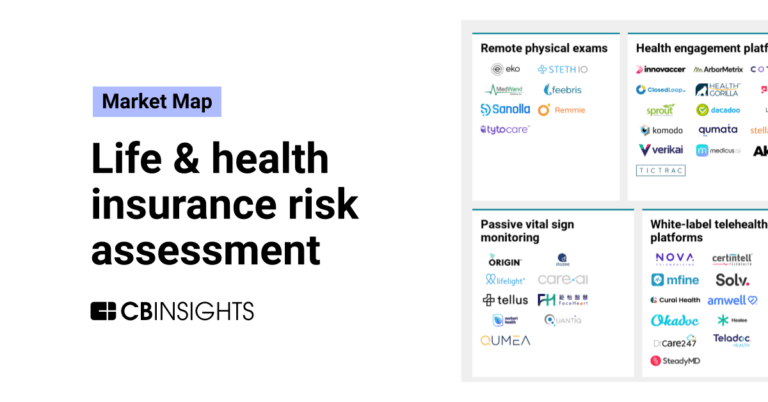
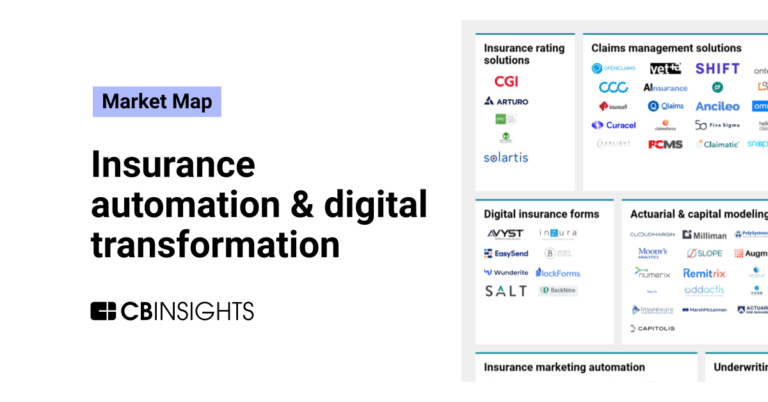
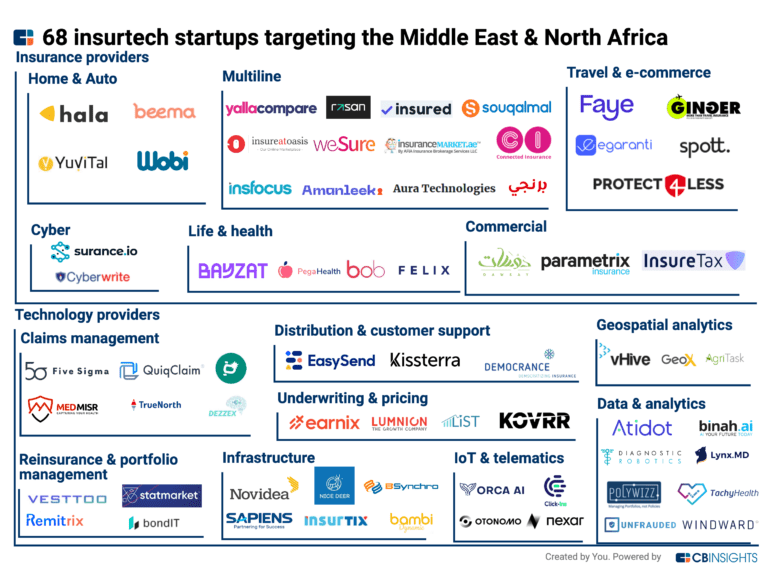
CB Insights Intelligence Analysts have mentioned Earnix in 3 CB Insights research briefs, most recently on Aug 9, 2023.
Expert Collections containing Earnix
Expert Collections are analyst-curated lists that highlight the companies you need to know in the most important technology spaces.
Earnix is included in 7 Expert Collections, including Insurtech.
Insurtech
4,636 items
Companies and startups that use technology to improve core and ancillary insurance operations. Companies in this collection are creating new product architectures, improving underwriting models, accelerating claims and creating a better customer experience
Fintech 100
249 items
250 of the most promising private companies applying a mix of software and technology to transform the financial services industry.
Insurtech 50
50 items
Digital Banking
937 items
ITC Vegas 2024 - Exhibitors and Sponsors
699 items
Created 9/9/24. Updated 10.22.24. Company list source: ITC Vegas. Check ITC Vegas' website for final list: https://events.clarionevents.com/InsureTech2024/Public/EventMap.aspx?shMode=E&ID=84001
ITC Vegas 2025
496 items
Based on sponsor list as of 9.22.2025
Latest Earnix News
Oct 19, 2025
Why tech employees are embracing side careers despite the exhaustion. From cyber startups to coaching and design, tech workers are redefining the meaning of work-life balance. Maayan Manela 09:07, 19.10.25 When Shoval Eidan finishes an intense day at a cyber startup, she puts on a riding jacket, helmet, and off-road boots and begins her second shift: as an advanced motorcycle riding instructor. “Most of the time it’s a crazy juggling act that leaves me little free time but fills me with happiness. I don’t have to choose between two sides of myself, nor do I have to wait until retirement to fulfill my dream of riding coaching,” she says. (Photo: Nir Bar) Eidan works at Cyolo, a startup that enables secure remote access to critical systems, as a Sales Development Representative. She is also an advanced riding instructor at Ofnoan Mauman (Trained Rider) and rides a Yamaha Tenere 700 motorcycle. "I started training as a riding instructor in January 2022, two months before joining Cyolo, knowing that it wasn’t certain I would succeed in the training for the position I really wanted. In my previous job at a project company in the human resources field, working full-time with high-tech companies only, I felt burnt out. The main feeling was that I was capable of more and wanted to do more," she says. She felt that the work, which mostly involved sitting in front of a screen, was only part of the “career puzzle” she wanted to build for herself. So when the opportunity to work at Trained Rider came, she felt like she had “won the lottery.” (Photo: Cyolo) The salary in the motorcycle field “does not come close to what high-tech has to offer,” but the personal value she gains - the ability to express another significant part of her skills and passion - makes working in two places rewarding despite the challenges. “The main challenge is the workload. Even on days when I have a several-hour shift at Trained Rider, I come home and complete my workday and tasks at Cyolo on the computer until late at night. It’s certainly exhausting and draining, but the love for both fields and the passion push me to keep giving my maximum, even at the cost of yawning in front of the screen. In addition to the workload, there’s the need to balance the expectations of both companies and navigate the boundaries between them. I can say that both workplaces are very understanding and considerate because they know I never compromise on productivity,” she says. Eidan works almost full-time in two jobs, and she’s not alone. More and more high-tech employees - programmers, product managers, and salespeople - are turning to additional occupations, becoming what’s known as “slashers.” Sometimes this comes from a desire for meaning or personal fulfillment, but recently, with the rising cost of living, financial motivations are becoming more common. Related articles: According to the Central Bureau of Statistics, the average salary in high-tech was 32,774 shekels (approximately $9,900) in June, up from the previous month but down from the peak of 36,731 shekels ($11,100) in March. The average salary in the overall economy is much lower, at 14,133 shekels ($4,270). Because high-tech salaries have long been far higher than the national average, it was once rare to see high-tech professionals seeking side jobs to supplement their income. But the sector has suffered a major blow - hit by the war, global slowdowns, and the AI revolution - leading many companies to downsize. (Photo: Liron Brier) “People who once symbolized job security and high income are now turning to second jobs,” says Hava Nissenboim, owner of Golda Business Development and author of 'From Idea to Business'. She says professionals pursue side work for many reasons, from passion and fulfillment to extra income, and that Israel’s rising cost of living “does not spare high-tech workers either.” For Liran Zablo, a Content Architect at AutoDS, his additional work provides a significant source of income, as well as freedom and financial security. “It’s not just about money but about building a long-term asset that creates stability and diversification in income,” he says. He has been working at the e-commerce automation company for five years while also running an independent business in e-commerce and dropshipping, where he builds online stores and manages content and sales systems. Liran Zablo. “I was a customer of the company long before I became an employee. I know friends and acquaintances who don’t always look favorably on employees who hold an additional job, but here they actually encourage it, in my case because it genuinely helps me in my role. The company’s DNA is about making financial independence and business opportunities accessible to both customers and employees,” he says. He founded his independent business before joining the company, while working in sales elsewhere. “At the time, I wanted to try my hand at it myself - build stores, sell online, and generate extra income. It gave me much deeper practical understanding and strengthened my ability to guide others. Even after joining AutoDS, I kept the business because it was important to stay connected to the field and ensure my advice was based on real experience,” he says. Similarly, Daniel Boaron, a Senior Product Designer at fintech company Remitly, represents the “new slasher” - building a professional world that bridges two identities. In his tech job, he works on user experience design and integrating AI-based tools into products, while also conducting workshops for company employees in Israel and abroad. At the same time, he advises companies and helps design teams improve processes using AI. He is also the founder of Design A, a platform dedicated to design and artificial intelligence, where he leads workshops and conferences. (Photo: Odelia Yehiel) He began his second occupation not for financial reasons but out of “a professional mission - the desire to lead a new field and share knowledge.” Over time, it also became an additional income stream through workshops, lectures, and consulting. “The main challenge is time management, knowing how to balance full-time high-tech work with another occupation. It requires discipline and constant prioritization so that each area receives the attention it deserves. At the same time, the advantages are significant: the additional work keeps me constantly at the forefront of new tools and technologies, which I bring back to my daily job. It allows me to propose new ideas, enrich my team with advanced methods, and develop thinking that strengthens both the product and internal work processes. In that sense, the combination not only coexists but directly contributes to my work,” he says. Working in high-tech is financially rewarding, but it’s also demanding - long hours, high availability, tight deadlines, and constant pressure. For some, a side occupation provides creative relief and personal fulfillment that go beyond financial gain. For Roy Amid, a Product Leader at fintech company Earnix and coach of a youth team at Shimshon Tel Aviv, coaching is “for the soul.” Roy Amid. “Just like people go for a run or to the gym, I coach,” he says. He began coaching children’s teams at 14, first in basketball, then soccer. “This is the gift I received, to see the other side, to explain and teach, and to motivate those around me.” After a break during military service, studies, and work, Roy returned to coaching about a decade ago, while running a startup he had founded. “I realized I didn’t want to wait for an exit, I wanted to combine the two worlds now. I love working with children and youth, helping them grow as players and as people. That’s a deep part of what coaching means to me.” The main challenge, he says, is balance. “The main sacrifice is family time. After a day at work, I go to practice, and on weekends there’s a game. It takes time and energy. Over the years, I’ve turned down roles that didn’t allow this combination. But it’s a conscious choice, it’s who I am.” How to Become a Successful ‘Slasher’ “Being a ‘slasher’ isn’t just about having two jobs, it’s about being independent, which is a profession in itself,” says Nissenbaum. “You have to learn to price your work, manage your time, and build sales processes. Those who succeed are the ones who understand this and invest in learning.” According to her, if you’re taking on a second occupation due to the cost of living, it should be done efficiently. “The formula for efficiency is the ratio of resources - energy and money - invested versus the return. You should aim to invest as few resources as possible and gain as much as possible.” She warns that freelancing as a second job can be difficult, but says that for employees considering starting an independent business, it’s an excellent interim step. “I always say: wait a bit before quitting your job to start a business. Try launching it as a side project first, to see if it’s a fit and to maintain income while you build it, because you don’t reach your revenue target immediately.” She outlines a practical roadmap for becoming successful slashers: 1. Arrange with employers before you start Review your employment contract for non-compete clauses or limits on additional work. Create a clear agreement outlining what you’ll do, how many hours, and when. “Times have changed,” Nissenbaum says. “Many managers also have side work. It’s not strange anymore, but it must be done transparently and smartly.” 2. Leverage existing strengths and test market fit Since time is limited, build a product or service based on existing knowledge, experience, and connections. Don’t start from scratch, check whether people already pay for what you plan to offer. 3. Focus on efficiency and savings Find customers through supplier databases or agencies that can contract your services. “True, they take a commission, but if you’re not a salesperson, outsourcing that can help you build stability faster,” she says. Successful slashers, she adds, save on costs early and grow gradually, such as sharing workshop space, renting kitchens by the hour, or working as subcontractors. 4. Dedicate time to business development Many overestimate how much time they’ll have for a side business. Set a realistic schedule, for example, at least three hours a week, and stick to it. “Remember, fatigue and family life matter. Don’t overpromise,” Nissenbaum advises. 5. Understand net vs. gross “Earning 4,000 shekels net requires a higher gross, depending on your costs and materials,” she says. “You must calculate your real income needs.” 6. Don’t do it alone Finally, she recommends joining freelancer groups, training programs, or mentorship communities. “Slashers aren’t used to working solo. Those who follow a structured process and learn with others significantly increase their chances of success.” TAGS:
Earnix Frequently Asked Questions (FAQ)
When was Earnix founded?
Earnix was founded in 2001.
Where is Earnix's headquarters?
Earnix's headquarters is located at 2 Ze’ev Jabotinsky Street, Ramat Gan.
What is Earnix's latest funding round?
Earnix's latest funding round is Secondary Market.
How much did Earnix raise?
Earnix raised a total of $98.5M.
Who are the investors of Earnix?
Investors of Earnix include Jerusalem Venture Partners, Israel Growth Partners, Vintage Investment Partners, Insight Partners, PropertyCasualty360 Insurance Luminaries and 7 more.
Who are Earnix's competitors?
Competitors of Earnix include Soteris, ZestyAI, Zelros, Quantee, Federato and 7 more.
Loading...
Compare Earnix to Competitors

Akur8 provides pricing and reserving platforms for the insurance industry. The company offers a suite of software solutions that utilize machine learning and predictive analytics for actuarial pricing and reserving processes. Akur8's platforms aim to support insurance pricing and reserving for personal and commercial lines insurers, managing general agents, insurers, and health insurers. It was founded in 2019 and is based in Paris, France.

Convr is a company focused on AI-driven underwriting solutions for the commercial property and casualty insurance industry. Their offerings include a modularized underwriting workbench that improves the underwriting process through data enrichment, risk scoring, and document processing. Convr serves commercial P&C carriers, reinsurers, managing general agents, and underwriters. It was founded in 2015 and is based in Schaumburg, Illinois.

Atidot provides AI and predictive analytics solutions for the life insurance sector. The company offers a cloud-based platform that combines internal data with external sources to support decision-making for insurers. Atidot's technology is utilized by various stakeholders in the life insurance industry, including executives, marketing teams, policy distributors, and actuaries, focusing on improving profitability, lead generation, policy accuracy, and risk analysis. It was founded in 2016 and is based in Palo Alto, California.

Insurity provides cloud-based software solutions for the property and casualty (P&C) insurance industry. The company offers a suite of software products, including policy administration, billing, claims management, and analytics, aimed at improving operations and aiding decision-making for insurers. It primarily serves insurance carriers, brokers, managing general agents (MGAs), and other entities within the insurance sector. The company was founded in 1985 and is based in Hartford, Connecticut.

UnderwriteMe is a technology provider that offers underwriting solutions for the life insurance industry. The company provides products such as decision platforms, underwriting engines, and analytics tools that aim to facilitate the insurance application process and support decision-making. UnderwriteMe serves the life insurance sector by providing technology solutions to insurers and intermediaries. It was founded in 2012 and is based in London, United Kingdom.

Sixfold provides generative AI tools for the insurance underwriting sector. Its platform ingests underwriting guidelines, extracts relevant risk data, and offers risk insights and suggestions. The company serves insurers, managing general agents (MGAs), and reinsurers across various lines of insurance including life, disability, and property & casualty. It was founded in 2023 and is based in New York, New York.
Loading...