

Coinbase
Founded Year
2012Stage
IPO | IPOTotal Raised
$540.07MDate of IPO
4/14/2021Market Cap
92.70BStock Price
330.42Revenue
$0000About Coinbase
Coinbase operates as a cryptocurrency exchange platform. It allows users to buy, sell, and trade cryptocurrencies. The company’s products include Coinbase Wallet, an application that lets users manage crypto assets, and Coinbase Commerce, a payment solution for merchants to accept crypto payments. It was founded in 2012 and is based in San Francisco, California.
Loading...
ESPs containing Coinbase
The ESP matrix leverages data and analyst insight to identify and rank leading companies in a given technology landscape.
The AI agent payments infrastructure market enables secure financial transactions between AI agents, humans, and businesses without requiring traditional banking infrastructure. Vendors in this space provide APIs, SDKs, and specialized protocols that allow developers to build AI systems that can autonomously initiate, authenticate, and complete financial transactions online. These solutions levera…
Coinbase named as Leader among 11 other companies, including Stripe, Skyfire, and Circuit & Chisel.
Loading...
Research containing Coinbase
Get data-driven expert analysis from the CB Insights Intelligence Unit.
CB Insights Intelligence Analysts have mentioned Coinbase in 12 CB Insights research briefs, most recently on Sep 3, 2025.
Aug 22, 2025
The AI agent tech stack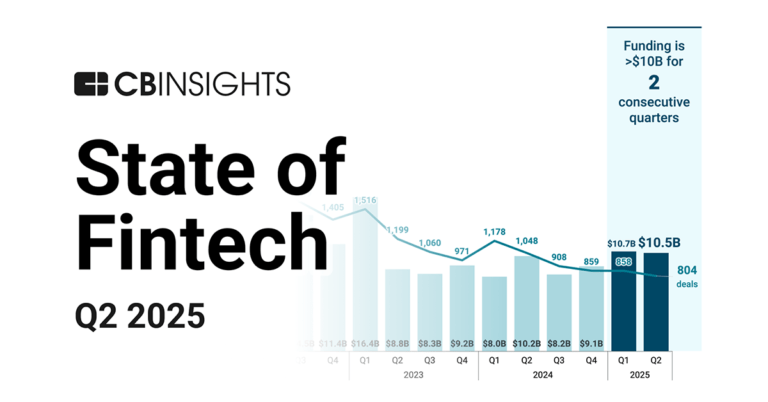
Jul 17, 2025 report
State of Fintech Q2’25 Report

Aug 14, 2024
Crypto is showing signs of life in payments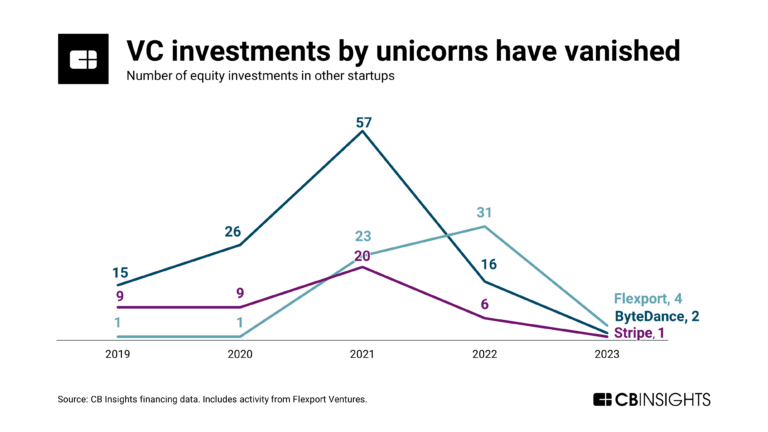
Expert Collections containing Coinbase
Expert Collections are analyst-curated lists that highlight the companies you need to know in the most important technology spaces.
Coinbase is included in 11 Expert Collections, including Blockchain.
Blockchain
10,606 items
Companies in this collection build, apply, and analyze blockchain and cryptocurrency technologies for business or consumer use cases. Categories include blockchain infrastructure and development, crypto & DeFi, Web3, NFTs, gaming, supply chain, enterprise blockchain, and more.
Fintech 100
748 items
250 of the most promising private companies applying a mix of software and technology to transform the financial services industry.
SMB Fintech
1,231 items
Tech IPO Pipeline
568 items
Artificial Intelligence (AI)
37,222 items
Companies developing artificial intelligence solutions, including cross-industry applications, industry-specific products, and AI infrastructure solutions.
Fintech
9,809 items
Companies and startups in this collection provide technology to streamline, improve, and transform financial services, products, and operations for individuals and businesses.
Coinbase Patents
Coinbase has filed 161 patents.
The 3 most popular patent topics include:
- cryptocurrencies
- blockchains
- cryptography
Application Date | Grant Date | Title | Related Topics | Status |
|---|---|---|---|---|
7/7/2022 | 4/8/2025 | Cryptocurrencies, Cryptographic hash functions, Blockchains, Cryptography, Data management | Grant |
Application Date | 7/7/2022 |
|---|---|
Grant Date | 4/8/2025 |
Title | |
Related Topics | Cryptocurrencies, Cryptographic hash functions, Blockchains, Cryptography, Data management |
Status | Grant |
Latest Coinbase News
Nov 4, 2025
reading significantly easing long-standing fears and igniting a substantial surge in institutional buying within the cryptocurrency market. This unexpected deceleration in price growth has not only reinforced expectations for continued monetary easing by the Federal Reserve but has also propelled risk assets, particularly digital currencies, into a robust rally, signaling a potential shift in the economic landscape. The report, reflecting September 2025 data and further confirmed by October's figures, revealed a welcome moderation in inflationary pressures, falling below market expectations. This development has been a significant catalyst, prompting a decisive move by institutional investors into Bitcoin (BTC) and various altcoins, as the prospect of a more accommodative monetary policy environment becomes increasingly likely. The receding specter of persistent inflation is now paving the way for renewed investor confidence and a re-evaluation of asset allocations. Cooler CPI Fuels Market Optimism and Crypto Inflows The September 2025 CPI report, released around October 24, 2025, and further supported by the October 2025 data in early November, painted a picture of decelerating inflation that exceeded market expectations. The year-over-year (YoY) headline CPI for September rose to 3.0%, a slight increase from August's 2.9% but crucially below the consensus estimate of 3.1%. More significantly, the October 2025 CPI report indicated a further drop to a modest 2.8% YoY headline CPI, reinforcing the trend of broad-based price pressures coming under control. The closely watched core CPI, excluding volatile food and energy components, also demonstrated a significant deceleration, registering a 3.0% YoY increase for September, down from 3.1% in August and below forecasts. This "cooler" reading was primarily driven by a marked slowdown in shelter costs, the largest component of the CPI, which eased to 0.2% month-over-month (MoM) in September, and a decline in core goods prices. While the gasoline index saw a MoM rise in September, its year-over-year performance showed a decrease, contributing to the overall moderation. This data significantly eased long-standing inflation fears, signaling a much-anticipated moderation that was immediately reflected in consumer sentiment, with year-ahead inflation expectations also ebbing. The immediate market reaction was swift and pronounced. The softer inflation data strongly reinforced expectations for continued Federal Reserve rate cuts, with markets pricing in a near-certainty (96-99% probability) of a 25-basis-point rate cut at both the October and December Federal Open Market Committee (FOMC) meetings. This anticipated easing of monetary policy sent major stock indexes, including the Dow Jones Industrial Average (DJIA), S&P 500 (SPX), and Nasdaq Composite (IXIC), surging to new record highs, with the Dow notably closing above 47,000 for the first time. Bond yields fell, and while the U.S. dollar index softened slightly, the overall sentiment was overwhelmingly positive for risk assets. Nowhere was this optimism more evident than in the cryptocurrency market. Following a period of turbulence linked to inflation data, crypto markets rebounded sharply. Institutional inflows into Bitcoin (BTC) and Ethereum (ETH) Exchange-Traded Funds (ETFs) reached record levels, supporting a broader market rally. Bitcoin spot ETFs recorded five consecutive days of inflows, marking their strongest run in weeks, with an impressive $931 million in inflows during the last week of October alone. This signals one of the strongest institutional accumulation waves since the Federal Reserve initiated its latest monetary easing cycle, with BlackRock's iShares Bitcoin Trust (IBIT) leading the charge. Year-to-date ETF inflows into digital asset funds surpassed $30.2 billion, pushing total assets under management beyond $229 billion. Companies Poised to Win or Lose in the New Environment The "cooler CPI" and the subsequent institutional pivot towards risk assets, particularly cryptocurrencies, will undoubtedly create a distinct set of winners and losers across various sectors. Winners: Cryptocurrency Exchanges and Service Providers: Companies operating prominent cryptocurrency exchanges, such as Coinbase Global ( NASDAQ: COIN , are direct beneficiaries. Increased trading volumes, higher institutional participation, and renewed retail interest will translate into greater revenue from trading fees, custody services, and other offerings. Similarly, firms providing crypto infrastructure, data analytics, and security solutions will see increased demand. Asset Managers with Crypto Offerings: Traditional asset managers that have launched or are planning to launch Bitcoin and altcoin ETFs stand to gain significantly. Firms like BlackRock ( NYSE: BLK , with its iShares Bitcoin Trust (IBIT), and Fidelity ( NYSE: FNF , are already seeing substantial inflows. Their early mover advantage and established distribution networks position them to capture a large share of the institutional capital flowing into digital assets. Public Companies with Significant Crypto Holdings: Corporations that have strategically invested in Bitcoin or other cryptocurrencies as part of their treasury management, such as MicroStrategy ( NASDAQ: MSTR , will see the value of their holdings appreciate, directly impacting their balance sheets and potentially their stock performance. Blockchain Technology Companies: Firms developing underlying blockchain technologies and decentralized applications (dApps) will benefit from the increased mainstream adoption and institutional validation of the crypto space. This could include companies involved in scaling solutions, Web3 infrastructure, and enterprise blockchain applications. Losers (or those facing headwinds): Traditional Safe-Haven Assets: While gold (COMEX: GC=F) saw some initial volatility, the receding inflation fears and a "risk-on" environment typically reduce the appeal of traditional safe-haven assets. Investors may reallocate capital from these assets to higher-growth opportunities. Companies Highly Sensitive to Interest Rate Hikes (if not already priced in): While the current environment suggests rate cuts, companies with substantial variable-rate debt or those whose business models are highly sensitive to rising borrowing costs might have faced headwinds if inflation had remained high. With rate cuts on the horizon, this specific risk is mitigating, but those that have not adapted to a lower rate environment might still struggle to optimize their capital structure. Banks with Limited Digital Asset Exposure: Financial institutions that have been slow to embrace digital assets or offer crypto-related services might find themselves losing market share to more agile competitors who are catering to the growing institutional demand for crypto. They risk being left behind in a rapidly evolving financial landscape. Wider Significance: A Paradigm Shift in Market Dynamics The "cooler CPI" report and its subsequent market reactions represent more than just a momentary blip; they signify a potentially profound shift in broader industry trends and investor sentiment. For years, the specter of persistent inflation has hung over markets, driving monetary policy and dictating asset performance. The latest data suggests that this era may be drawing to a close, ushering in a new phase where growth assets, particularly those in the nascent digital asset space, can thrive. This event fits squarely into a broader trend of increasing institutional acceptance and integration of cryptocurrencies into mainstream finance. The success and record inflows into Bitcoin spot ETFs are not just about price appreciation; they represent a critical validation of digital assets as a legitimate asset class, capable of attracting significant institutional capital. This validation is likely to have ripple effects, encouraging more traditional financial institutions to explore and offer crypto-related products, thereby expanding the market's reach and liquidity. Competitors in the asset management space will be compelled to follow suit, lest they lose out on a rapidly growing segment of client demand. Regulatory and policy implications are also significant. A more stable inflation environment and increasing institutional involvement in crypto may lead to a more nuanced and potentially favorable regulatory framework. As digital assets become more intertwined with traditional finance, regulators may feel more pressure to provide clear guidelines and protections, moving beyond the initial caution that characterized earlier approaches. This could pave the way for further innovation and broader adoption. Historically, periods of receding inflation and anticipated rate cuts have often coincided with robust performance in growth-oriented assets. While the cryptocurrency market is relatively young, the current environment draws parallels to previous cycles where a dovish central bank stance provided a tailwind for risk assets. However, the unique characteristics of digital assets, including their decentralized nature and technological innovation, suggest that this cycle could see even more pronounced effects, especially as global liquidity conditions improve. What Comes Next: Navigating a New Market Landscape The path forward for both traditional and crypto markets appears to be shaped by the continued implications of a "cooler CPI" and the Federal Reserve's response. In the short term, the prevailing sentiment suggests sustained upward momentum for risk assets. The anticipation of further rate cuts in October and December 2025 creates a favorable liquidity backdrop, encouraging continued institutional and retail investment into equities and digital assets. Bitcoin's potential trajectory towards $120,000 to $140,000, and even higher by late 2025, is a testament to the bullish outlook. Altcoins are also expected to continue their strong performance, with the Altcoin Season Index already hitting 90-day highs. In the long term, the market will be closely watching for several key developments. The actual execution of the anticipated rate cuts by the Federal Reserve will be crucial, as any deviation from this path could introduce volatility. Furthermore, the regulatory landscape for cryptocurrencies will continue to evolve. As institutional adoption deepens, there will be increasing pressure for clearer and more comprehensive regulatory frameworks, which could either foster further growth or introduce new challenges. Strategic pivots for companies will involve adapting to this evolving regulatory environment and innovating to meet the growing demand for digital asset products and services. Market opportunities will emerge for companies that can effectively bridge the gap between traditional finance and the crypto ecosystem. This includes firms specializing in secure custody solutions, compliant trading platforms, and innovative financial products built on blockchain technology. Challenges may arise from potential market saturation, increased competition, and the inherent volatility of the crypto market, which, despite institutional interest, remains a factor. Potential scenarios range from a sustained bull run driven by continuous institutional inflows and favorable monetary policy to periods of consolidation as the market digests new information and regulatory developments. Wrap-Up: A New Era for Financial Markets The latest U.S. Consumer Price Index report marks a significant turning point, signaling a welcome moderation in inflation and profoundly impacting global financial markets. The key takeaway is the dramatic shift in institutional sentiment, with a "cooler CPI" acting as a powerful catalyst for a surge in capital flows into the cryptocurrency market. This has not only validated digital assets as a legitimate investment class but has also recalibrated expectations for future monetary policy, with rate cuts now firmly on the horizon. Moving forward, the market is poised for a dynamic period characterized by increased institutional participation in crypto, continued innovation in blockchain technology, and an evolving regulatory environment. Investors should closely monitor the Federal Reserve's actions regarding interest rates, further CPI reports to confirm the disinflationary trend, and any new legislative or regulatory developments pertaining to digital assets. The current environment presents both immense opportunities and potential challenges, underscoring the need for informed decision-making and strategic adaptation. The lasting impact of this "cooler CPI" could be the ushering in of a new era where digital assets play an increasingly central role in the global financial landscape. This content is intended for informational purposes only and is not financial advice
Coinbase Frequently Asked Questions (FAQ)
When was Coinbase founded?
Coinbase was founded in 2012.
Where is Coinbase's headquarters?
Coinbase's headquarters is located at 548 Market Street, San Francisco.
What is Coinbase's latest funding round?
Coinbase's latest funding round is IPO.
How much did Coinbase raise?
Coinbase raised a total of $540.07M.
Who are the investors of Coinbase?
Investors of Coinbase include K5 Global Technology, Pegasus Tech Ventures, Union Square Ventures, Andreessen Horowitz, FundersClub and 92 more.
Who are Coinbase's competitors?
Competitors of Coinbase include Kraken, CoinDCX, Circle, Limited, eToro and 7 more.
Loading...
Compare Coinbase to Competitors

Kraken is a Bitcoin exchange that focuses on cryptocurrency trading and financial services. The company offers a platform for trading various digital currencies, including Bitcoin, Ethereum, and others, with a focus on security and liquidity. Kraken serves a range of clients, including individual users, institutions, and regulatory authorities, offering services such as leveraged trading and futures trading. It was founded in 2011 and is based in San Francisco, California.

Binance develops a cryptocurrency exchange platform. It specializes in trading various digital assets. The company offers services such as spot market trading, futures and options trading, as well as peer-to-peer transactions. Binance also provides tools for margin trading, automated trading bots, and educational resources. It was founded in 2017 and is based in George Town, Cayman Islands.

Crypto.com provides services for buying, selling, and trading cryptocurrencies, as well as decentralized finance services like staking and various crypto financial products. The company serves individuals and businesses involved in cryptocurrency transactions and investments. Crypto.com was formerly known as Monaco. It was founded in 2016 and is based in Singapore.

BitPay provides cryptocurrency payment processing and digital wallet services within the financial technology (fintech) sector. It offers a platform for individuals and businesses to buy, store, swap, sell, and spend cryptocurrencies and tools for merchants to accept cryptocurrency payments. Its services are available to various sectors, including e-commerce and real estate technology. It was founded in 2011 and is based in Atlanta, Georgia.

BurjX provides cryptocurrency trading exchange and broker-dealer solutions. It develops a platform for trading digital assets, managing digital asset wallets, and facilitating financial transactions. It was founded in 2022 and is based in New York, New York.

CoinDCX is a cryptocurrency exchange that provides access to virtual digital assets. The company offers a platform for trading cryptocurrencies and complies with regulatory guidelines. CoinDCX also engages in Web3 project investments and educational initiatives related to decentralized technologies. It was founded in 2018 and is based in Mumbai, India.
Loading...