

BillionToOne
Founded Year
2016Stage
Debt | AliveTotal Raised
$563.64MValuation
$0000Last Raised
$140M | 1 yr agoRevenue
$0000Mosaic Score The Mosaic Score is an algorithm that measures the overall financial health and market potential of private companies.
-35 points in the past 30 days
About BillionToOne
BillionToOne is a precision diagnostics company involved in molecular diagnostics within the healthcare sector. The company has developed technology that allows for the detection and quantification of disease-related deoxyribonucleic acid (DNA) fragments at the single-base-pair level, which is used in prenatal screening and liquid biopsy. BillionToOne serves the healthcare industry, particularly in prenatal care and oncology testing. It was founded in 2016 and is based in Menlo Park, California.
Loading...
Loading...
Research containing BillionToOne
Get data-driven expert analysis from the CB Insights Intelligence Unit.
CB Insights Intelligence Analysts have mentioned BillionToOne in 1 CB Insights research brief, most recently on Dec 5, 2023.
Expert Collections containing BillionToOne
Expert Collections are analyst-curated lists that highlight the companies you need to know in the most important technology spaces.
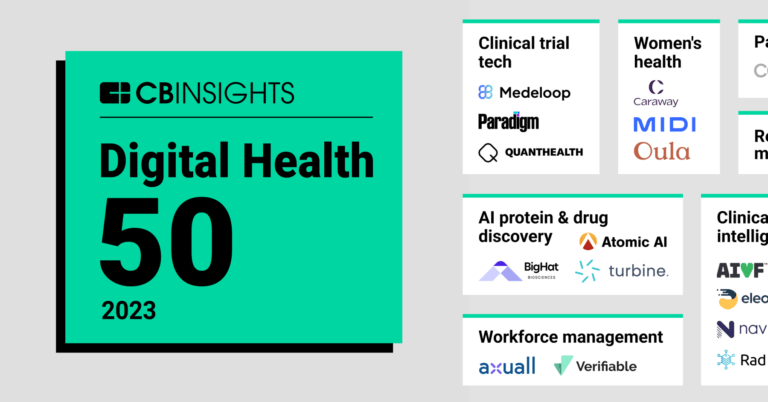
BillionToOne is included in 4 Expert Collections, including Digital Health.
Digital Health
12,122 items
The digital health collection includes vendors developing software, platforms, sensor & robotic hardware, health data infrastructure, and tech-enabled services in healthcare. The list excludes pureplay pharma/biopharma, sequencing instruments, gene editing, and assistive tech.
Women's Health Tech
713 items
This collection includes companies applying technology to address a spectrum of physical, mental, and social well-being concerns specific to women. Examples include companies in reproductive health, maternal care, fertility tracking, and menopause support.
Oncology Tech
571 items
This collection includes companies applying technology to cancer care, diagnosis, and treatment. Examples include vendors offering cancer detection and diagnosis, oncology clinical decision support, real-world data, and AI oncology drug discovery.
Digital Health 50
50 items
BillionToOne Patents
BillionToOne has filed 16 patents.
The 3 most popular patent topics include:
- molecular biology
- genetics
- biotechnology
Application Date | Grant Date | Title | Related Topics | Status |
|---|---|---|---|---|
8/1/2022 | 12/31/2024 | Molecular biology, Biotechnology, Drug discovery, DNA sequencing, DNA | Grant |
Application Date | 8/1/2022 |
|---|---|
Grant Date | 12/31/2024 |
Title | |
Related Topics | Molecular biology, Biotechnology, Drug discovery, DNA sequencing, DNA |
Status | Grant |
Latest BillionToOne News
Oct 23, 2025
Advanced technologies within specialized, high-volume clinics are elevating success rates, moving assisted reproduction into the mainstream as a primary option for building families worldwide. Chicago, Oct. 23, 2025 (GLOBE NEWSWIRE) -- The global artificial insemination market was valued at US$ 2.8 billion in 2024 and is expected to reach US$ 5.5 billion by 2033, growing at a CAGR of 7.9% during the forecast period 2025–2033. The artificial insemination market is experiencing an unprecedented influx of capital, signaling strong investor confidence and paving the way for accelerated innovation. Venture capital investment in the broader women's health category reached a substantial US$ 2.6 billion in 2024. When including diseases that disproportionately affect women, the total investment figure climbs to an impressive US$ 10.7 billion. Specifically within the femtech subsector, startups attracted approximately $1.2 billion in global venture capital in the first half of 2024 alone. This robust funding environment is enabling companies to scale operations and bring new technologies to market faster than ever before. Download Sample Pages: https://www.astuteanalytica.com/request-sample/artificial-insemination-market This investment trend is vividly illustrated by several high-value funding rounds and strategic corporate moves. Fertility and women's health app Flo Health secured over $200 million in a minority investment from General Atlantic in July 2024. Similarly, molecular diagnostics firm BillionToOne raised $130 million in a Series D funding round in June 2024. Smaller, more specialized startups are also attracting significant capital; AI-powered fertility treatment startup Ovom raised €4.3 million in 2024, FertilAI secured $4.5 million, and microfluidics innovator Parallel Fluidics raised $7 million. On the strategic front, private equity firm Astorg acquired Hamilton Thorne for €388 million ($282 million) in July 2024, while Amulet Capital Partners acquired the Genetics & IVF Institute in a major September 2024 deal. Key Findings in Artificial Insemination Market Premium Pricing Structures Defining Patient Access and Market Tiers The cost structure of fertility services is a critical factor influencing patient access and decision-making within the artificial insemination market. The average base cost for a single cycle of In-Vitro Fertilization (IVF) in 2024 is estimated to be between $14,000 and $20,000. For a more comprehensive cycle that includes advanced procedures like ICSI and genetic screening for up to six embryos, the cost at a leading US clinic is $26,990 in 2024. Elective egg freezing, another growing segment, costs $11,900 for a single cycle at the same clinic, a figure that excludes medications. The ancillary costs associated with these procedures are also substantial across the Artificial insemination market. Essential fertility medications for one IVF or egg freezing cycle typically fall between $5,800 and $10,800 in 2024. Before treatment can even begin, initial diagnostic testing adds approximately $4,165 to the overall expense. Additional procedural costs, such as $475 for anesthesia services, further contribute to the financial burden. Even a less invasive procedure like Intrauterine Insemination (IUI) carries a significant price tag, ranging from $2,000 to $3,095 for a single cycle in 2024, with medications adding another $300 to $4,000. Furthermore, embryo cryopreservation can add $2,000 to $4,000, with annual storage fees ranging from $500 to $1,000. Age-Dependent Success Rates Drive Demand for Premier Clinical Services Success rates remain a paramount concern for patients and a key differentiator for clinics in the competitive artificial insemination market. Clinical data from 2024 highlights the critical role that age plays in the likelihood of achieving a live birth through ART. For women under the age of 35, the IVF live birth rate was reported at 44.5% in 2024. This rate sees a decline in successive age brackets, with a 32.4% success rate for women aged 35-37 and a 20.2% rate for those aged 38-40. For women over the age of 42, the live birth rate per IVF cycle drops significantly to just 2.9%. However, clinical excellence can lead to better outcomes, with some top-tier fertility clinics reporting impressive live birth rates of nearly 55% for women under 35 in 2024. International studies provide further context. A large 2024 Japanese study focusing on fertility preservation outcomes reported an overall live birth rate of 21.4% per embryo transfer. Within that study, patients aged 35 to 37 achieved a notably higher live birth rate of 28.1% per transfer. A separate Dutch study published in 2024 looked at cumulative outcomes, reporting a live birth rate of 34.6% per patient who had previously undergone fertility preservation procedures. Fertility Preservation Emerges as a Key Strategic Growth Vertical Fertility preservation is an increasingly vital segment of the artificial insemination market, serving diverse patient needs from oncology to elective planning. A 2024 international survey of 16 centers revealed that testicular tissue has been cryopreserved from 3,118 boys under the age of 18. Of these cases, 1,883 were for patients with cancer diagnoses, while the remaining 1,235 were for young patients with non-malignant conditions that could compromise future fertility. These numbers reflect a growing awareness and utilization of preservation techniques for medical necessity in pediatric and adolescent populations. The trend in the Artificial insemination market is equally strong among adult women. A Dutch study of 1,112 women who had cryopreserved oocytes or embryos as of 2024 found that 693 of them did so for oncological reasons. An additional 109 women in the study preserved their fertility due to benign diseases. Demonstrating a significant societal shift, a growing cohort of 310 women in the study opted for fertility preservation for non-medical social reasons. However, utilization rates show a complex picture; the 10-year utilization rate was 25.5% as of 2024, while the 5-year rate was 12.3%, indicating that a majority of preserved gametes are not used within a decade. Direct-to-Consumer Models Capitalize on Accessibility and Privacy Demands A notable trend shaping the artificial insemination market is the rise of consumer-driven solutions, including at-home insemination kits. This niche is fueled by a desire for greater privacy, autonomy, and lower costs. The U.S. market for at-home insemination kits reached a value of USD 27.8 million in 2024, pointing to a significant and growing consumer base. Within this market, simpler and more affordable syringe-based insemination kits accounted for 65.8% of product revenue in 2024, highlighting a preference for accessible options. The demand for such products is partly driven by high infertility rates. A 2024 report indicated that approximately 2.4 million married women in the U.S., or 8.5% of those aged 15-49, face challenges with infertility. The legal and regulatory environment is also adapting in the Artificial insemination market. In India, the government's 2024 amendments to the Assisted Reproductive Technology Act aim to create a more inclusive legal framework for various fertility treatments. Similarly, the government of Japan in 2024 is actively addressing a national fertility rate that has fallen to a new record-low of 1.15, which is expected to increase state support for fertility treatments and alternatives. Male Infertility Emerges from Niche Concern to Core Market Driver The artificial insemination market is increasingly acknowledging the critical role of male-factor infertility, leading to more targeted diagnostics, treatments, and technological innovation. In certain Eastern European regions, male infertility rates were estimated to be between 8% and 12% in 2024. A 2024 study in France revealed that 20% of infertility cases among heterosexual couples were attributable exclusively to male factors, while another 2024 report indicated male-only factors were responsible for 25.6% of cases studied. Lifestyle factors are a major area of concern for the artificial insemination market growth. A May 2024 report from the American Psychiatric Association noted that 43% of US adults felt more anxious in 2024, a known contributor to male infertility. The prevalence of obesity among men in the United States was 39.2% in 2024, another significant factor that can negatively impact sperm health. In response to the growing need for specialized laboratory equipment, Nikon Corporation launched its ECLIPSE Ti2-I Motorized Inverted Microscope on July 5th, 2024. The new device is specifically designed for micro-insemination procedures and aims to improve efficiency and precision in the lab. AI and Automation Revolutionize Laboratory Efficiency and Outcomes Technology, especially artificial intelligence and advanced biopharmaceuticals, is at the vanguard of innovation within the artificial insemination market. In 2024, AI algorithms demonstrated between 70% and 97% accuracy in supporting the crucial process of selecting viable embryos for transfer, promising to improve clinical outcomes. In the laboratory, new equipment is enhancing efficiency; the Nikon microscope launched in July 2024 for micro-insemination is designed to reduce the number of required operational steps by approximately 75%. Investment in research and development is robust. Venture capital funding for biopharma solutions in women's health accounted for 34% of all VC funding in the space in 2024, a significant jump from just 12% in 2021. This is further evidenced by specific funding rounds, such as the $4.5 million raised by AI startup FertilAI and the $7 million secured by microfluidics company Parallel Fluidics in November 2024. Looking to the near future, CooperSurgical plans to launch a new computer-assisted sperm analysis (CASA) system in early 2025. The new system will integrate AI to improve the accuracy and consistency of sperm analysis, a foundational diagnostic tool. Genetic Screening Solidifies Its Position as a High-Value Service Standard The demand for genetic precision is a powerful force in the modern artificial insemination market, with patients increasingly opting for advanced screening to maximize their chances of a healthy pregnancy. Preimplantation Genetic Testing for Aneuploidy (PGT-A), which screens embryos for chromosomal abnormalities, now carries a significant cost, ranging from $4,000 to $10,000 per cycle as of 2024. A closer look at clinic pricing reveals bundled costs, with one provider charging $4,800 to test up to eight embryos and another setting the price at $4,400 for up to four. The clinic's fee for performing the embryo biopsy adds another layer, typically costing between $1,500 and $4,000. More specialized testing for single-gene disorders (PGT-M) involves even greater investment. The development of a unique genetic probe for a specific condition alone costs $3,000, and once the probe is created, the cost per embryo tested is an additional $400. The detailed cost structure includes fees for each component; for example, some labs charge $200 per embryo for the first eight embryos tested. Ancillary costs, such as an estimated $415 for shipping samples, are also part of the equation. Beyond embryos, expanded carrier screening for couples is also gaining traction, with an out-of-pocket cost of $949 in some regions or a more accessible self-pay price of $249. Need a Customized Version? Request It Now: https://www.astuteanalytica.com/ask-for-customization/artificial-insemination-market Third-Party Reproduction Services Command Premium Market Segments Third-party reproduction is a cornerstone of the artificial insemination market, providing essential pathways to parenthood and fueling a robust and growing service sector. The costs associated with donor gametes reflect a mature and highly structured segment of the industry. As of 2025, a single cycle using fresh donor eggs ranges from $25,000 to $35,000, while using frozen donor eggs offers a more affordable alternative at $18,000 to $20,000 per cycle. One clinic provides a specific price of $30,000 for a complete fresh donor egg cycle. The compensation paid directly to egg donors is also a significant market factor, ranging from $10,000 to $40,000 per donation cycle in 2025. On the male side, the cost of donor sperm is a key indicator of demand in the artificial insemination market. A single vial of donor sperm in 2024 costs between $1,000 and $1,800 from a major U.S. cryobank. Another provider offers vials starting at $347.50, with prices varying based on donor characteristics. Beyond the purchase price, storage fees are a recurring expense. Annual storage of donor sperm costs $520 for one year or $1,780 for five years at a leading facility. For individuals wishing to preserve their own sperm, initial cryopreservation services cost between $250 and $1,000. One university-based fertility center quotes an annual sperm storage fee of $2,550, effective July 2025, illustrating the wide range of pricing in the market. Global Artificial Insemination Market Major Players: Key Market Segmentation: By Type By Source By End Use By Region Need a Detailed Walkthrough of the Report? Request a Live Session: https://www.astuteanalytica.com/report-walkthrough/artificial-insemination-market About Astute Analytica Astute Analytica is a global market research and advisory firm providing data-driven insights across industries such as technology, healthcare, chemicals, semiconductors, FMCG, and more. We publish multiple reports daily, equipping businesses with the intelligence they need to navigate market trends, emerging opportunities, competitive landscapes, and technological advancements. With a team of experienced business analysts, economists, and industry experts, we deliver accurate, in-depth, and actionable research tailored to meet the strategic needs of our clients. At Astute Analytica, our clients come first, and we are committed to delivering cost-effective, high-value research solutions that drive success in an evolving marketplace. Contact Us: Astute Analytica Phone: +1-888 429 6757 (US Toll Free); +91-0120- 4483891 (Rest of the World) For Sales Enquiries: sales@astuteanalytica.com Website: https://www.astuteanalytica.com/ Follow us on: LinkedIn | Twitter | YouTube CONTACT: Contact Us: Astute Analytica Phone: +1-888 429 6757 (US Toll Free); +91-0120- 4483891 (Rest of the World) For Sales Enquiries: sales@astuteanalytica.com Website: https://www.astuteanalytica.com/
BillionToOne Frequently Asked Questions (FAQ)
When was BillionToOne founded?
BillionToOne was founded in 2016.
Where is BillionToOne's headquarters?
BillionToOne's headquarters is located at 1035 O'Brien Drive, Menlo Park.
What is BillionToOne's latest funding round?
BillionToOne's latest funding round is Debt.
How much did BillionToOne raise?
BillionToOne raised a total of $563.64M.
Who are the investors of BillionToOne?
Investors of BillionToOne include Oberland Capital, Hummingbird Ventures, Neotribe Ventures, Libertus Capital, Fifty Years and 22 more.
Who are BillionToOne's competitors?
Competitors of BillionToOne include IdentifAI Genetics.
Loading...
Compare BillionToOne to Competitors

IdentifAI Genetics specializes in the healthcare sector with a focus on non-invasive prenatal testing and genetic screening. The company offers a comprehensive service that analyzes fetal DNA from a maternal blood sample to detect genetic disorders early in pregnancy without the need for invasive procedures. IdentifAI Genetics primarily serves the healthcare industry, particularly in the field of obstetrics and prenatal care. It was founded in 2021 and is based in Tel Aviv, Israel.

Natera specializes in cell-free deoxyribonucleic acid (DNA) testing, focusing on insights for oncology, women's health, and organ health within the healthcare sector. The company offers noninvasive genetic tests that assist in early disease detection, transplant health assessment, and hereditary condition identification. Natera's tests measure fetal, tumor, or donor cfDNA at the molecular level. Natera was formerly known as Gene Security Network. It was founded in 2004 and is based in Austin, Texas.

LabCorp operates as a healthcare diagnostics company. It provides clinical laboratory services and drug development support. The company offers various diagnostic tests and services, including genetic testing, cancer screening, and wellness programs. LabCorp serves patients, healthcare providers, organizations, and biopharmaceutical companies. It was formerly known as National Health Laboratories. It was founded in 1978 and is based in Burlington, North Carolina.
Loading...