

Amazon Web Services
Founded Year
2006Stage
Other Investors | AliveRevenue
$0000About Amazon Web Services
Amazon Web Services provides cloud computing services in sectors including technology, finance, and healthcare. It offers services such as virtual servers and data storage, as well as artificial intelligence (AI) and machine learning capabilities. The company serves startups, enterprises, and public sector organizations using cloud technology. It was founded in 2006 and is based in Seattle, Washington.
Loading...
ESPs containing Amazon Web Services
The ESP matrix leverages data and analyst insight to identify and rank leading companies in a given technology landscape.
The supply chain management (SCM) market helps organizations manage their supply chains more efficiently. The market offers a range of platforms and tools that provide end-to-end visibility and control over the supply chain, enabling companies to optimize service levels and reduce costs. These solutions address common challenges such as identifying disruptions, harmonizing data from multiple sourc…
Amazon Web Services named as Challenger among 15 other companies, including IBM, Oracle, and Microsoft.
Loading...
Research containing Amazon Web Services
Get data-driven expert analysis from the CB Insights Intelligence Unit.
CB Insights Intelligence Analysts have mentioned Amazon Web Services in 24 CB Insights research briefs, most recently on Sep 9, 2025.
Aug 22, 2025
The AI agent tech stack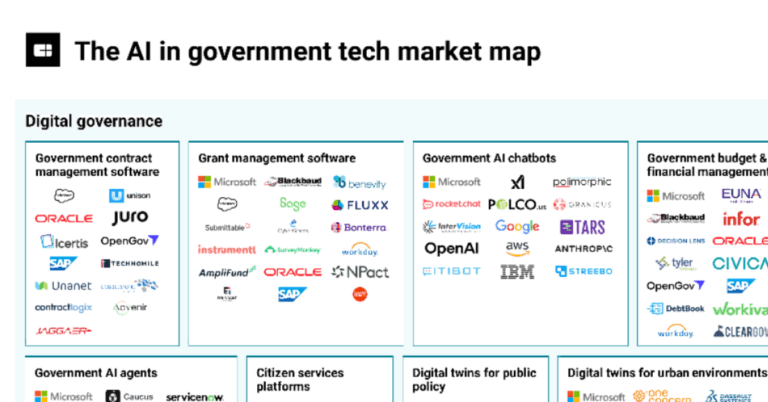
Aug 14, 2025
310+ AI companies transforming government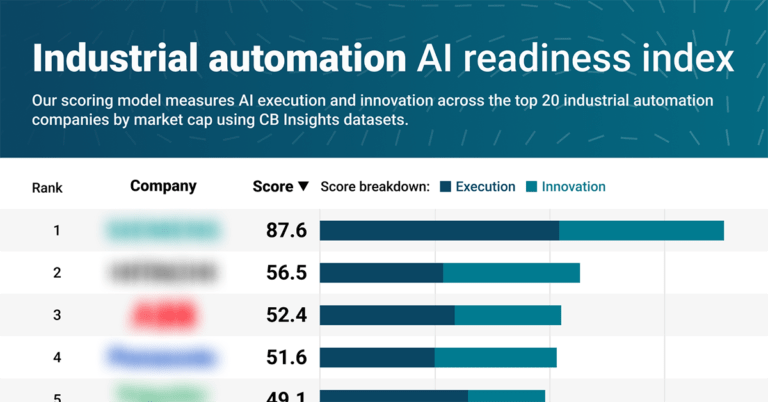
Jul 31, 2025 report
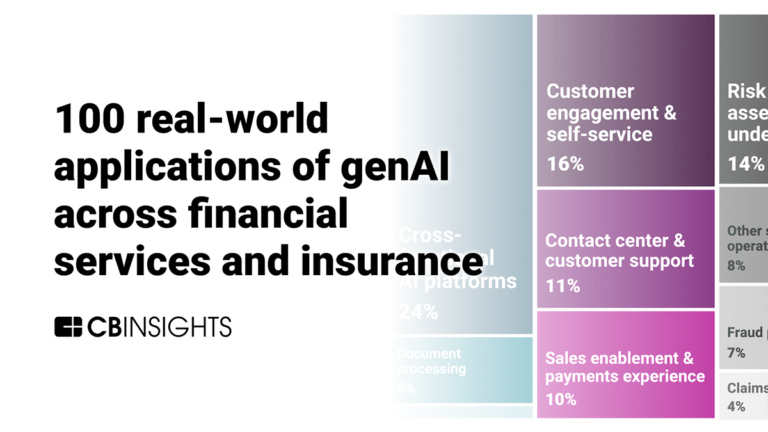
100 real-world applications of genAI across financial services and insurance
Expert Collections containing Amazon Web Services
Expert Collections are analyst-curated lists that highlight the companies you need to know in the most important technology spaces.
Amazon Web Services is included in 11 Expert Collections, including Auto Tech.
Auto Tech
4,189 items
Companies working on automotive technology, which includes vehicle connectivity, autonomous driving technology, and electric vehicle technology. This includes EV manufacturers, autonomous driving developers, and companies supporting the rise of the software-defined vehicles.
Oil & Gas Tech
4,862 items
Companies in the Oil & Gas Tech space, including those focused on improving operations across upstream, midstream, and downstream sectors, as well as those working on sustainable fuels.
Grid and Utility
2,383 items
Companies that are developing and implementing new technologies to optimize the grid and utility sector. This includes, but is not limited to, distributed energy resources, infrastructure security, utility asset management, grid inspection, energy efficiency, grid storage, etc.
Artificial Intelligence (AI)
37,243 items
Companies developing artificial intelligence solutions, including cross-industry applications, industry-specific products, and AI infrastructure solutions.
Conference Exhibitors
5,302 items
Generative AI
2,951 items
Companies working on generative AI applications and infrastructure.
Latest Amazon Web Services News
Nov 5, 2025
| PointFive February 29, 2024 The cloud computing landscape is undergoing a dramatic shift. No longer simply a strategy for reducing operational costs, the cloud is now the essential foundation for innovation, particularly in the burgeoning fields of artificial intelligence and real-time data analytics. This fundamental change is reflected in a substantial increase in spending, signaling a new era of investment in cloud infrastructure. The Rise of ‘Cost Escape’ in the Cloud Era For years, the narrative surrounding cloud adoption centered on cost optimization – doing more with less. However, the current climate demonstrates a move towards what analysts are calling “cost escape.” Companies aren’t just seeking to lower expenses; they’re investing heavily in cloud resources to unlock new capabilities and gain a competitive edge. This is driven by the insatiable demand for processing power required by complex AI models, the need for robust data pipelines to manage ever-increasing volumes of information, and the imperative to deliver seamless, real-time services to customers. First-quarter cloud infrastructure spending reached $90.9 billion, a remarkable 21% increase compared to the same period last year. Industry forecasts predict that global public cloud end-user spending will climb to $723 billion in 2025, highlighting the sustained momentum of this trend. This growth isn’t limited to hyperscale providers like Amazon Web Services, Microsoft Azure, and Google Cloud Platform; it extends to specialized cloud services and edge computing solutions. The shift towards AI is a key driver. Training and deploying large language models (LLMs) and other AI applications require massive computational resources, often exceeding the capacity of on-premises infrastructure. The cloud provides the scalability and flexibility needed to meet these demands, allowing organizations to experiment with and deploy AI solutions without significant upfront investment. But is this rapid investment sustainable? And what are the implications for businesses that lag behind in cloud adoption? The answer to the first question likely depends on continued innovation in cloud technologies and the ability of providers to manage costs effectively. The second question is more urgent: organizations that fail to embrace the cloud risk being left behind in a rapidly evolving competitive landscape. The cloud’s evolution isn’t just about technology; it’s about business strategy. Companies are increasingly viewing the cloud as a platform for innovation, enabling them to develop new products and services, reach new markets, and transform their operations. Gartner reports that cloud-native platforms are becoming the standard for new application development. Furthermore, the demand for data analytics is fueling cloud growth. Businesses are collecting vast amounts of data from various sources, and the cloud provides the tools and infrastructure needed to process, analyze, and derive insights from this data. This is particularly important for organizations seeking to personalize customer experiences, optimize operations, and make data-driven decisions. The increasing reliance on real-time services, such as streaming video, online gaming, and financial trading, also contributes to cloud demand. These applications require low latency and high availability, which the cloud can provide through its distributed infrastructure and advanced networking capabilities. Amazon Web Services offers a comprehensive suite of services designed to meet these requirements. Pro Tip: Consider a multi-cloud strategy to mitigate vendor lock-in and optimize costs. Diversifying your cloud providers can also enhance resilience and improve negotiating power. What impact will the increasing demand for cloud services have on sustainability efforts? And how can organizations ensure their cloud deployments are environmentally responsible? Frequently Asked Questions About Cloud Spending What is driving the increase in cloud spending? The primary driver is the growing demand for resources to support artificial intelligence (AI) initiatives, data analytics, and real-time services. Companies are investing in cloud infrastructure to unlock new capabilities and gain a competitive advantage. Is ‘cost escape’ a sustainable trend in cloud computing? The sustainability of ‘cost escape’ depends on continued innovation in cloud technologies and the ability of providers to manage costs effectively. However, the strategic value of the cloud for innovation suggests continued investment is likely. How does AI contribute to increased cloud infrastructure costs? Training and deploying AI models, particularly large language models (LLMs), require significant computational power and storage capacity, which are readily available through cloud providers. What are the risks of not adopting cloud technologies? Organizations that fail to embrace the cloud risk falling behind competitors, missing out on innovation opportunities, and struggling to adapt to changing market demands. What is the projected global public cloud end-user spending for 2025? Industry analysts estimate that global public cloud end-user spending will reach $723 billion in 2025, demonstrating the continued growth and importance of cloud computing. The cloud is no longer a peripheral component of IT infrastructure; it’s the central nervous system of the modern enterprise. As organizations continue to embrace digital transformation, the demand for cloud services will only intensify, shaping the future of computing and driving innovation across industries. Share this article with your network to spark a conversation about the evolving cloud landscape! What are your biggest cloud challenges and opportunities? Let us know in the comments below. Disclaimer: This article provides general information about cloud computing trends and should not be considered financial or investment advice. Share this:
Amazon Web Services Frequently Asked Questions (FAQ)
When was Amazon Web Services founded?
Amazon Web Services was founded in 2006.
Where is Amazon Web Services's headquarters?
Amazon Web Services's headquarters is located at 410 Terry Avenue North, Seattle.
What is Amazon Web Services's latest funding round?
Amazon Web Services's latest funding round is Other Investors.
Who are the investors of Amazon Web Services?
Investors of Amazon Web Services include TusStar VC, Startupbootcamp - PropTech & Housing, Cloud Native Computing Foundation Incubator, Founder Institute Malaysia Core Accelerator Program, Peachscore Data-Driven Accelerator and 23 more.
Who are Amazon Web Services's competitors?
Competitors of Amazon Web Services include Wasabi, Linode, Netlify, Backblaze, OVHcloud and 7 more.
Loading...
Compare Amazon Web Services to Competitors

Google Cloud operates as a cloud computing service provider offering various solutions, including artificial intelligence (AI) and machine learning, data analytics, and managed databases. The company provides a platform for businesses to leverage AI and machine learning, manage data with analytics, and modernize infrastructure. Google Cloud's services cater to different industries, offering tools for application programming interface (API) management and serverless computing. Google Cloud was formerly known as Google Cloud Platform. It was founded in 2008 and is based in Mountain View, California.

Microsoft Azure operates as a cloud computing platform that provides various services for building, testing, deploying, and managing applications and services through Microsoft-managed data centers. It includes solutions like virtual machine hosting, data storage, software development tools, and services for big data analytics, artificial intelligence, and Internet of Things integration. Microsoft Azure serves sectors that need computing resources and application development tools. It was founded in 2010 and is based in Redmond, Washington.

Vercel provides tools and services for web development and cloud infrastructure. Its offerings include a platform for building and deploying web applications, utilizing frameworks like Next.js, and tools like Turborepo and an AI SDK for TypeScript. Vercel serves the web development and digital experience sectors, providing solutions for AI applications, e-commerce, marketing, and multi-tenant platforms. Vercel was formerly known as ZEIT. It was founded in 2015 and is based in Covina, California.

Alibaba Cloud operates as a provider of cloud computing and data management services in the technology sector. The company offers cloud solutions aimed at supporting the networking and information needs of businesses, financial institutions, and government entities. Alibaba Cloud serves sectors that require cloud infrastructure to support online and mobile commerce. It was founded in 2009 and is based in Hangzhou, China.

Oracle Cloud offers infrastructure and platform services, including cloud infrastructure services, platform as a service, and infrastructure as a service, to support various workloads and applications. It provides services for managing databases, integrating AI and machine learning, and conducting big data analytics. It was founded in 1977 and is based in Austin, Texas.

Filebase is a decentralized storage solutions provider in the cloud storage industry. The company offers services such as IPFS pinning, dedicated IPFS gateways, and IPNS names to facilitate the development of decentralized applications. Filebase's platform is designed to be an enterprise-grade, S3-compatible API that simplifies the process of pinning data and integrating with existing cloud storage workflows. It was founded in 2019 and is based in Boston, Massachusetts.
Loading...